How can we help you?
Recent Searches Clear All
News
For the inspection, repair, operation, and digital management of urban water supply and drainage networks
Dec.05,2025
In the evolving world of pipeline maintenance and repair, trenchless technologies have become game-changers. Among these, UV-cured pipe lining (UV pipe lining) stands out for its efficiency, environmental benefits, and durability. Brands like Easy Sight are pioneering this technology with products such as the ZY-86 UV-curing liner, pushing the boundaries of what trenchless repair can achieve.
In this blog, we will explore why UV pipe lining is rapidly becoming the go-to method for pipeline rehabilitation, comparing it with traditional repair methods and looking ahead at its promising future.
What is UV Pipe Lining?
UV pipe lining, also known as UV-CIPP (Cured-In-Place Pipe), is a trenchless pipeline rehabilitation method that uses ultraviolet (UV) light to cure a specially designed liner inside an existing pipe. This liner is impregnated with resin and then inserted into the damaged pipeline. Once positioned, the liner is exposed to UV light, causing the resin to harden and form a durable, corrosion-resistant new pipe within the old one.
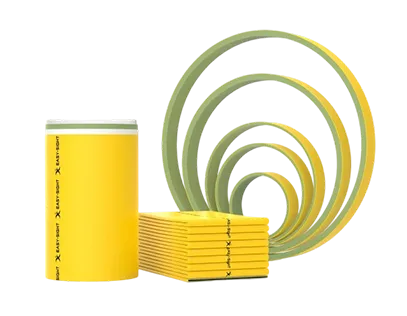
One of the flagship products in this category is Easy Sight's ZY-86 UV-curing liner. This liner is composed of multiple layers, including an inner film, resin-impregnated glass fiber fabric, an anti-seepage outer film, and a UV-resistant outer film. It is adaptable to various pipeline shapes — circular, elliptical, egg-shaped, and rectangular — and customizable in diameters ranging from DN150 to DN2200mm with thickness tailored to project needs.
Thanks to rigorous testing, including a 10,000-hour mechanical performance evaluation by TÜV Rheinland (Germany), the ZY-86 liner guarantees structural stability and durability, boasting a reduction factor of just 1.24. This ensures the liner maintains integrity even under challenging operational conditions.
UV Pipe Lining vs. Traditional Pipe Repair Methods: A Comparative Advantage
Feature
UV Pipe Lining (UV-CIPP)
Traditional Thermal Cured Lining
Open Trench Excavation Repair
Construction Efficiency Fast curing within hours, minimal disruption Longer curing times (up to days), moderate disruption Time-consuming excavation, significant disruption
Environmental Impact Minimal excavation, reduced carbon footprint Requires heat source, moderate environmental impact Large excavation, heavy environmental disturbance
Repair Quality High structural integrity, corrosion-resistant Good but may have uneven curing issues Dependent on workmanship, risk of joint failure
Cost Efficiency Lower overall cost due to less labor and downtime Higher energy costs for curing, moderate labor High labor, material, and restoration costs
As shown, UV pipe lining technology combines simplicity, efficiency, and controllability — key reasons why it's gaining preference over traditional methods.
Is UV CIPP Lining Worth It?
Investing in UV-CIPP lining is increasingly becoming a smart choice for municipalities, industrial facilities, and infrastructure managers. The method's speed and minimal disruption translate to reduced downtime for critical pipelines, meaning less inconvenience for residents and businesses.
Furthermore, UV curing eliminates the need for external heat sources, reducing energy consumption and safety risks during installation. The ZY-86 liner from Easy Sight also offers customizable sizing and superior material composition, ensuring a precise fit and long-lasting performance in a wide range of pipeline types.
While upfront costs can be comparable or slightly higher than some traditional methods, the long-term savings in maintenance, operation, and reduced environmental remediation make UV pipe lining a cost-effective and future-proof solution.
Future Trends and Market Outlook for UV Pipe Lining
The pipe rehabilitation market is expected to grow significantly, driven by aging infrastructure, urbanization, and stricter environmental regulations. UV pipe lining technology stands at the forefront of this trend.
Key factors shaping its future include:
Technological advancements such as improved UV light sources and liner materials enhancing curing speed and performance.
Integration with pipe inspection tools, including CCTV and sonar systems, allowing for precise defect detection and tailored repairs.
Customization and scalability, as exemplified by Easy Sight's ZY-86 liner, meeting diverse pipeline shapes and diameters(DN150-DN2200).
Growing environmental awareness pushing industries toward green repair technologies that minimize excavation and waste.
Overall, UV pipe lining is poised to become the dominant pipeline rehabilitation technology worldwide, offering an effective, sustainable, and reliable alternative to traditional methods.
With proven durability, rapid installation, and environmental advantages, UV-cured pipe lining represents a forward-looking solution for pipeline repair. Brands like Easy Sight with their ZY-86 UV-curing liner are leading this transformation, delivering simple, efficient, and controllable repair options.
For infrastructure projects seeking minimal disruption and long-term performance, embracing UV pipe lining technology is not just a trend—it's the future.
Our smart inspection devices support customized services. To receive a tailored quotation, feel free to contact our sales team for professional assistance.
EasySight– Guardians of Urban Lifelines
Empowering cities with IoT-driven innovations to protect every inch of their underground infrastructure. A global pioneer in digital HD CCTV pipeline robots and China's first developer of trenchless rehabilitation equipment, we redefine pipeline lifecyc
Latest News
Sep.18,2026
Common Problems Detected by Modern Pipe Inspection Equipment
Sep.17,2026
Pipe Inspection Equipment Cost Factors: What Affects the Investment?
Sep.16,2026
Pipe Inspection Equipment Selection Guide for Different Pipeline Diameters
Get Friendly Advice, Tailored to You!
Let's Talk About Your Project