How can we help you?

Recent Searches Clear All
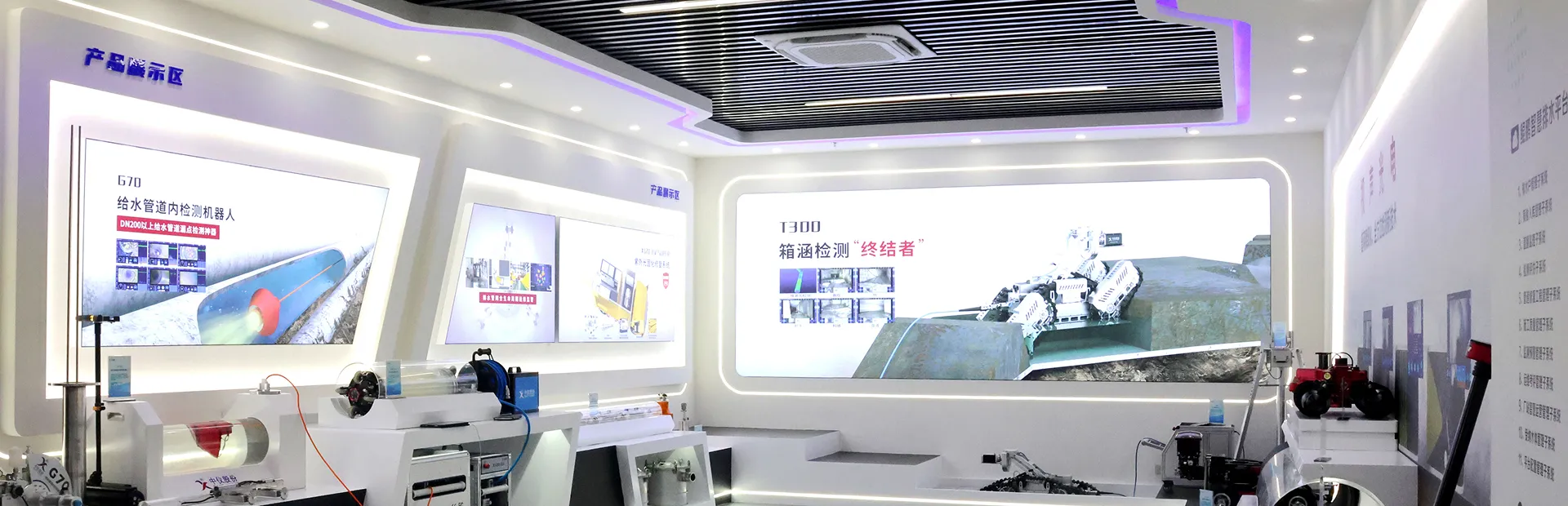
    The Future Development Potential of Pipeline Robots

    Dec.05,2025

    Since entering the 21st century, significant progress has been made in pipeline robot research, which is attributed to the government's efforts to guarantee energy consumption by vigorously developing oil and gas pipeline networks. The role of pipeline robot detection and maintenance technology in pipeline construction has become increasingly important.


    Pipeline robots are a type of mechanical integrated system


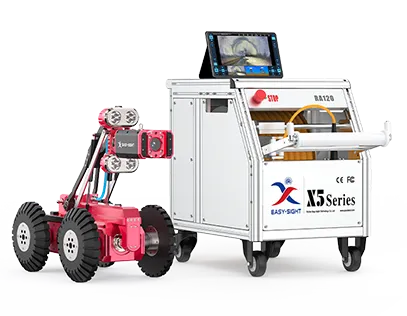
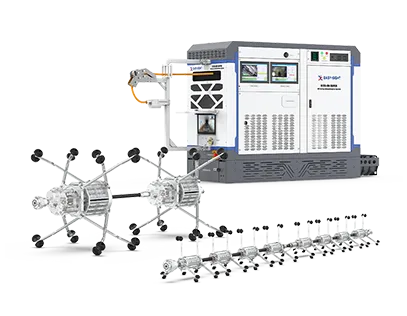
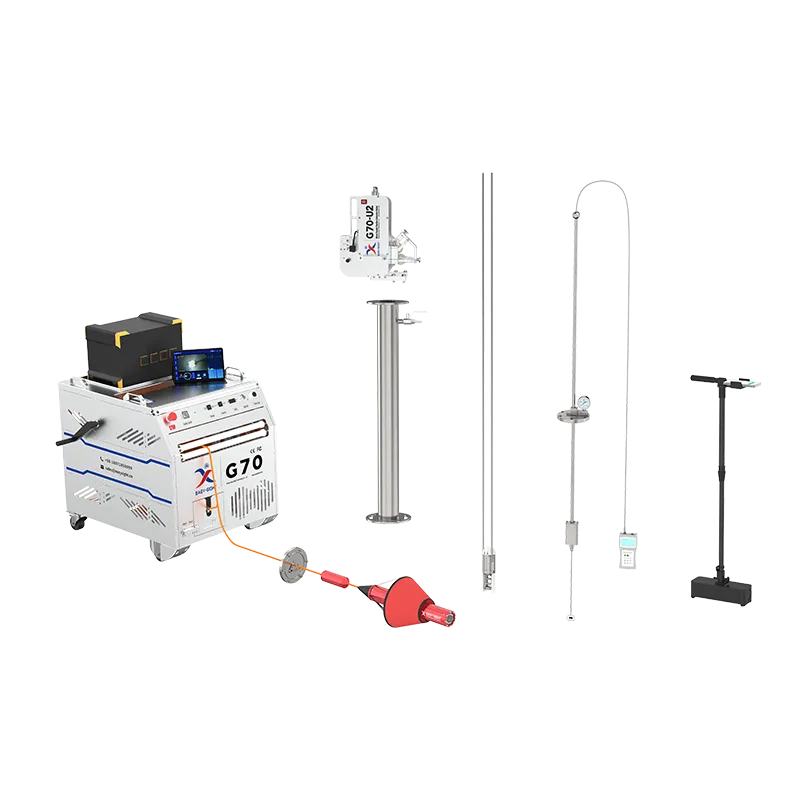
    Pipeline robots can automatically walk inside or outside the pipeline-carrying one or more sensors and operating machinery-and perform a series of pipeline operations under remote control by personnel or computer automatic control. Pipeline robots can easily carry out pipeline inspection, maintenance, and hazard investigation. They are autonomous and have a patented intelligent pipeline inspection system.


    Pipeline inspection robots can be applied in three areas: above ground, underground, and underwater. Above ground mainly includes: roads, tunnels, bridges, dangerous places, medical systems, safety protection, ships, aircraft carriers, smart agriculture, etc. Underground mainly includes: pipelines, pipe galleries, civil air defense projects (concealed works), subways, underground warehouses, military use, etc. Underwater (deep water) mainly includes: important water bodies, water tanks, underground pressure water pipes.


    The autonomous navigation ability and intelligent image processing ability of pipeline robots will be further improved


    Pipeline robot research began in the 1950s and was largely due to the rapid development of automatic control and computer technology. It has gradually entered the fast lane and been put into actual production and application. With the development of many industrialized regions, the demand for inspection and maintenance of oil and gas pipelines has increased day by day. Since entering the 21st century, the emergence of micro-electro-mechanical systems, micro-drives, and material technologies has led to a surge of research interest in small pipeline robots.


    In the future, the continuously maturing artificial intelligence technology of pipeline robots will promote the rapid development of intelligent robots. Suitable intelligent control algorithms are key technologies for the research of intelligent robots, and the autonomy of intelligent robots can be significantly improved. The rapidly developing image processing technology also enables further improvement of detection capabilities and makes it applicable to a wider range of scenarios, providing good conditions for its routing planning and pipe inspection operations.


    Whether in traditional industries such as natural gas, nuclear facilities, and oil or in the fields of biomedicine and urban water pipelines, the emergence of pipeline robot application scenarios has met the demand for pipeline robots in detection, maintenance, and repair. It has also promoted the rapid development of theoretical research on pipeline robot, and the development potential of pipeline robots in the future is immeasurable.


    Latest News

    • Dec.05,2025

      Overcoming Challenges Faced by Pipe Crawler Robots in Navigating Complex Pipe Networks

      In recent years, the use of pipe crawler robots has become increasingly prevalent in various industries such as oil and gas, water management, and construction. These innovative robots are designed to navigate through intricate pipe networks with ease, carrying out inspections, maintenance, and repairs efficiently. However, despite their advanced capabilities, pipe crawler robots face several challenges when operating in complex pipe networks. In this blog post, we will explore some of the common obstacles faced by these robots and how engineers are working to overcome them.

    • Dec.05,2025

      Inserted Lining High-Density Polyethylene (HDPE) Pipeline Repair Technology

      Inserted lining high-density polyethylene (HDPE) pipe is a brand new pipe rehabilitation technology. The technology is to insert a HDPE pipe of suitable size into the old pipe that needs to be repaired. It takes advantage of the rigidity and strength of the old pipeline as the bearing structure, as well as the characteristics of HDPE pipe's corrosion resistance, wear resistance and permeability resistance, to form a "pipe in pipe" composite structure, so that the repaired pipeline has the comprehensive performance of steel pipe and HDPE pipe. This technology, by using the feature of HDPE pipe that it can automatically recover its original physical shape after deformation, is to retract HDPE pipe with special equipment. Before inserting, the lining pipe is pulled into the target pipe with a certain traction force as well as speed. Then the pulling force is removed and the liner is restored to its original diameter and tightly bonded with the outer pipe. The outer diameter of the lineing pipe is slightly larger than the inner diameter of the original tube. After the lining is completed, the lining pipe and the original tube are firmly combined and the thickness of the liner can be designed according to the needs.

    • Dec.05,2025

      Trenchless Rehabilitation Technology and Application of Pipeline Lining

      Since the rise of pipeline trenchless rehabilitation technology in developed countries in the 1980s, it has become a widely used method for underground pipeline rehabilitation. By avoiding large-scale excavation, this technology reduces the impact on urban traffic, the environment, and residents' lives, hence gaining extensive attention and preference. This article will provide a detailed introduction to the main methods and application fields of trenchless rehabilitation technology and analyze its important role in urban network renovation.

    Get Friendly Advice, Tailored to You!

    Let's Talk About Your Project

    • Afghanistan
    • Albania
    • Algeria
    • American Samoa
    • Andorra
    • Angola
    • Anguilla
    • Antarctica
    • Antigua and Barbuda
    • Argentina
    • Armenia
    • Aruba
    • Australia
    • Austria
    • Azerbaijan
    • Bahamas
    • Bahrain
    • Bangladesh
    • Barbados
    • Belarus
    • Belgium
    • Belize
    • Benin
    • Bermuda
    • BBhutan
    • Bolivia
    • Bosnia and Herzegovina
    • Botswana
    • Bouvet Island
    • Brazil
    • British Indian Ocean Territory
    • Brunei Darussalam
    • Bulgaria
    • Burkina Faso
    • Burundi
    • Cambodia
    • Cameroon
    • Canada
    • Cape Verde
    • Cayman Islands
    • Central African Republic
    • Chad
    • Chile
    • China
    • Christmas Island
    • Cocos (Keeling) Islands
    • Colombia
    • Comoros
    • Congo
    • Cook Islands
    • Costa Rica
    • Cote D'Ivoire
    • Croatia
    • Cuba
    • Cyprus
    • Czech Republic
    • Denmark
    • Djibouti
    • Dominica
    • East Timor
    • Ecuador
    • Egypt
    • El Salvador
    • Equatorial Guinea
    • Eritrea
    • Estonia
    • Ethiopia
    • Falkland Islands (Malvinas)
    • Faroe Islands
    • Fiji
    • Finland
    • France, Metropolitan
    • French Guiana
    • French Polynesia
    • Gabon
    • Gambia
    • Georgia
    • Germany
    • Ghana
    • Gibraltar
    • Greece
    • Greenland
    • Grenada
    • Guadeloupe
    • Guam
    • Guatemala
    • Guinea
    • Guinea-Bissau
    • Guyana
    • Haiti
    • Honduras
    • Hong Kong, China
    • Hungary
    • Iceland
    • India
    • Indonesia
    • Iran (Islamic Republic of)
    • Iraq
    • Ireland
    • Israel
    • Italy
    • Jamaica
    • Japan
    • Jordan
    • Kazakhstan
    • Kenya
    • Kiribati
    • North Korea
    • South Korea
    • Kuwait
    • Kyrgyzstan
    • Lao People's Democratic Republic
    • Latvia
    • Lebanon
    • Lesotho
    • Liberia
    • Libyan Arab Jamahiriya
    • Liechtenstein
    • Lithuania
    • Luxembourg
    • Macau
    • Madagascar
    • Malawi
    • Malaysia
    • Maldives
    • Mali
    • Malta
    • Marshall Islands
    • Martinique
    • Mauritania
    • Mauritius
    • Mayotte
    • Mexico
    • Micronesia
    • Moldova
    • Monaco
    • Mongolia
    • Montserrat
    • Morocco
    • Mozambique
    • Myanmar
    • Namibia
    • Nauru
    • Nepal
    • Netherlands
    • New Caledonia
    • New Zealand
    • Nicaragua
    • Niger
    • Nigeria
    • Niue
    • Norfolk Island
    • Northern Mariana Islands
    • Norway
    • Oman
    • Pakistan
    • Palau
    • Panama
    • Papua New Guinea
    • Paraguay
    • Peru
    • Philippines
    • Pitcairn
    • Poland
    • Portugal
    • Puerto Rico
    • Qatar
    • Reunion
    • Romania
    • Russian Federation
    • Rwanda
    • Saint Kitts and Nevis
    • Saint Lucia
    • Saint Vincent and the Grenadines
    • Samoa
    • San Marino
    • Saudi Arabia
    • Senegal
    • Seychelles
    • Sierra Leone
    • Singapore
    • Slovak Republic
    • Slovenia
    • Solomon Islands
    • Somalia
    • South Africa
    • Spain
    • Sri Lanka
    • St. Helena
    • Sudan
    • Suriname
    • Swaziland
    • Sweden
    • Switzerland
    • Syrian Arab Republic
    • Taiwan, China
    • Tajikistan
    • Tanzania
    • Thailand
    • Togo
    • Tokelau
    • Tonga
    • Trinidad and Tobago
    • Tunisia
    • Turkey
    • Turkmenistan
    • Turks and Caicos Islands
    • Tuvalu
    • Uganda
    • Ukraine
    • United Arab Emirates
    • United Kingdom
    • United States
    • Uruguay
    • Uzbekistan
    • Vanuatu
    • Vatican City State (Holy See)
    • Venezuela
    • Viet Nam
    • Virgin Islands (U.S.)
    • Wallis and Futuna Islands
    • Western Sahara
    • Yemen
    • Zambia
    • Zimbabwe
    • Montenegro
    • Serbia
    • Palestine
    • South Sudan
    • Jersey
    sales@easysight.cn
    +86 188 7185 8099