How can we help you?

Recent Searches Clear All
    What Are the Main Methods of Pipe Dredging

    Dec.05,2025

    Ⅰ. The importance of clearing choked pipes


    Pipe desilting has become an important work that cannot be ignored in the drainage department. The precipitation and siltation of a large amount of debris discharged into the rain drain and the cement sand of the infrastructure construction site will cause the pipe to block. Failure of rain drain cleaning and dredging will cause overflow of sewage and pollute the environment, bringing troubles to people's lives. Today, the main methods of clearing blocked stormwater drains will be told in detail.


    Ⅱ. Main methods of clearing chocked pipes


    1. Pipe inspection robot

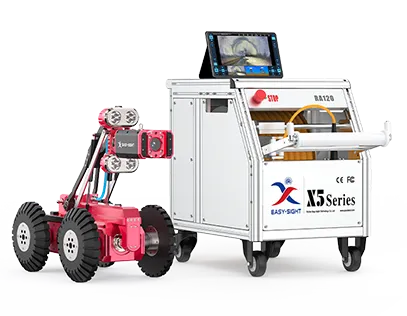
    The pipe CCTV television inspection system is composed of three parts: the main controller, the control cable rack, and the pipe inspection robot. The main controller can be installed on the car. The operator controls the speed and direction of the "sewer inspection crawler" in the pipe through the main controller, and controls the camera to transmit the video image inside the pipe to the main controller display screen through the cable so that the operator can monitor the internal conditions of the pipe in real-time, and, at the same time, store the original image records for further analysis. When the fieldwork of CCTV is completed, the pipe defects are coded, the defect pictures are captured according to the detected video data, and the test reports are compilated. The CCTV image data is processed according to the user's requirements, and video tapes or CDs are provided for archiving to guide future pipe rehabilitation.


    2. Winch dredging

    First bamboo chip is used to pass through the pipe that needs to be cleared, and then the winch on the inspection well at both ends of the pipe is used to reciprocate the wire rope so that the sludge is pushed into the downstream inspection well by the clearing tool. The winch has manual, motorized, electric, and other types, and there are also many kinds of tools, which can be selected based on the size of the pipe and the needs of users. This method is suitable for pipes of various diameters and is more suitable for pipes with serious siltation and dense sludge adhesion.

    Disadvantages of winch dredging: The transfer of bamboo chips from one wellhead to another requires a manual downhole. The poor working environment in the well brings great inconvenience to work and easily leads to safety accidents.


    3. Trencher

    The dredger used for the same pipe with a rigid seal passes through the pipe as a jet under the air or liquid pressure, and at the same time removes foreign matter in the pipe. This method requires the pipe wall to be smooth and regular, and the silt should not be too much, so it is mostly used in the dredging of nuclear energy and industrial metal sewage pipes. A similar pneumatic trencher uses compressed air to transfer the dredger from one inspection well to another, and then the wire rope at its tail is pulled by a winch to open the fins and the silt will be dredged out along with it. Another type of flexible shaft trencher is powered by a motor or automobile engine, which is transmitted to the dredging tool through a flexible shaft. The rotation of the flexible shaft causes the dredging tool to move forward while rotating, and the sludge is loosened and scraped into another inspection well.


    4. High-pressure water jet

    The more widely used method of dredging uses a high-pressure water jet vehicle equipped with a large water tank, a motorized hose reel, a high-pressure water pump, and a water jet nozzle. During the operation, a car engine drives a high-pressure pump to pressurize the water and send it to the sewer cleaning nozzle. The reaction force generated by its backward jet causes the water jet nozzle and the hose to move in the opposite direction together, and also clear the pipe wall at the same time; when the nozzle reaches the downstream inspection well, the motorized winch retracts the hose, and the water jet nozzle continues to spray water to flush the remaining sediment to the downstream inspection well where the suction truck will suck it away.


    Latest News

    • Dec.05,2025

      Overcoming Challenges Faced by Pipe Crawler Robots in Navigating Complex Pipe Networks

      In recent years, the use of pipe crawler robots has become increasingly prevalent in various industries such as oil and gas, water management, and construction. These innovative robots are designed to navigate through intricate pipe networks with ease, carrying out inspections, maintenance, and repairs efficiently. However, despite their advanced capabilities, pipe crawler robots face several challenges when operating in complex pipe networks. In this blog post, we will explore some of the common obstacles faced by these robots and how engineers are working to overcome them.

    • Dec.05,2025

      Inserted Lining High-Density Polyethylene (HDPE) Pipeline Repair Technology

      Inserted lining high-density polyethylene (HDPE) pipe is a brand new pipe rehabilitation technology. The technology is to insert a HDPE pipe of suitable size into the old pipe that needs to be repaired. It takes advantage of the rigidity and strength of the old pipeline as the bearing structure, as well as the characteristics of HDPE pipe's corrosion resistance, wear resistance and permeability resistance, to form a "pipe in pipe" composite structure, so that the repaired pipeline has the comprehensive performance of steel pipe and HDPE pipe. This technology, by using the feature of HDPE pipe that it can automatically recover its original physical shape after deformation, is to retract HDPE pipe with special equipment. Before inserting, the lining pipe is pulled into the target pipe with a certain traction force as well as speed. Then the pulling force is removed and the liner is restored to its original diameter and tightly bonded with the outer pipe. The outer diameter of the lineing pipe is slightly larger than the inner diameter of the original tube. After the lining is completed, the lining pipe and the original tube are firmly combined and the thickness of the liner can be designed according to the needs.

    • Dec.05,2025

      Trenchless Rehabilitation Technology and Application of Pipeline Lining

      Since the rise of pipeline trenchless rehabilitation technology in developed countries in the 1980s, it has become a widely used method for underground pipeline rehabilitation. By avoiding large-scale excavation, this technology reduces the impact on urban traffic, the environment, and residents' lives, hence gaining extensive attention and preference. This article will provide a detailed introduction to the main methods and application fields of trenchless rehabilitation technology and analyze its important role in urban network renovation.

    Get Friendly Advice, Tailored to You!

    Let's Talk About Your Project

    • Afghanistan
    • Albania
    • Algeria
    • American Samoa
    • Andorra
    • Angola
    • Anguilla
    • Antarctica
    • Antigua and Barbuda
    • Argentina
    • Armenia
    • Aruba
    • Australia
    • Austria
    • Azerbaijan
    • Bahamas
    • Bahrain
    • Bangladesh
    • Barbados
    • Belarus
    • Belgium
    • Belize
    • Benin
    • Bermuda
    • BBhutan
    • Bolivia
    • Bosnia and Herzegovina
    • Botswana
    • Bouvet Island
    • Brazil
    • British Indian Ocean Territory
    • Brunei Darussalam
    • Bulgaria
    • Burkina Faso
    • Burundi
    • Cambodia
    • Cameroon
    • Canada
    • Cape Verde
    • Cayman Islands
    • Central African Republic
    • Chad
    • Chile
    • China
    • Christmas Island
    • Cocos (Keeling) Islands
    • Colombia
    • Comoros
    • Congo
    • Cook Islands
    • Costa Rica
    • Cote D'Ivoire
    • Croatia
    • Cuba
    • Cyprus
    • Czech Republic
    • Denmark
    • Djibouti
    • Dominica
    • East Timor
    • Ecuador
    • Egypt
    • El Salvador
    • Equatorial Guinea
    • Eritrea
    • Estonia
    • Ethiopia
    • Falkland Islands (Malvinas)
    • Faroe Islands
    • Fiji
    • Finland
    • France, Metropolitan
    • French Guiana
    • French Polynesia
    • Gabon
    • Gambia
    • Georgia
    • Germany
    • Ghana
    • Gibraltar
    • Greece
    • Greenland
    • Grenada
    • Guadeloupe
    • Guam
    • Guatemala
    • Guinea
    • Guinea-Bissau
    • Guyana
    • Haiti
    • Honduras
    • Hong Kong, China
    • Hungary
    • Iceland
    • India
    • Indonesia
    • Iran (Islamic Republic of)
    • Iraq
    • Ireland
    • Israel
    • Italy
    • Jamaica
    • Japan
    • Jordan
    • Kazakhstan
    • Kenya
    • Kiribati
    • North Korea
    • South Korea
    • Kuwait
    • Kyrgyzstan
    • Lao People's Democratic Republic
    • Latvia
    • Lebanon
    • Lesotho
    • Liberia
    • Libyan Arab Jamahiriya
    • Liechtenstein
    • Lithuania
    • Luxembourg
    • Macau
    • Madagascar
    • Malawi
    • Malaysia
    • Maldives
    • Mali
    • Malta
    • Marshall Islands
    • Martinique
    • Mauritania
    • Mauritius
    • Mayotte
    • Mexico
    • Micronesia
    • Moldova
    • Monaco
    • Mongolia
    • Montserrat
    • Morocco
    • Mozambique
    • Myanmar
    • Namibia
    • Nauru
    • Nepal
    • Netherlands
    • New Caledonia
    • New Zealand
    • Nicaragua
    • Niger
    • Nigeria
    • Niue
    • Norfolk Island
    • Northern Mariana Islands
    • Norway
    • Oman
    • Pakistan
    • Palau
    • Panama
    • Papua New Guinea
    • Paraguay
    • Peru
    • Philippines
    • Pitcairn
    • Poland
    • Portugal
    • Puerto Rico
    • Qatar
    • Reunion
    • Romania
    • Russian Federation
    • Rwanda
    • Saint Kitts and Nevis
    • Saint Lucia
    • Saint Vincent and the Grenadines
    • Samoa
    • San Marino
    • Saudi Arabia
    • Senegal
    • Seychelles
    • Sierra Leone
    • Singapore
    • Slovak Republic
    • Slovenia
    • Solomon Islands
    • Somalia
    • South Africa
    • Spain
    • Sri Lanka
    • St. Helena
    • Sudan
    • Suriname
    • Swaziland
    • Sweden
    • Switzerland
    • Syrian Arab Republic
    • Taiwan, China
    • Tajikistan
    • Tanzania
    • Thailand
    • Togo
    • Tokelau
    • Tonga
    • Trinidad and Tobago
    • Tunisia
    • Turkey
    • Turkmenistan
    • Turks and Caicos Islands
    • Tuvalu
    • Uganda
    • Ukraine
    • United Arab Emirates
    • United Kingdom
    • United States
    • Uruguay
    • Uzbekistan
    • Vanuatu
    • Vatican City State (Holy See)
    • Venezuela
    • Viet Nam
    • Virgin Islands (U.S.)
    • Wallis and Futuna Islands
    • Western Sahara
    • Yemen
    • Zambia
    • Zimbabwe
    • Montenegro
    • Serbia
    • Palestine
    • South Sudan
    • Jersey
    sales@easysight.cn
    +86 188 7185 8099