


How can we help you?

Recent Searches Clear All

    Why Camera Crawlers Are Essential for Pipeline Inspection

    Apr.15,2026

    Camera crawlers have become a core technology in modern pipeline inspection systems.    As industries demand safer, faster, and more accurate inspection methods, traditional manual approaches are no longer enough.    A camera crawler for pipeline inspection allows operators to visually inspect pipelines from the inside without excavation or system shutdown, reducing risk and cost while improving accuracy.

    In this article, we will explore why camera crawlers are essential for pipeline inspection, how they work, and why industries such as oil & gas, water utilities, and chemical processing rely heavily on this advanced technology.

    Understanding Camera Crawlers in Pipeline Inspection

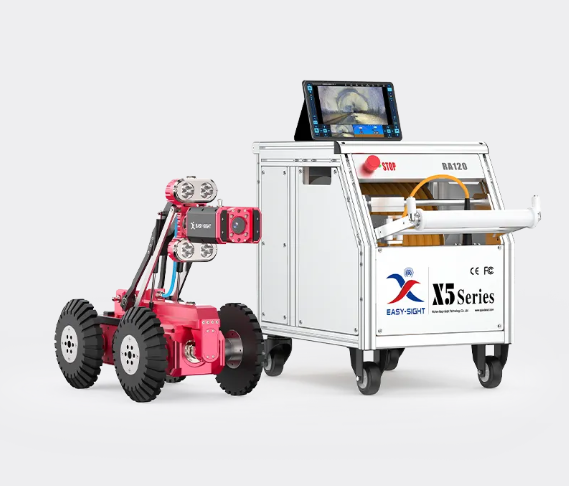
    A camera crawler is a remote-controlled robotic device equipped with high-definition cameras, LED lighting, and sometimes sensors.    It is designed to travel through pipelines of different diameters and record real-time video footage.    These devices are widely used in pipeline inspection services to detect corrosion, blockages, leaks, and structural damage.

    Modern systems such as those developed by Easy-Sight integrate advanced imaging and control technologies to ensure high-quality inspection results even in complex pipeline environments.


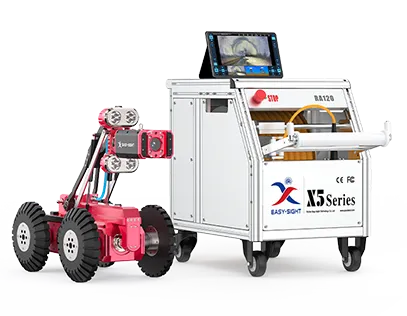
    X5-HS Pipeline CCTV Inspection Robot

    Why Camera Crawlers Are Essential for Pipeline Inspection

    1. Improved Safety for Workers

    One of the most important advantages of using a pipeline inspection camera crawler is safety.    Traditional pipeline inspections often require workers to enter hazardous environments.    This exposes them to toxic gases, confined spaces, and structural risks. Camera crawlers eliminate this need by performing inspections remotely.

    By reducing human exposure to dangerous conditions, companies significantly improve workplace safety and comply with strict industrial regulations.

    2. High Accuracy and Real-Time Visualization

    Camera crawlers provide real-time video feeds with high-definition clarity.    This allows engineers to accurately assess pipeline conditions without guesswork.    Unlike manual inspection methods, pipeline inspection cameras capture precise visual data that can be recorded, analyzed, and reviewed later.

    This level of accuracy is essential for detecting small cracks, corrosion spots, and early-stage damage that could otherwise go unnoticed.

    3. Cost-Effective Pipeline Maintenance

    Using camera crawlers significantly reduces inspection costs.    Traditional pipeline inspection methods often require excavation, shutdowns, or dismantling of pipeline sections.    These processes are expensive and time-consuming.

    With a robotic pipeline inspection crawler, companies can inspect long pipeline sections quickly without interrupting operations.    This leads to lower maintenance costs and reduced downtime.

    4. Access to Hard-to-Reach Areas

    Pipelines often run through underground, underwater, or confined environments.    Manual inspection in these areas is extremely difficult or impossible.    Camera crawlers are designed to navigate bends, long distances, and narrow pipes with ease.

    Advanced systems, including solutions from Easy-Sight, are engineered to operate in complex pipeline networks, making them ideal for industrial-scale inspections.

    5. Data Collection and Digital Reporting

    Another key benefit of camera crawlers in pipeline inspection is data recording.    These systems not only provide live video but also store inspection footage for later analysis.    Engineers can generate detailed reports, identify trends, and plan maintenance more effectively.

    This digital transformation in pipeline inspection improves decision-making and long-term asset management.

    Applications of Camera Crawlers in Different Industries

    Oil and Gas Industry

    In the oil and gas sector, pipeline integrity is critical.    Camera crawlers are widely used to inspect underground pipelines that transport crude oil, natural gas, and refined products.    Early detection of leaks or corrosion helps prevent environmental damage and financial losses.

    Water and Wastewater Systems

    Municipal water systems rely heavily on pipeline inspection technology to ensure clean and safe water delivery.    Camera crawlers help detect pipe blockages, cracks, and contamination risks in sewer and drainage systems.

    Chemical and Industrial Plants

    Chemical pipelines require frequent inspection due to the corrosive nature of transported materials.    Camera crawlers provide a non-invasive solution for monitoring pipeline conditions without shutting down production systems.

    Key Features of Modern Pipeline Inspection Camera Crawlers

    • High-definition HD/4K camera systems

    • Adjustable LED lighting for dark pipelines

    • Remote control navigation systems

    • Flexible crawler wheels for different pipe diameters

    • Real-time video transmission and recording

    • Durable waterproof and dustproof design

    These features make camera crawlers indispensable tools for modern pipeline inspection solutions.

    Future Trends in Pipeline Inspection Technology

    The future of pipeline inspection is moving toward automation and artificial intelligence.    Smart camera crawlers are being developed to automatically detect defects using AI-based image recognition.

    Companies like Easy-Sight are contributing to this innovation by integrating smart analytics and advanced robotics into their inspection systems.    This will further improve efficiency and reduce human intervention in hazardous environments.

    Conclusion

    Camera crawlers are transforming the way industries perform pipeline inspection.    They provide safer, faster, and more accurate solutions compared to traditional methods.    With their ability to access difficult environments, deliver real-time data, and reduce operational costs, they have become an essential tool across multiple industries.

    As technology continues to evolve, pipeline inspection camera crawlers will play an even more important role in ensuring infrastructure safety and efficiency worldwide.


    999.jpg

    FAQs About Camera Crawlers for Pipeline Inspection

    1. What is a camera crawler in pipeline inspection?

    A camera crawler is a robotic device equipped with a camera that moves through pipelines to capture real-time video.    It is used to inspect internal pipe conditions without excavation or manual entry, making pipeline inspection safer and more efficient.

    2. How does a pipeline inspection camera crawler work?

    The crawler is remotely controlled and navigates inside pipelines using wheels or tracks.    It sends live video footage to an operator, who can analyze the condition of the pipeline and detect issues such as cracks, corrosion, or blockages.

    3. What industries use camera crawlers?

    Camera crawlers are widely used in oil and gas, water utilities, wastewater management, chemical plants, and industrial manufacturing.    Any industry that relies on pipelines can benefit from this technology.

    4. Are camera crawlers cost-effective?

    Yes, camera crawlers are highly cost-effective because they reduce the need for excavation, minimize downtime, and prevent costly repairs by detecting problems early.

    5. What are the advantages of using camera crawlers over traditional inspection methods?

    Camera crawlers offer higher safety, better accuracy, real-time monitoring, and lower operational costs compared to traditional inspection methods.    They also allow access to hard-to-reach pipeline sections without disrupting operations.


    Latest News

    Get Friendly Advice, Tailored to You!

    Related Products

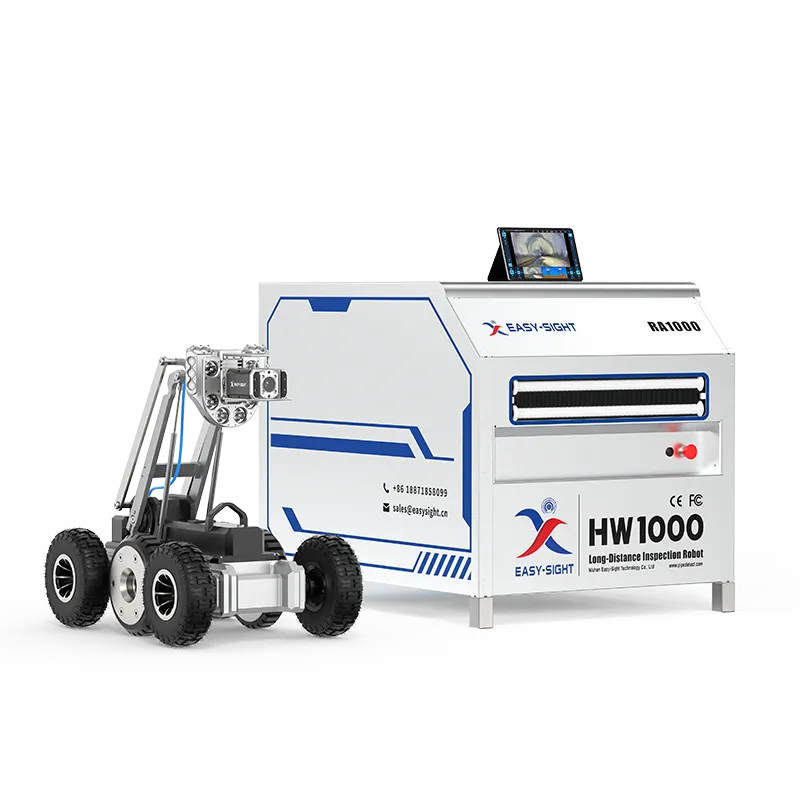
    X5-HW1000 Pipeline CCTV Inspection Robot

    The X5-HW1000 pipeline CCTV inspection robot is designed for large-diameter, long-distance drainage pipelines, with an applicable pipe diameter range of 500mm-3000mm and an inspection distance of up to 1050m. 


    Its most notable feature is its long single-inspection distance, solving the problem of traditional pipeline inspection robots being unable to inspect long-distance pipelines.
    X5-HT4 Pipeline CCTV Inspection Robot

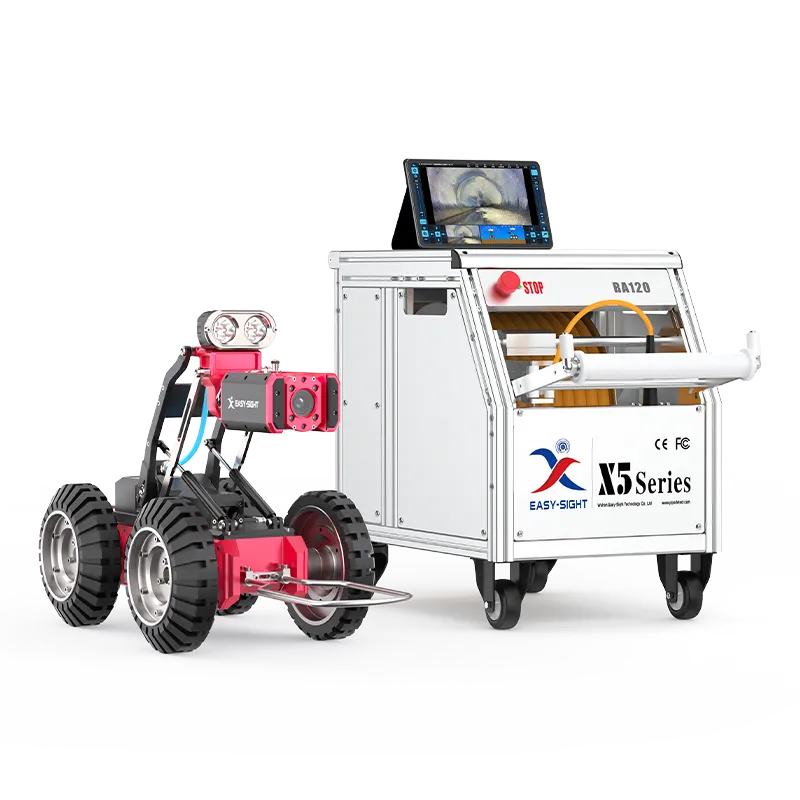
    The X5-HT4 pipeline CCTV inspection robot is a high-definition inspection system that uses a tablet as the primary control unit. 


    The main controller connects wirelessly to other system components to display and store high-definition inspection video in real time. 


    The X5-HT4 pipeline CCTV inspection robot comprises four main parts: the crawler, the camera, the cable reel, and the main control unit. 
    T300L2 Box Culvert Inspection Robot

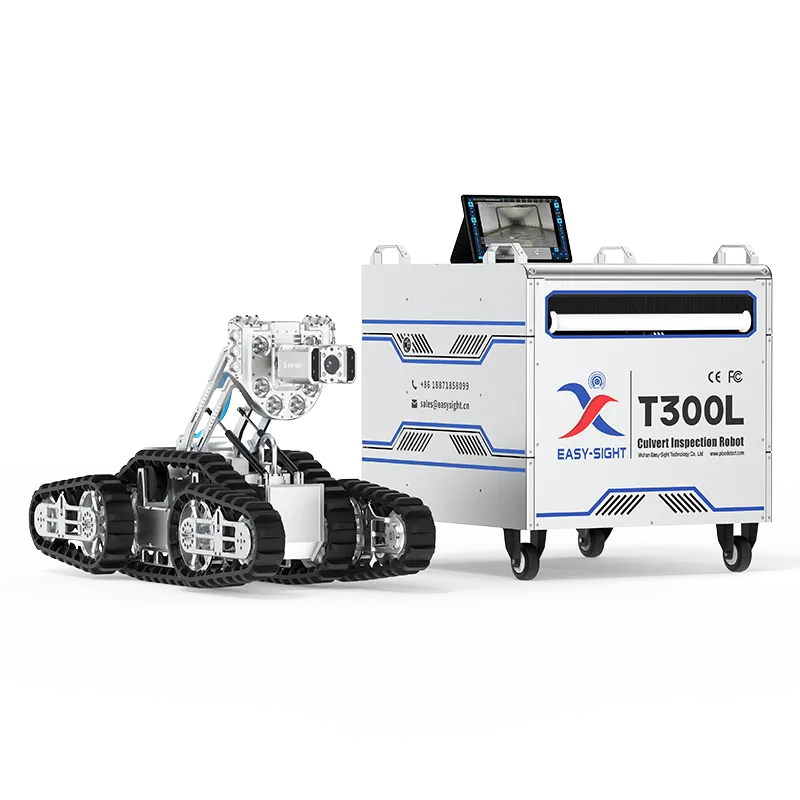
    The T300L2 box culvert inspection robot consists of a tracked crawler, a cable reel, and a control terminal. The crawler utilizes a new track structure equipped with front and rear swing arms, enabling multiple posture adjustments. 
    X5-HM100 Pipeline CCTV Inspection Robot

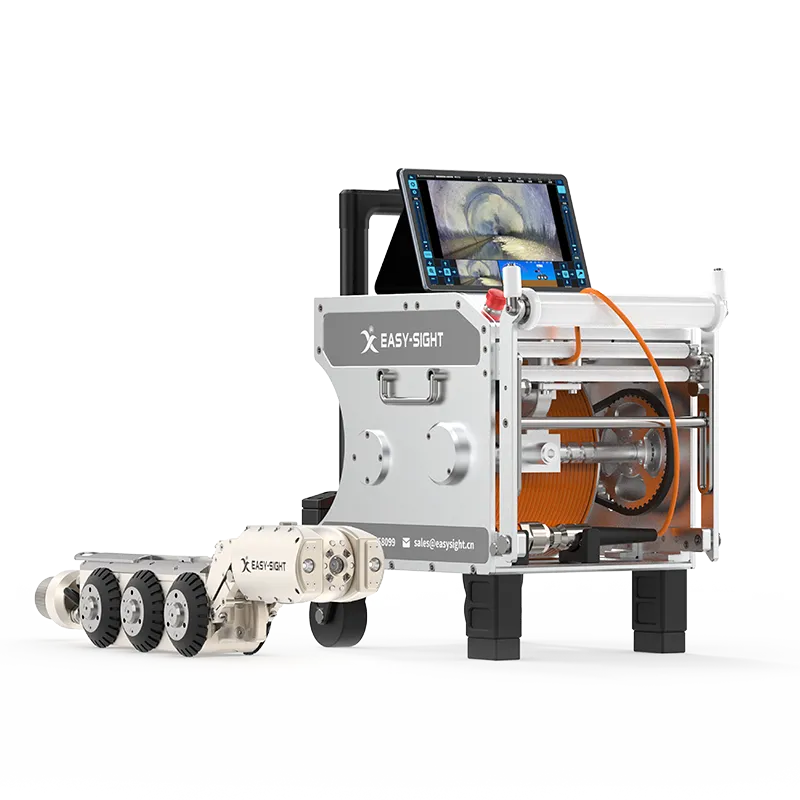
    The X5-HM100 is a compact HD pipeline CCTV inspection robot system, utilizing a tablet as the master control unit. The master control connects wirelessly to other system components, enabling real-time display and recording of high-definition inspection videos. It is suitable for inspecting community small-diameter pipelines and municipal storm/sewer pipelines from DN100 to DN250.
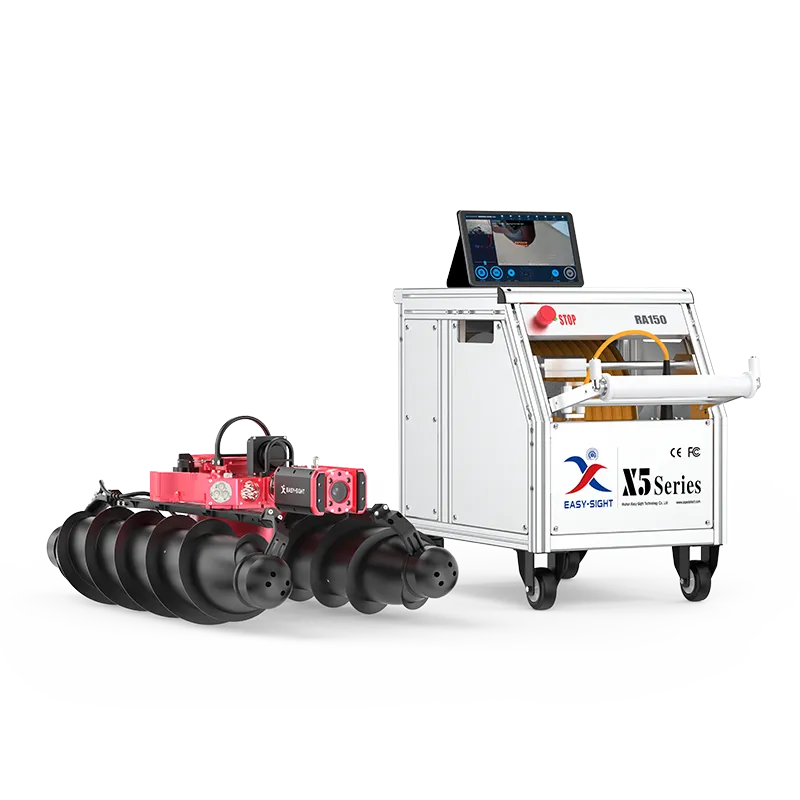
    X5-HR4 All-terrain Pipeline Robot

    The X5-HR4 all-terrain pipeline robot comprises three main components: a spiral propulsion crawler, a cable reel, and a control terminal. 


    It is designed to operate in environments with a minimum diameter of DN600mm, including those with heavy siltation and high water levels where conventional CCTV inspection robots cannot function. 


    The system is equipped with a 360° high-definition camera that provides a comprehensive view of the pipeline interior. 
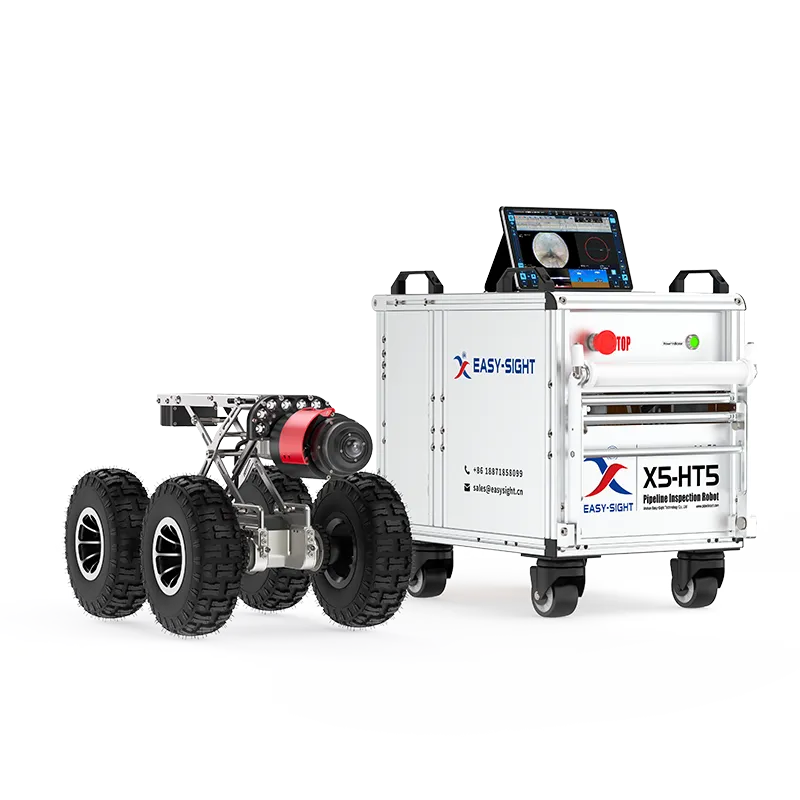
    X5-HT5 Pipeline CCTV Inspection Robot

    The X5-HT5 pipeline CCTV inspection robot is a high-definition pipeline inspection system that utilizes a tablet as the primary control interface. 


    The main control unit connects wirelessly to other system components to display and store high-definition inspection video in real time. 


    The X5-HT5 pipeline CCTV inspection robot consists of four main parts: the crawler, the camera, the cable reel, and the main control unit. 
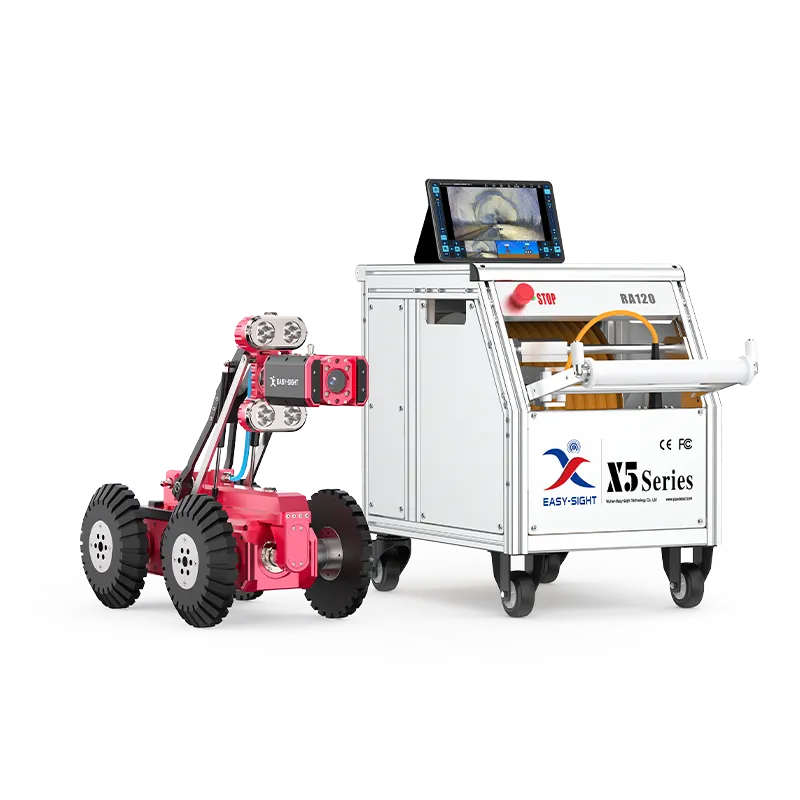
    X5-HS Pipeline CCTV Inspection Robot

    The X5-HS pipeline CCTV inspection robot is a high-definition inspection system that can utilize a tablet as the primary control unit. 


    The main controller connects wirelessly to other system components to display and store high-definition inspection video in real time. 


    The X5-HS pipeline CCTV inspection robot consists of several main components, including the crawler, the camera, the cable reel, and the main control unit. 
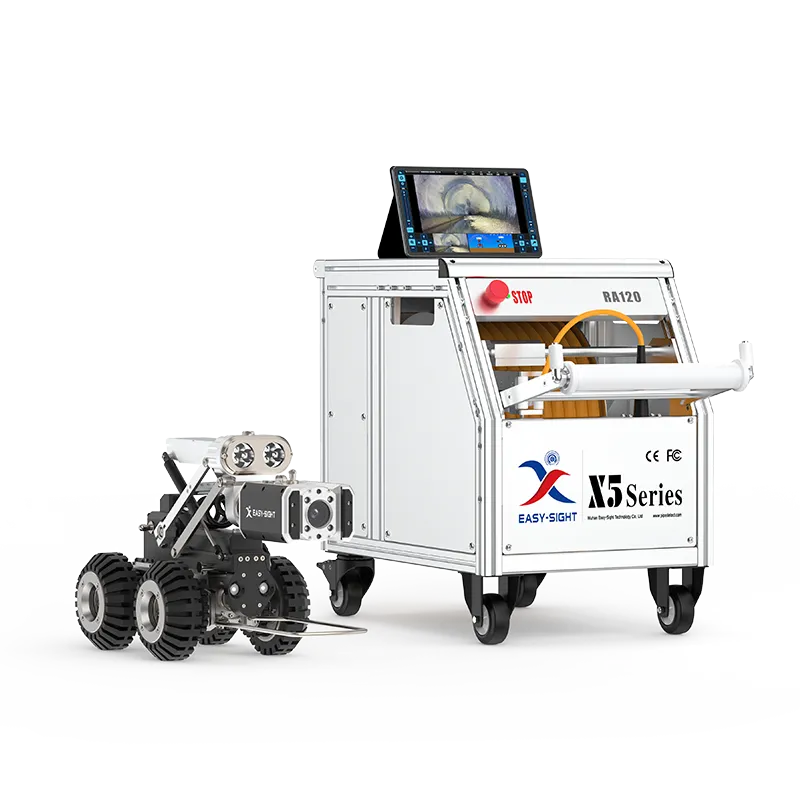
    X5-HMA4 Pipeline CCTV Inspection Robot

    The X5-HMA4 pipeline CCTV inspection robot is a high-definition system that uses a tablet as the main control unit. 


    The controller connects wirelessly to other components, enabling real-time display and recording of HD inspection videos and crawler status.


    During inspections, the system instantly captures defect images and generates reports immediately after completion.

    Let's Talk About Your Project

    • Afghanistan
    • Albania
    • Algeria
    • American Samoa
    • Andorra
    • Angola
    • Anguilla
    • Antarctica
    • Antigua and Barbuda
    • Argentina
    • Armenia
    • Aruba
    • Australia
    • Austria
    • Azerbaijan
    • Bahamas
    • Bahrain
    • Bangladesh
    • Barbados
    • Belarus
    • Belgium
    • Belize
    • Benin
    • Bermuda
    • BBhutan
    • Bolivia
    • Bosnia and Herzegovina
    • Botswana
    • Bouvet Island
    • Brazil
    • British Indian Ocean Territory
    • Brunei Darussalam
    • Bulgaria
    • Burkina Faso
    • Burundi
    • Cambodia
    • Cameroon
    • Canada
    • Cape Verde
    • Cayman Islands
    • Central African Republic
    • Chad
    • Chile
    • China
    • Christmas Island
    • Cocos (Keeling) Islands
    • Colombia
    • Comoros
    • Congo
    • Cook Islands
    • Costa Rica
    • Cote D'Ivoire
    • Croatia
    • Cuba
    • Cyprus
    • Czech Republic
    • Denmark
    • Djibouti
    • Dominica
    • East Timor
    • Ecuador
    • Egypt
    • El Salvador
    • Equatorial Guinea
    • Eritrea
    • Estonia
    • Ethiopia
    • Falkland Islands (Malvinas)
    • Faroe Islands
    • Fiji
    • Finland
    • France, Metropolitan
    • French Guiana
    • French Polynesia
    • Gabon
    • Gambia
    • Georgia
    • Germany
    • Ghana
    • Gibraltar
    • Greece
    • Greenland
    • Grenada
    • Guadeloupe
    • Guam
    • Guatemala
    • Guinea
    • Guinea-Bissau
    • Guyana
    • Haiti
    • Honduras
    • Hong Kong, China
    • Hungary
    • Iceland
    • India
    • Indonesia
    • Iran (Islamic Republic of)
    • Iraq
    • Ireland
    • Israel
    • Italy
    • Jamaica
    • Japan
    • Jordan
    • Kazakhstan
    • Kenya
    • Kiribati
    • North Korea
    • South Korea
    • Kuwait
    • Kyrgyzstan
    • Lao People's Democratic Republic
    • Latvia
    • Lebanon
    • Lesotho
    • Liberia
    • Libyan Arab Jamahiriya
    • Liechtenstein
    • Lithuania
    • Luxembourg
    • Macau
    • Madagascar
    • Malawi
    • Malaysia
    • Maldives
    • Mali
    • Malta
    • Marshall Islands
    • Martinique
    • Mauritania
    • Mauritius
    • Mayotte
    • Mexico
    • Micronesia
    • Moldova
    • Monaco
    • Mongolia
    • Montserrat
    • Morocco
    • Mozambique
    • Myanmar
    • Namibia
    • Nauru
    • Nepal
    • Netherlands
    • New Caledonia
    • New Zealand
    • Nicaragua
    • Niger
    • Nigeria
    • Niue
    • Norfolk Island
    • Northern Mariana Islands
    • Norway
    • Oman
    • Pakistan
    • Palau
    • Panama
    • Papua New Guinea
    • Paraguay
    • Peru
    • Philippines
    • Pitcairn
    • Poland
    • Portugal
    • Puerto Rico
    • Qatar
    • Reunion
    • Romania
    • Russian Federation
    • Rwanda
    • Saint Kitts and Nevis
    • Saint Lucia
    • Saint Vincent and the Grenadines
    • Samoa
    • San Marino
    • Saudi Arabia
    • Senegal
    • Seychelles
    • Sierra Leone
    • Singapore
    • Slovak Republic
    • Slovenia
    • Solomon Islands
    • Somalia
    • South Africa
    • Spain
    • Sri Lanka
    • St. Helena
    • Sudan
    • Suriname
    • Swaziland
    • Sweden
    • Switzerland
    • Syrian Arab Republic
    • Taiwan, China
    • Tajikistan
    • Tanzania
    • Thailand
    • Togo
    • Tokelau
    • Tonga
    • Trinidad and Tobago
    • Tunisia
    • Turkey
    • Turkmenistan
    • Turks and Caicos Islands
    • Tuvalu
    • Uganda
    • Ukraine
    • United Arab Emirates
    • United Kingdom
    • United States
    • Uruguay
    • Uzbekistan
    • Vanuatu
    • Vatican City State (Holy See)
    • Venezuela
    • Viet Nam
    • Virgin Islands (U.S.)
    • Wallis and Futuna Islands
    • Western Sahara
    • Yemen
    • Zambia
    • Zimbabwe
    • Montenegro
    • Serbia
    • Palestine
    • South Sudan
    • Jersey
    sales@easysight.cn
    +86 188 7185 8099