How can we help you?
Recent Searches Clear All
News
For the inspection, repair, operation, and digital management of urban water supply and drainage networks
Sep.18,2026
Modern Pipe Inspection Equipment can identify blockages, grease buildup, foreign objects, cracks, offsets, root intrusion, corrosion, leaks, and collapsed sections without immediately excavating the ground. I use camera-based inspection to connect each visible defect with its location, severity, and appropriate next action. The result is a more controlled process for residential plumbing diagnostics, commercial buildings, and municipal sewer systems.
!
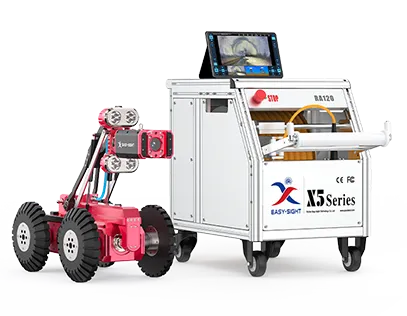
A pipe inspection camera usually consists of a waterproof camera head, push cable or robotic crawler, lighting system, control unit, and recording software. For small residential drains, a technician may push a flexible camera through a cleanout or access point. For larger municipal pipelines, a crawler can travel through pipes while transmitting video, distance data, and camera position to an operator above ground.
The camera shows the internal pipe wall in real time, allowing me to observe deposits, fractures, joints, intrusions, and obstructions that cannot be confirmed from surface symptoms alone. A built-in sonde or locating transmitter can also help estimate the underground position of a defect. More advanced systems add measurement, laser profiling, sonar imaging, or robotic movement for larger diameters and partially submerged lines.
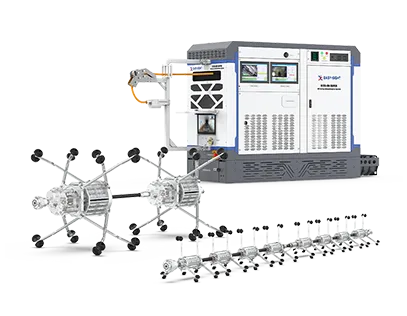
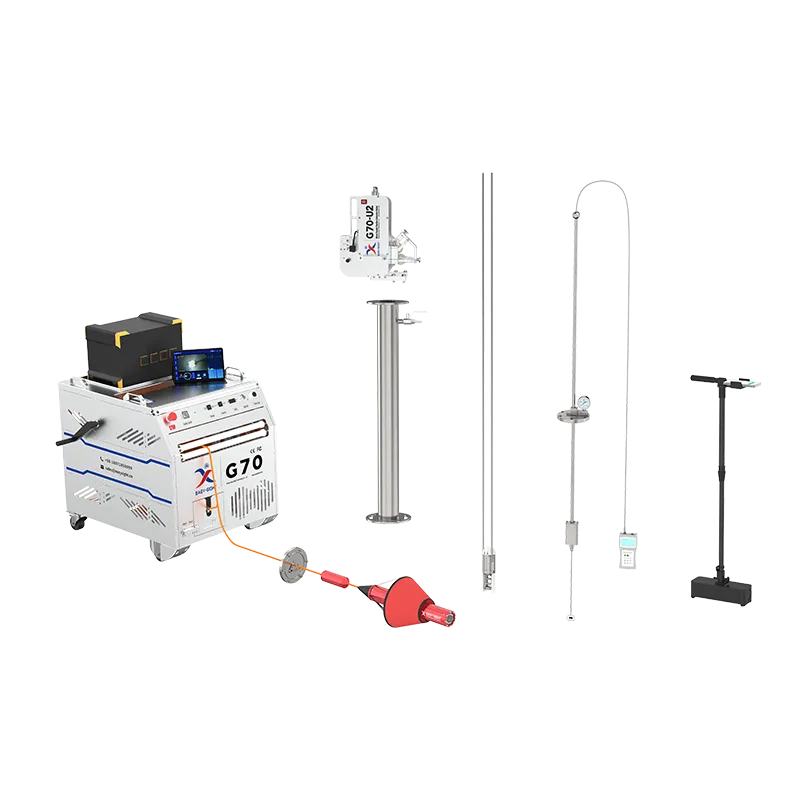
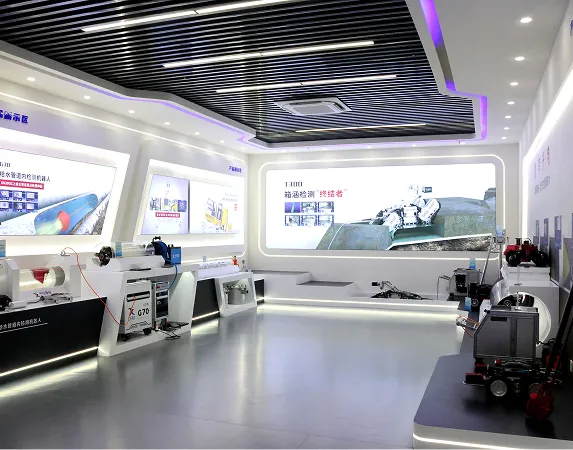
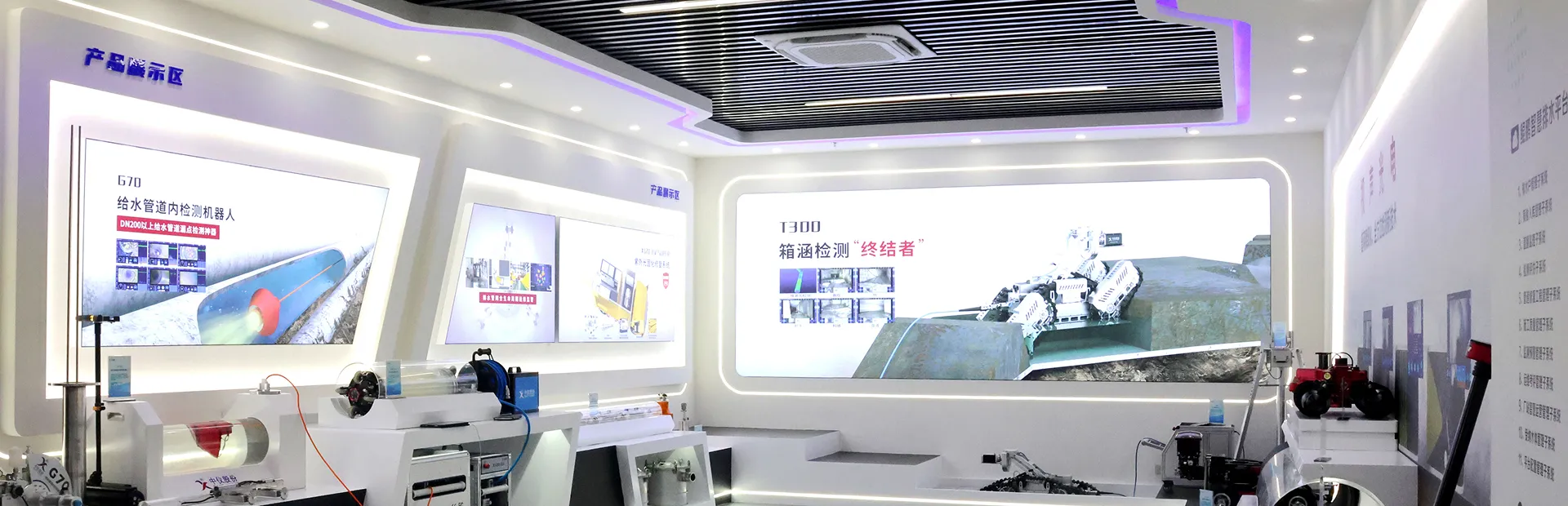
Easy-Sight develops inspection and rehabilitation systems for drainage, sewer, and water supply networks. Its published product range includes CCTV inspection robots, small-diameter cameras, manhole cameras, sonar systems, long-distance detection equipment, and water pipeline inspection robots. The company states that it was founded in 2010 and has deployed more than 4,000 pipeline inspection robots, with systems active in more than 50 countries.
The inspection method should match the pipe diameter, access conditions, flow level, and purpose of the survey. A push camera may be suitable for a 50–150 mm residential branch, while a crawler is more appropriate for longer or larger sewer sections. Easy-Sight lists equipment such as the X5-HT5 for DN200–1200 mm pipes, with a stated maximum travel speed of 41 m/min and inspection distance of up to 500 m, although actual field performance depends on pipe condition and operating conditions.
The following defects are the most common findings I expect during CCTV pipe inspection for blocked drains, sewer investigations, and structural condition surveys.
Blockages and grease buildup appear as narrowed flow paths, thick deposits, standing water, or material attached to the pipe wall. The usual next action is mechanical cleaning, water jetting, or hydro jetting before a second inspection confirms that the passage is open.
Debris and foreign objects may include construction waste, stones, wipes, roots, broken fittings, or discarded materials. The response depends on the object’s size and position, ranging from retrieval with cleaning tools to localized excavation when the obstruction is lodged in a damaged section.
Cracks and fractures appear as lines, splits, or irregular openings in the pipe wall. Fine cracks may be monitored when they are stable and isolated, while active infiltration, widening fractures, or multiple cracks may require spot repair, lining, or replacement.
Pipe offsets occur when two pipe sections no longer align at the joint. A visible step can catch solids, reduce hydraulic capacity, and allow soil or groundwater movement, so the recommended action may range from cleaning and monitoring to targeted repair.
Collapsed sections show a severely restricted or completely blocked passage, crushed pipe walls, displaced fragments, or a tunnel-like opening. A collapsed line generally requires urgent repair, trenchless replacement, or excavation because cleaning alone cannot restore the original structure.
Tree-root intrusion appears as fine roots entering through joints, cracks, service connections, or deteriorated walls. Root cutting may restore flow temporarily, but repeated intrusion usually calls for joint sealing, spot repair, trenchless lining, or replacement of the affected section.
Corrosion and material loss are identified by pitting, rough surfaces, exposed reinforcement, flaking, or reduced wall thickness. Video can show the location and visible extent, but thickness measurement or additional testing may be needed before selecting a structural repair method.
Leaks and infiltration may appear as flowing water, droplets, sediment movement, wet joints, or visible openings. A sewer camera can detect many entry points, but it cannot always prove the full external path of water or identify every leak when the section is submerged.
Blockages are among the most frequent sewer line problems found during inspection. Grease often forms a thick coating that reduces the effective internal diameter, while sediment and debris collect in low sections where water velocity is insufficient to carry solids away. In a video pipe inspection report, I look for the percentage of the passage obstructed, the length of the deposit, and whether the material is fixed to the wall or moving with the flow.
A sewer camera can detect blockages when the camera reaches the obstruction or when water levels indicate restricted movement. However, a camera may stop before the actual blockage if the passage is completely closed, the cable cannot pass through a tight bend, or the line is filled with standing water. In that situation, cleaning should normally come before a second camera survey.
| Finding | Typical visual sign | Common next action |
|---|---|---|
| Grease buildup | Cream-colored or dark coating on the lower or full pipe wall | Hydro jetting and follow-up inspection |
| Sediment | Sand, silt, or sludge covering the invert | Vacuum removal or jetting |
| Foreign object | Wipes, stones, fittings, or construction debris | Retrieval, cutting, or localized access |
| Partial blockage | Reduced opening with standing water upstream | Cleaning followed by verification |
| Complete blockage | Camera cannot pass beyond a fixed point | Locate, clear, and reinspect |
Repeated blockages should not be treated as isolated cleaning events. If the same location accumulates grease, roots, or sediment after cleaning, I check for a pipe belly, offset joint, crack, poor grade, or damaged connection. This distinction is important because cleaning removes the symptom, while structural correction addresses the reason the blockage returns.
Structural defects can develop from age, ground movement, traffic loads, poor installation, corrosion, freeze-thaw cycles, or failing joints. A camera inspection identifies the visible condition and helps establish whether the pipe remains open, partially deformed, or structurally compromised. For commercial buildings and municipalities, the recording should include distance markers, clock-position references, defect descriptions, and still images for maintenance records.
Cracks may be longitudinal, circumferential, branching, or located around a joint. A single hairline crack in a stable, dry section does not carry the same risk as a wide fracture with soil entering the pipe. I classify the observation by location, apparent width, infiltration, debris movement, and effect on flow rather than labeling every crack as an emergency.
Offsets deserve careful attention because even a relatively small joint displacement can create a ledge where paper, grease, or roots collect. If the offset is combined with infiltration or visible soil loss, the surrounding ground may be moving into the pipe. Cleaning may improve flow temporarily, but a persistent offset often requires a spot repair, internal joint treatment, trenchless lining, or excavation.
A collapsed pipe is usually recognizable from a crushed profile, broken fragments, or a passage that narrows to a small opening. The camera may not pass beyond the collapse, so the inspection record should document the stopping distance and the nearest access points. Replacement decisions should consider pipe depth, road or building access, utility congestion, diameter, length, and whether a structurally sound host pipe remains for lining.
Root intrusion detection in sewer lines depends on identifying roots entering through joints, cracks, connections, or deteriorated pipe walls. Fine roots can create a mesh that traps grease and paper, while larger roots may deform or break the pipe. A camera shows where the roots enter and how much of the passage they occupy, but it does not measure the complete root mass outside the pipe.
Root cutting or hydro jetting can restore the opening when the pipe wall is still serviceable. If roots return at the same joint, I treat the condition as a recurring structural defect rather than a simple maintenance issue. Joint sealing, targeted point repair, trenchless lining, or excavation may be appropriate depending on the number of intrusion points and the remaining pipe condition.
The inspection schedule also matters. A property with repeated backups, mature trees near the sewer route, or a history of root cutting may require periodic inspection rather than waiting for another emergency. Municipal programs can combine CCTV records with pipe age, material, diameter, previous repairs, and blockage history to rank sections for cleaning or rehabilitation.
A camera provides direct visual evidence inside the pipe, but it does not reveal every external defect. Submerged sections may conceal cracks beneath the water surface, and heavy sediment can cover the invert. Tight bends, inaccessible branches, collapsed openings, and damaged access points may prevent the camera from reaching important areas.
Poor visibility can also result from grease, cloudy water, mineral deposits, lens contamination, or inadequate lighting. A camera may show a suspicious area without proving wall thickness, soil loss, pressure leakage, or the full extent of corrosion. For water supply pipelines, sonar, leak detection, pressure testing, electromagnetic methods, or other sensors may be needed in addition to CCTV.
I also avoid treating a clean video as proof that the entire network is defect-free. The inspection only represents the sections reached by the equipment under the conditions present on that day. A reliable report should identify the inspected distance, access points, uninspected branches, flow conditions, obstructions, and limitations that affected the survey.
I use four practical categories to connect observations with decisions: monitor, clean, repair, and replace. This structure keeps a visible defect from being treated either too casually or too urgently.
| Severity category | Typical findings | Recommended response |
|---|---|---|
| Monitor | Minor isolated crack, stable joint wear, light deposits without flow restriction | Record location, schedule review, compare future footage |
| Clean | Grease, sediment, wipes, roots, or debris limiting flow without major structural damage | Mechanical cleaning, hydro jetting, root cutting, then reinspection |
| Repair | Active infiltration, repeated root entry, offset joint, localized fracture, service connection defect | Spot repair, joint sealing, trenchless lining, or targeted rehabilitation |
| Replace | Collapse, severe deformation, widespread cracking, major corrosion, repeated failure | Trenchless replacement or excavation with full section renewal |
The category can change after cleaning. For example, a pipe that initially appears severely damaged may be hidden beneath grease or sediment, while a small visible crack may become more serious once deposits are removed. For that reason, I prefer a before-and-after inspection when the condition affects a repair decision.
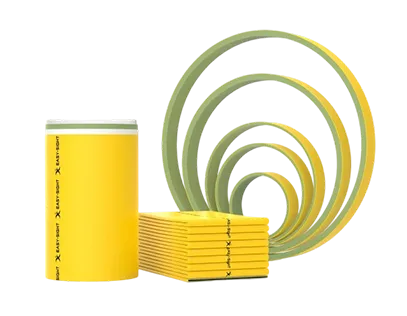
Inspection results support a trenchless pipe repair assessment by showing whether the existing pipe has enough continuity and shape for internal rehabilitation. A liner may be suitable when the pipe has cracks, leaking joints, or moderate deterioration but still provides a continuous route for installation. A localized point repair may be more appropriate when one defect is isolated and the surrounding pipe remains serviceable.
Hydro jetting is primarily a cleaning method, not a structural repair. It can remove grease, sediment, and roots, but it does not restore a collapsed wall or permanently close a displaced joint. Spot repair is suited to short damaged areas, while trenchless lining or replacement becomes more practical when defects repeat across a longer section.
Excavation remains necessary when the pipe is inaccessible to rehabilitation equipment, the line has collapsed completely, the surrounding soil is unstable, or the pipe layout prevents liner installation. The camera report helps determine where excavation should occur, reducing the chance of opening a large area without confirming the actual defect location.
When I compare pipe inspection equipment for plumbers, contractors, commercial facilities, or municipalities, I begin with the operating range rather than the camera resolution alone. The system should match the smallest and largest pipe diameters, required inspection distance, access points, bend radius, water exposure, and expected obstruction type.
Key specifications include:
Easy-Sight lists systems for small-diameter detection, long-distance inspection, high-precision inspection, all-terrain movement, manhole surveying, and water pipeline assessment. Its published specifications include equipment with millimeter-level accuracy, 500 m stated inspection distance, IP68 waterproof protection, and specialized water-pipe leak detection figures. These specifications should be evaluated against the intended pipe network and verified through a field demonstration before purchase.
Common Problems Detected by Modern Pipe Inspection Equipment include blockages, grease, debris, foreign objects, cracks, offsets, root intrusion, corrosion, leaks, and collapsed sections. I get the most useful result when the inspection record connects each defect with its location, visible severity, operating limitation, and recommended action. Cleaning may resolve a deposit, but repeated blockages, infiltration, offsets, or structural damage require a repair assessment.
Before choosing equipment, I confirm pipe diameter, access, distance, flow conditions, bend geometry, waterproofing, locating functions, and reporting requirements. After inspection, I classify findings as monitor, clean, repair, or replace, then select hydro jetting, spot repair, trenchless lining, excavation, or replacement according to the evidence. This approach can reduce unnecessary excavation, limit downtime, improve repair targeting, and help prevent recurring sewer line problems.
Latest News
Sep.18,2026
Common Problems Detected by Modern Pipe Inspection Equipment
Sep.17,2026
Pipe Inspection Equipment Cost Factors: What Affects the Investment?
Sep.16,2026
Pipe Inspection Equipment Selection Guide for Different Pipeline Diameters
Get Friendly Advice, Tailored to You!
Let's Talk About Your Project