How can we help you?
Recent Searches Clear All
News
For the inspection, repair, operation, and digital management of urban water supply and drainage networks
Sep.16,2026
Choosing the right Pipe Inspection Equipment Selection Guide for Different Pipeline Diameters starts with more than matching a camera to a nominal pipe size. I first confirm the inspection objective, smallest internal clearance, bends, access points, operating conditions, defect types, data requirements, and reporting format. A technically suitable system must also provide enough reach, traction, lighting, sensor coverage, and post-inspection support for the actual pipeline.
Use this five-step selection process:
Pipeline diameter affects the physical fit of the inspection system, but it also influences image quality, sensor positioning, traction, turning ability, and the amount of area that one inspection pass can cover. A small-diameter pipe may prevent a conventional crawler from entering, while a large-diameter pipe may require adjustable wheels, articulated movement, stronger lighting, or a walking robot.
I treat nominal diameter as a starting point rather than a final specification. The minimum internal diameter may be smaller than the nominal size because of corrosion deposits, liners, joints, deformation, sediment, valves, or construction tolerances. Before purchasing Pipe Inspection Equipment, I request the manufacturer’s minimum clearance, maximum operating diameter, minimum bend radius, obstacle-crossing capability, cable length, waterproof rating, and allowable operating environment.
The inspection goal is equally important. A CCTV camera can show cracks, blockages, displaced joints, roots, corrosion products, and visible leakage, but it does not directly measure internal wall thickness. Geometry tools identify deformation and changes in cross-section, while magnetic flux leakage and ultrasonic systems address different forms of metal loss and wall-condition analysis.
The table below provides a practical starting point for comparing equipment by pipe size, access method, inspection objective, and operating constraints. The ranges are planning categories rather than universal equipment limits, so I always compare them with the manufacturer’s confirmed specifications.
| Pipeline diameter | Recommended equipment | Typical inspection use | Main selection checks |
|---|---|---|---|
| Below 100 mm | Push camera, flexible camera, small-diameter camera head | Service lines, narrow drains, industrial branches | Camera head diameter, cable flexibility, bend radius, lighting |
| 100–200 mm | Small crawler, CCTV camera, push camera | Building drainage, community lines, process pipes | Traction, vertical lift, access opening, cable length |
| 200–600 mm | CCTV crawler, geometry sensor, sonar system | Municipal sewers, water lines, industrial pipelines | Wheel adjustment, flow conditions, obstacle clearance, reporting |
| 600–1,200 mm | Large crawler, articulated robot, laser or geometry system | Large drainage lines, culverts, utility tunnels | Crawler load, lighting coverage, turning radius, long-distance control |
| Above 1,200 mm | All-terrain robot, walking robot, sonar, laser, specialist NDT | Culverts, large conduits, tunnels, major transmission lines | Human access rules, communication range, surface condition, safety |
| Multi-diameter networks | Modular crawler, interchangeable camera heads, pigging system | Networks with changing diameters and fittings | Diameter transition, launcher and receiver design, tool clearance |
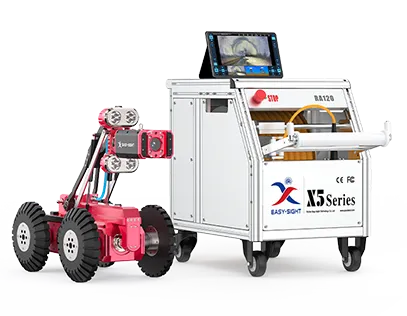
Easy-Sight’s published product information illustrates how equipment specifications should be reviewed by diameter and operating range. Its X5-HT5 pipe inspection robot is listed for DN200–1200 mm pipelines, with a maximum travel speed of 41 m/min and long-distance detection up to 500 m. Its X5-HM100 is listed for community pipelines above DN100 mm and includes a 50 mm vertical lift range, 0.16 m/s maximum travel speed, 2000w HD CCTV, and IP68 waterproof protection.
For pipe inspection equipment for small diameter pipelines, the camera head and push-rod or cable assembly must be small enough to pass through the narrowest section without damaging the pipe or becoming trapped. I check the actual camera-head diameter, bending flexibility, minimum turning radius, connector dimensions, and the relationship between cable stiffness and pipe curvature.
A push camera is often suitable for short runs where the operator needs a visual answer quickly. A compact crawler becomes more useful when the line is longer, the inspection requires controlled movement, or the report must include distance tracking and repeatable video. In very small pipes, a crawler may be physically impossible, making a flexible camera the more practical choice.
Small-diameter inspections are especially sensitive to lighting and lens position. If the camera sits too close to the pipe wall, the field of view becomes narrow and defects may be missed at the edges. I therefore compare the lens angle, adjustable lighting, image resolution, focus range, recording format, and cable-length options rather than selecting equipment by camera diameter alone.
For pipeline inspection equipment for large diameter pipelines, the main challenge is usually movement and coverage rather than entry. A crawler must maintain traction across the pipe invert, climb over joints or deposits, maintain a stable camera position, and provide lighting across a larger internal surface. Large pipelines may also require articulated steering, adjustable wheel spacing, all-terrain movement, sonar, laser profiling, or a walking robot.
A large crawler is appropriate when the operator needs controlled CCTV inspection and distance measurement. An all-terrain platform becomes more useful where the pipe contains sediment, standing water, uneven surfaces, trenches, or obstacles. For pipes large enough to permit personnel entry, equipment selection must still consider confined-space rules, atmospheric testing, communication, retrieval, and whether robotic inspection can reduce exposure.
For partially flooded or submerged large pipes, sonar can supplement or replace optical inspection in areas where the camera cannot see the pipe wall. Laser or geometry systems can identify deformation, ovality, sagging, and changes in cross-section. I do not treat CCTV, sonar, laser, and NDT tools as interchangeable because each produces a different type of evidence.
CCTV cameras are the first choice for visible internal conditions, including blockages, cracks, open joints, roots, corrosion deposits, liners, debris, and surface leakage. A push camera works for short and relatively accessible sections, while a crawler provides controlled travel, distance recording, adjustable lighting, and more stable positioning.
A crawler robot is preferable when the pipeline is long, the inspection must be repeated, or the report must link defects to chainage or distance. I also check whether the crawler can maintain traction when the pipe is wet and whether the camera can pan, tilt, zoom, or rotate. When camera inspection is selected, the system should support clear video export, still-image capture, defect annotations, and a structured reporting workflow.
Geometry tools measure changes in internal shape rather than simply recording visible conditions. They are useful for detecting ovality, dents, deformation, sagging, and clearance restrictions that may not be obvious in forward-facing video.
For this application, I confirm measurement accuracy, calibration procedures, sensor spacing, reference points, and data-export formats. A system that produces a visual profile without a usable measurement report may not satisfy engineering or maintenance requirements. Diameter gauges, laser profilers, and structured-light systems should be tested against the pipe material, surface reflectivity, water level, and expected deformation range.
Magnetic flux leakage, or MFL, is used primarily on suitable ferromagnetic pipe materials to identify indications associated with metal loss and corrosion. It requires more than a camera because the sensor assembly must maintain the correct magnetic field and contact or standoff conditions as it travels through the pipe.
I confirm the compatible pipe material, wall-thickness range, tool clearance, speed limits, data interpretation process, and calibration requirements. MFL is not a universal replacement for visual inspection or ultrasonic testing. It may identify a metal-loss indication, but engineering teams may still need complementary measurements to characterize depth, length, width, or remaining wall.
Ultrasonic inspection equipment measures wall thickness or detects flaws by transmitting and receiving high-frequency sound waves. It is useful when the project requires quantitative wall-condition data rather than only a visual record.
Ultrasonic tools depend on coupling, surface condition, sensor contact, fluid properties, calibration, and material characteristics. I check whether the tool is designed for the pipe diameter, whether it operates in the existing medium, and how the system compensates for deposits, coating, scale, or uneven surfaces. If the pipeline contains heavy sediment or irregular internal surfaces, cleaning and preparation become part of the measurement plan.
Sonar is useful in water-filled or partially flooded pipelines where optical visibility is limited. It can help identify sediment levels, voids, blockages, and submerged geometry, but it does not provide the same surface detail as a clear CCTV image.
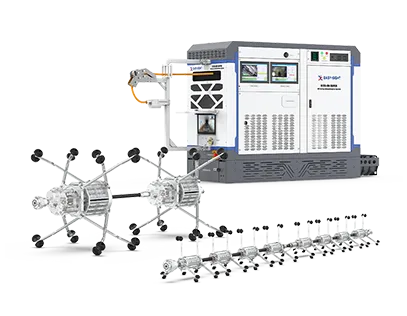
Pigging systems are designed for pipelines that have suitable geometry, access points, launchers, receivers, and operating conditions. I verify the smallest restriction, bend radius, valve and tee configuration, pressure, flow direction, bypass requirements, and tool recovery plan. A pigging system may be unsuitable for a complex municipal network even when it is appropriate for a continuous industrial or transmission pipeline.
The selection process should continue beyond the camera or robot specification. I use the following checklist when comparing suppliers and preparing a purchase request:
Cleaning is not an optional extra when deposits can hide defects or interfere with sensors. Grease, scale, roots, sediment, corrosion products, and standing water can reduce visibility, obstruct movement, or produce unreliable measurements. Before inspection, I define the cleaning method, debris removal plan, flow-control procedure, and verification point for confirming that the line is ready.
Access planning comes next. The team should map entry points, measure opening dimensions, identify traffic or site restrictions, verify power and lighting, and confirm whether the system can reach the entire target section. For long runs, cable length and retrieval strategy are as important as the camera specification because a system that cannot return safely or communicate across the full distance creates an incomplete inspection.
During the inspection, I record pipe identification, diameter, material, direction of travel, start and end points, flow conditions, cleaning status, equipment configuration, and any interruptions. The operator should document defects with consistent distance references and capture additional views when the forward camera angle does not show the full condition. For critical assets, a second review of the footage and measurement data should be included in the quality-assurance process.
Reporting should convert raw video or sensor files into maintenance decisions. A useful report identifies defect location, defect type, severity category, supporting images, measurement information, inspection limitations, and recommended follow-up. I also confirm whether the files remain accessible in standard formats and whether the pipeline inspection reporting software can transfer data into the owner’s asset-management system.
I use visual inspection as the starting point when the main question concerns blockage, joint condition, visible cracking, roots, debris, or general cleanliness. I add geometry or laser measurement when deformation, ovality, sagging, or clearance loss is suspected. I select sonar when water prevents a complete optical view, and I consider MFL or ultrasonic methods when corrosion, wall loss, or remaining thickness is the engineering concern.
Combination inspections are often justified when the pipeline has a high consequence of failure or when one technology cannot answer the full question. For example, CCTV may locate a visible corrosion area, while ultrasonic testing provides wall-thickness data. Similarly, sonar may show submerged geometry, while a crawler provides detailed images above the waterline.
The choice should be based on the decision that follows inspection. If the owner only needs to locate a blockage, a full NDT package may add unnecessary cost. If the result will determine pressure rating, rehabilitation, replacement, or continued operation, the inspection plan should produce measurements that support those decisions.
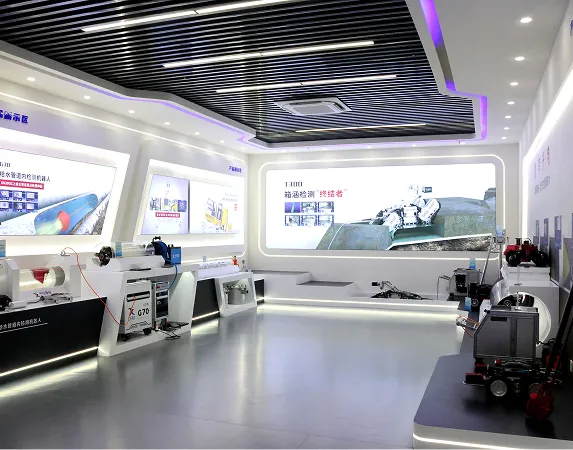
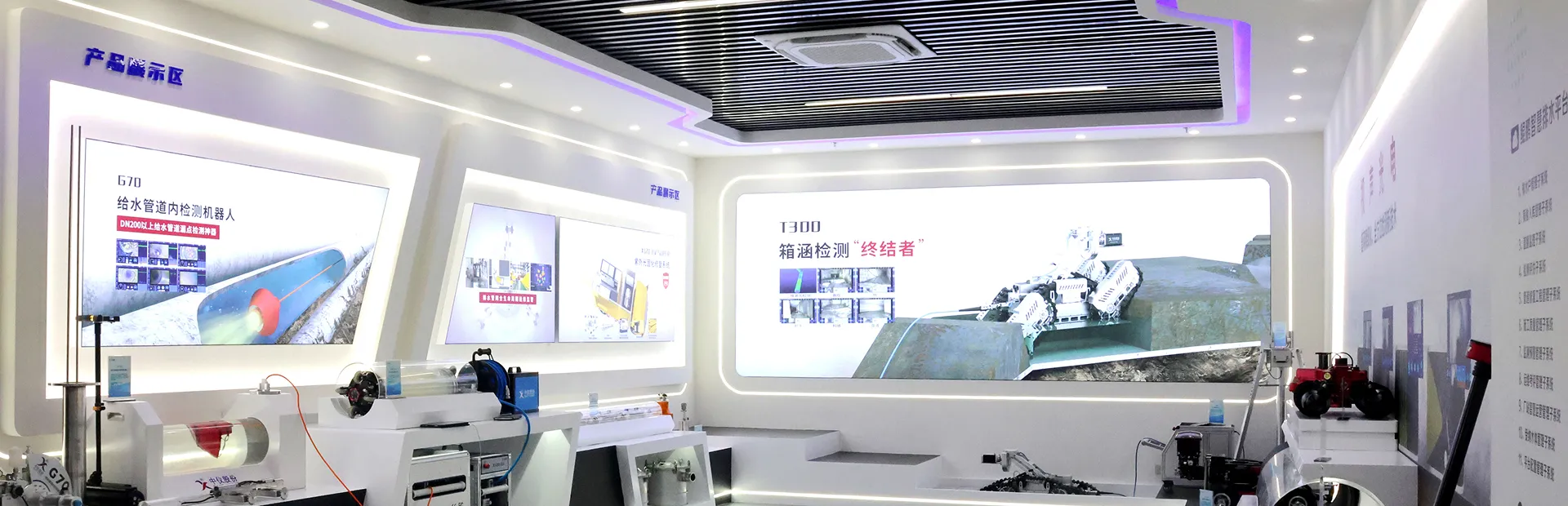
Easy-Sight provides pipeline inspection robots, cameras, sonar systems, diameter measurement tools, water-supply inspection systems, and rehabilitation equipment for urban water and drainage networks. Its published portfolio includes small-diameter detection, long-distance detection, high-precision detection, and all-terrain detection categories, which reflects the need to match equipment to both diameter and field conditions.
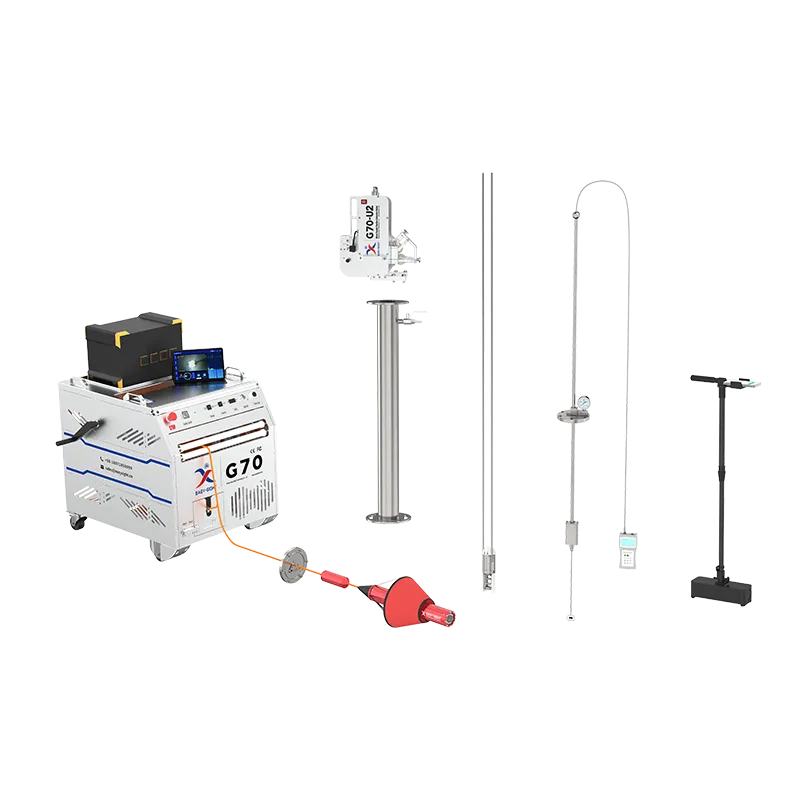
When reviewing a supplier such as Easy-Sight, I compare published specifications with the actual project requirements. Relevant data includes the listed pipe-diameter range, travel speed, inspection distance, waterproof rating, obstacle capability, leak-detection limits, and image or measurement system. The company reports more than 4,000 pipeline inspection robots deployed, service in more than 50 nations, and products such as the G70-U2 water-supply inspection robot for pipelines from DN200, with a listed inspection distance of 600 m.
Those figures should support a structured evaluation rather than replace field verification. I still request a technical datasheet, operating manual, sample report, training plan, spare-parts list, service response terms, and demonstration on a comparable pipe. The final purchase decision should reflect total ownership cost, including transport, operators, calibration, maintenance, batteries, software, replacement cameras, and downtime.
!
I begin by writing the inspection question in one sentence: what must the equipment prove, measure, or locate? I then document the smallest internal diameter, largest diameter, bends, access points, pipe material, operating medium, flow, water level, expected defects, required distance, and reporting format.
Next, I eliminate systems that fail any physical compatibility requirement. A camera that fits the straight section but cannot pass the smallest bend is not suitable, and a crawler with insufficient traction may produce incomplete footage even if its camera resolution is adequate. I also reject systems that cannot create the data format required by the asset owner or engineer.
Finally, I compare purchase price with lifecycle cost and inspection coverage. A lower-priced camera may be appropriate for short, low-risk visual checks, while a crawler, NDT tool, or combined system may produce better economic value for repeated inspections of critical infrastructure. I request field testing before approval and document the acceptance criteria in the purchase order.
This Pipe Inspection Equipment Selection Guide for Different Pipeline Diameters shows why diameter must be considered together with access, bends, pipe material, defect type, operating conditions, data requirements, and lifecycle cost. For narrow pipes, I prioritize camera-head size, flexibility, bend radius, and lighting. For medium and large pipelines, I focus more on crawler traction, adjustable clearance, cable length, obstacle handling, geometry measurement, sonar, and NDT compatibility.
The next practical step is to create a pipeline diameter inspection equipment chart for each asset group, then record the minimum clearance, access points, inspection objective, and required output. After that, compare suppliers using confirmed specifications, a field demonstration, sample reports, maintenance terms, and post-inspection support. A camera is sufficient for some visual questions, but geometry, MFL, ultrasonic, sonar, laser, or combined equipment is required when the inspection must quantify shape, wall condition, submerged areas, or structural risk.
Latest News
Sep.16,2026
Pipe Inspection Equipment Selection Guide for Different Pipeline Diameters
Sep.15,2026
How Digital Pipe Inspection Equipment Supports Smart Pipeline Management
Sep.04,2026
Technology for Safer Infrastructure | Easy-Sight Showcases Innovations at the 2026 High-Tech Launch Event in Hong Kong
Get Friendly Advice, Tailored to You!
Let's Talk About Your Project