How can we help you?
Recent Searches Clear All
News
For the inspection, repair, operation, and digital management of urban water supply and drainage networks
Sep.17,2026
Pipe Inspection Equipment cost depends on the system type, pipe diameter and length, imaging capability, deployment method, software, labor, maintenance, training, and support. A compact push camera may suit short residential lines, while a crawler system requires a larger investment for longer runs, larger diameters, stronger traction, measurement sensors, and structured reporting. I recommend evaluating the complete ownership cost instead of comparing purchase prices alone.
!
The largest cost differences come from equipment type, pipe size, inspection scope, and operating conditions. A basic camera for short indoor drainage lines has a different design requirement from a crawler robot inspecting hundreds of meters of municipal wastewater pipe. Imaging resolution, pan-and-tilt control, lighting, cable length, wheel configuration, waterproofing, locating functions, and reporting software also affect the final quotation.
I assess pipe inspection equipment cost through eight main categories:
Prices vary by configuration, region, camera specifications, cable length, software package, and after-sales support. The ranges below are budgetary planning estimates, not fixed quotations. A buyer should request a configuration-specific proposal that identifies included accessories, warranty coverage, shipping, taxes, training, and software terms.
| Equipment type | Typical planning range | Common application |
|---|---|---|
| Entry-level push camera | $2,000–$8,000 | Residential drains and short service lines |
| Professional push camera | $8,000–$25,000 | Plumbing contractors and property maintenance |
| Self-leveling camera system | $15,000–$40,000 | Commercial and larger-diameter pipe work |
| Compact crawler system | $30,000–$90,000 | Municipal and commercial wastewater inspections |
| Heavy-duty crawler robot | $80,000–$250,000+ | Long-distance, large-diameter, or difficult pipelines |
| Sonar or multi-sensor system | $60,000–$200,000+ | Submerged or partially blocked pipelines |
| Vehicle-mounted inspection package | $100,000–$350,000+ | High-volume contractors and utility programs |
A professional pipe inspection equipment cost estimate should separate the base machine from deployment items. The final investment may include a control console, cable reel, camera head, crawler, transport case, generator, locating transmitter, monitor, recording system, measurement tools, software, and vehicle modifications.
Push cameras are connected to a flexible rod or semi-rigid cable that the operator advances through a pipe. They are commonly used for residential sewer lines, branch connections, short commercial drains, and pre-purchase property surveys. Their lower mechanical complexity usually creates a lower initial investment, but the operator must physically push the camera and may have limited reach in long or heavily obstructed lines.
A basic system may provide a fixed camera head, LED lighting, a monitor, and video recording. A professional system can add a self-leveling head, sonde transmitter, distance counter, keyboard, digital reporting, and a larger cable reel. The additional functions increase purchase price but may reduce repeat visits by improving location accuracy and documentation.
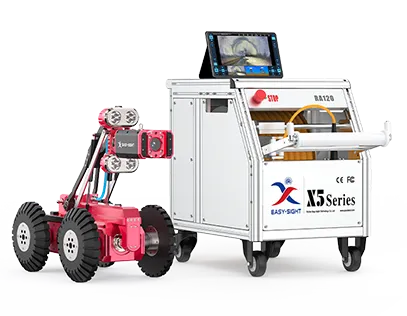
Crawler systems use powered wheels or tracks to move a camera through the pipe. They are more suitable for long inspection distances, larger diameters, standing water, and municipal or industrial networks. Their cost reflects the drive motors, traction control, camera articulation, cable management, waterproof housing, control software, and lifting or launch equipment.
For example, an inspection robot designed for DN200–1200 mm pipes requires a substantially different mechanical platform from a small-diameter camera. A system rated for 500 meters of inspection distance and a maximum travel speed of 41 meters per minute may also require a larger cable reel, stronger power supply, and more extensive operator training.
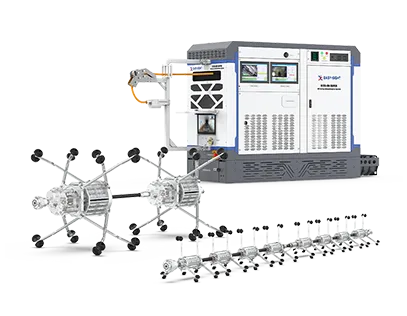
Standard CCTV cannot show every defect when a pipe contains standing water or sediment. Sonar can help profile submerged sections, while laser measurement can support diameter assessment, deformation measurement, or defect sizing. Leak detection, thickness measurement, and inertial mapping can also be added where the inspection objective extends beyond visual recording.
These functions may raise pipe inspection machine cost significantly, so I recommend defining the inspection question before selecting the sensor package. If the goal is simply to confirm a blockage location, a multi-sensor system may create unnecessary capital expense. If the objective is asset condition assessment for a utility program, the additional data may reduce the need for separate surveys.
Pipe diameter affects camera size, wheel configuration, lighting, stabilization, and access equipment. A camera designed for 100 mm community pipelines cannot automatically inspect a 1,000 mm culvert, and a large crawler may be impractical in a narrow residential line. Some systems use interchangeable wheels, camera lifts, or modular frames to cover several diameter ranges.
Inspection distance also changes equipment and labor requirements. A 30-meter service-line survey may require one operator and a portable reel, while a 500-meter sewer inspection may require traffic management, entry planning, cable handling, cleaning coordination, and a second technician. Longer projects increase fuel use, setup time, storage requirements, and exposure to equipment wear.
Operating conditions are equally important. Grease, grit, roots, inflow, corrosion, sharp offsets, and steep slopes can reduce camera travel and increase retrieval risk. Waterproof ratings, traction systems, cable strength, lighting output, and replaceable wear components should therefore be treated as cost-related specifications rather than optional features.
When I compare pipe inspection equipment for contractors, I focus on six measurable selection criteria.
The camera should produce an image clear enough to identify cracks, open joints, root intrusion, corrosion, deposits, and service connections under actual field lighting. Resolution alone does not determine useful output; lens design, lighting control, image stabilization, focus, camera rotation, and recording format also matter.
The reporting system should record pipe location, distance, defect notes, still images, video, operator information, and inspection date. If a contractor serves municipalities or engineering firms, compatibility with client reporting formats may influence equipment value more than a modest difference in camera resolution.
A system used in wastewater environments should be assessed for water resistance, impact protection, cable durability, corrosion resistance, and serviceability. Equipment with an IP68-rated component can offer stronger protection against water ingress, but the rating applies only under the stated test conditions and does not eliminate the need for cleaning and inspection after use.
I also examine whether wheels, camera windows, cable guides, connectors, lighting modules, and batteries can be replaced individually. A modular repair design can reduce downtime when a wear component fails during a busy inspection period.
Pipe diameter compatibility should match the contractor’s actual customer base rather than an optimistic future market. A plumbing contractor serving 100–300 mm lines may gain more from a compact system with flexible camera positioning than from a large crawler designed for municipal mains.
A municipal utility may need a broader range, such as small-diameter lateral inspection, DN200 or larger crawler operation, manhole imaging, sonar, or leak detection. Broader compatibility raises the initial budget but can reduce subcontracting and equipment rental costs.
Portability affects the number of jobs an operator can complete in a day. A compact reel and control unit may fit in a service vehicle, while a crawler package may require a dedicated inspection van, cable storage, power management, lifting equipment, and climate-controlled electronics storage.
Vehicle integration can add thousands or tens of thousands of dollars depending on the platform. I include shelving, inverter capacity, generator sizing, monitor mounting, lighting, cable routing, safety equipment, and weather protection in the initial cost model.
A lower purchase price may create a poor financial result if replacement parts require long shipping times or the supplier provides limited training. I ask for a spare-parts list, response time targets, warranty exclusions, software support terms, calibration requirements, and the expected service interval.
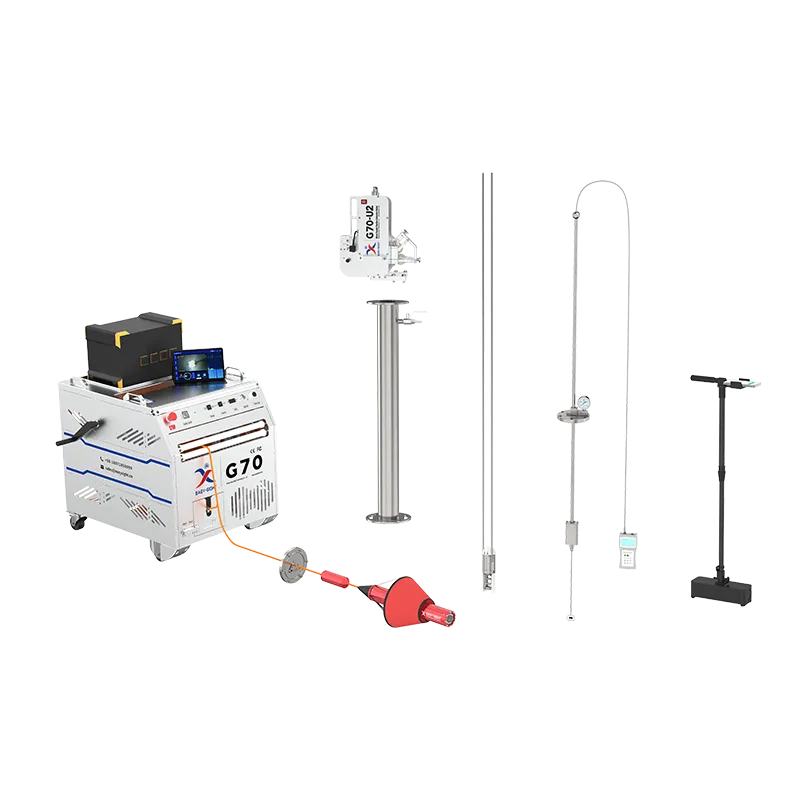
Easy-Sight, also known as Wuhan Zhongyi IoT Technology, presents itself as a pipeline technology company founded in 2010. Its product range includes crawlers, pole cameras, manhole cameras, sonar systems, long-distance detection systems, small-diameter systems, and high-precision inspection equipment. The company reports service in more than 50 countries and deployment of more than 4,000 pipeline inspection robots, but buyers should still evaluate the support structure available in their own region.
The purchase invoice is only one part of pipe inspection equipment maintenance costs. I recommend building a five-year ownership model that includes scheduled service, wear parts, repairs, calibration, software, training, insurance, data storage, vehicle expenses, and downtime.
| Cost category | Examples to include |
|---|---|
| Maintenance | Cleaning, lubrication, camera seals, wheels, cable guides, batteries |
| Repairs | Motors, camera heads, monitors, connectors, lighting modules, control boards |
| Calibration | Distance counters, measurement tools, laser systems, sensors |
| Software | Reporting licenses, cloud storage, updates, data export, user seats |
| Training | Initial instruction, refresher sessions, safety training, operator travel |
| Insurance | Equipment coverage, vehicle coverage, liability, theft protection |
| Consumables | Cleaning materials, protective covers, connectors, labels, recording media |
| Downtime | Lost billable hours, emergency rental, rescheduled projects, customer delays |
Software costs may be a one-time license, annual subscription, per-user charge, or project-based fee. Data storage also matters when each inspection produces high-resolution video, still images, reports, and backups. A contractor completing 10 inspections per week can accumulate a materially larger storage requirement than a company conducting occasional diagnostic work.
Training and operator costs should be calculated separately from wages. A new operator may require several days of instruction before producing consistent reports, and complex crawler or sonar systems may require additional field practice. If only one employee can operate the equipment, illness, vacation, or turnover can reduce utilization and increase the cost per inspection.
New versus used pipe inspection equipment should be evaluated through condition, remaining service life, support availability, and expected utilization. Used equipment may reduce initial capital requirements by 30% to 60%, but the discount can disappear if the camera head, cable reel, crawler motors, or control console require immediate replacement.
Before buying used equipment, I request a complete operating demonstration and inspect the cable for cuts, flattening, stiffness, and water damage. I also test camera articulation, lighting, recording, distance measurement, locating functions, wheel traction, connectors, battery capacity, and software access. The seller should provide serial numbers, maintenance records, repair history, and confirmation that replacement parts remain available.
New equipment generally offers current software, warranty coverage, configuration support, and clearer training arrangements. It may be preferable when the system will support municipal contracts, regulatory documentation, or daily commercial work where downtime has a direct revenue impact. Used equipment can make sense for a startup or low-volume contractor when an experienced technician can evaluate and maintain it.
The right choice depends on annual inspection volume, required capability, scheduling needs, and the cost of service interruption. Buying usually becomes more attractive when a contractor can maintain consistent utilization and charge inspection revenue across enough jobs to cover fixed costs. Renting is useful for occasional projects or specialized inspections that do not justify permanent ownership.
Hiring an inspection provider may be the most economical option when the work is infrequent, technically complex, or outside the company’s normal service area. It avoids capital expenditure, operator training, maintenance, software, insurance, and equipment storage. However, external scheduling, mobilization fees, and limited control over inspection timing should be included in the comparison.
A simple break-even calculation is:
Break-even inspections = Total annual ownership cost ÷ Contribution margin per inspection
For example, if annual ownership costs total $45,000 and the contribution margin is $450 per completed inspection, the business needs 100 inspections per year to cover those costs. This calculation should include expected downtime and realistic utilization rather than assuming every working day produces billable inspection hours.
Residential work often prioritizes portability, quick setup, moderate cable length, locating capability, and simple customer reports. A professional push camera may be sufficient for many jobs, while a crawler system could add cost without improving the typical inspection result.
The financial return depends on call volume, average inspection price, travel time, and the ability to identify additional repair work without overstating findings. A compact system may achieve better utilization because it can remain in a service vehicle and be operated by one technician.
Municipal programs often require repeatable coding, GPS or GIS references, distance accuracy, defect classification, asset records, and longer inspection distances. Crawler systems, manhole cameras, sonar, diameter gauges, and structured software may be required across the network.
The initial investment is higher, but the value is measured through coverage, data consistency, reduced emergency excavation, maintenance prioritization, and contract capacity. Equipment specifications should be matched to pipe diameter ranges, expected annual kilometers, access conditions, and reporting standards.
Industrial inspections may involve aggressive chemicals, process residues, confined spaces, heat, restricted access, and strict safety procedures. Equipment selection may require specialized materials, remote operation, protective housings, and additional documentation.
The cost model should include decontamination, permits, standby time, safety personnel, and production disruption. In this environment, a less expensive system can become uneconomical if it cannot tolerate the operating conditions or produce documentation accepted by the facility owner.
Oil and gas pipeline inspection can require specialized sensing, hazardous-area procedures, pressure considerations, corrosion assessment, and regulatory documentation. A standard sewer camera should not be assumed suitable for these environments.
The appropriate system may involve separate engineering review, certifications, sensor packages, and trained personnel. Buyers should obtain written confirmation that the equipment configuration is suitable for the intended environment before calculating return on investment.
I suggest using this ownership model when estimating pipe inspection equipment investment:
Five-year total cost = Purchase price + deployment cost + software + training + maintenance + repairs + insurance + storage + financing − resale value
Then calculate the cost per inspection:
Cost per inspection = Five-year total cost ÷ Expected completed inspections
A contractor purchasing a $35,000 camera package may spend another $10,000 on vehicle integration, training, software, accessories, and initial spares. If five-year ownership costs reach $75,000 and the contractor completes 500 inspections, the equipment-related cost averages $150 per inspection before labor, fuel, and customer acquisition costs.
Utilization is the critical variable. At 100 inspections, the same equipment cost averages $750 per inspection; at 1,000 inspections, it averages $75. This difference explains why a system can be financially sensible for a high-volume contractor but difficult to justify for a company with occasional inspection demand.
I recommend making the decision in this order:
I also compare equipment demonstrations using the same test pipe, lighting conditions, pipe diameter, distance, and reporting requirement. This provides a more useful comparison than relying on isolated specifications. The final decision should show how the selected system affects billable capacity, report quality, avoided subcontracting, and emergency response.
Pipe inspection equipment cost is driven by system type, pipe diameter, inspection distance, imaging and sensor capability, deployment requirements, operating conditions, software, maintenance, training, and support. A push camera may be the right financial choice for short residential work, while a crawler, sonar platform, or multi-sensor robot may be necessary for municipal, industrial, or long-distance inspections.
I recommend comparing the five-year total ownership cost rather than the equipment invoice alone. Include vehicle integration, spare parts, calibration, software, data storage, insurance, operator training, downtime, and expected resale value. Then calculate the number of inspections required to reach break-even.
For a practical purchasing decision, document your pipe diameter range, annual inspection volume, required reporting format, operating environment, and acceptable downtime. Compare new, used, rental, and outsourced options against those requirements, and request a configuration-specific quote before committing capital. When the equipment matches the work profile and reaches a realistic utilization rate, the investment can reduce subcontracting costs, improve inspection capacity, and support more consistent maintenance decisions.
Latest News
Sep.17,2026
Pipe Inspection Equipment Cost Factors: What Affects the Investment?
Sep.16,2026
Pipe Inspection Equipment Selection Guide for Different Pipeline Diameters
Sep.15,2026
How Digital Pipe Inspection Equipment Supports Smart Pipeline Management
Get Friendly Advice, Tailored to You!
Let's Talk About Your Project