

How can we help you?

Recent Searches Clear All

    How to choose the Right Pipeline Inspection Robot for Your Project

    May.19,2026

    Selecting the right pipeline inspection robot is essential for ensuring safety, accuracy, and efficiency in modern pipeline maintenance projects. Whether you are working in municipal sewer systems, industrial pipelines, or oil and gas infrastructure, the right robotic solution can significantly reduce operational risks and improve inspection outcomes. This guide will help you understand the key factors to consider when choosing a pipeline inspection robot for your project, including features, technologies, environments, and budget considerations.

    Understanding Pipeline Inspection Robots

    A pipeline inspection robot is an advanced robotic system designed to navigate through pipelines and collect visual and sensor data. These robots are commonly used for sewer inspection, drainage systems, industrial pipe monitoring, and underground infrastructure assessment. Modern pipeline inspection robots often come equipped with high-definition cameras, sonar systems, laser profiling, and remote control capabilities.

    The main purpose of a pipeline inspection robot is to detect issues such as cracks, corrosion, blockages, and structural weaknesses without the need for manual entry. This reduces human risk and improves inspection efficiency significantly.


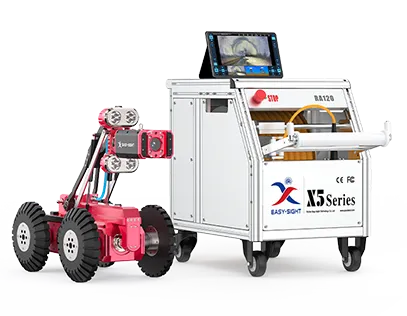
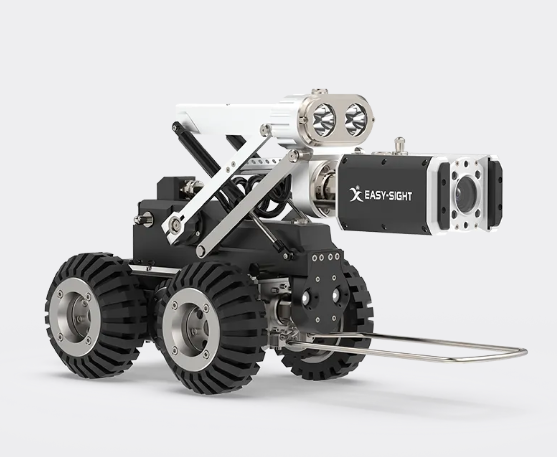
    X5-HMA4 Pipeline CCTV Inspection Robot

    Key Factors to Consider When Choosing a Pipeline Inspection Robot

    1. Pipeline Diameter and Compatibility

    One of the most important factors in selecting a pipeline inspection robot is the pipe diameter range. Robots are designed for specific pipe sizes, and choosing the wrong size can result in poor mobility or incomplete inspections. Always ensure that the robot can operate effectively within your pipeline dimensions, whether it is small residential piping or large industrial pipelines.

    2. Inspection Environment

    Different pipeline environments require different robotic capabilities. For example, wastewater systems often contain debris and water flow, while industrial pipelines may contain chemicals or high temperatures. A reliable pipeline inspection robot should be waterproof, corrosion-resistant, and capable of operating in harsh environments.

    3. Camera and Imaging Quality

    High-resolution imaging is critical for accurate pipeline inspection. Look for robots equipped with HD or 4K cameras, strong LED lighting, and wide-angle lenses. Some advanced models also offer pan-tilt-zoom (PTZ) functionality, allowing operators to examine defects in greater detail.

    4. Mobility and Navigation System

    The mobility system determines how well the robot can move through bends, slopes, and uneven surfaces inside pipelines. Multi-wheel drive systems, tracked designs, and self-leveling mechanisms enhance stability and navigation. A good pipeline inspection robot should maintain steady movement even in complex pipeline structures.

    5. Data Transmission and Control System

    Real-time data transmission is essential for efficient inspection. Most modern robots use wired or wireless communication systems to transmit video and sensor data to the operator. A user-friendly control system with intuitive software improves efficiency and reduces operator training time.

    Advanced Features to Look For

    Sensor Integration

    Advanced pipeline inspection robots often integrate multiple sensors such as ultrasonic sensors, gas detectors, and laser profiling tools. These features provide a more comprehensive understanding of pipeline conditions beyond visual inspection.

    AI and Automated Analysis

    Artificial intelligence is increasingly used in pipeline inspection robots to automatically detect defects, classify damage, and generate inspection reports. This reduces manual analysis time and improves accuracy.

    Modular Design

    A modular design allows users to upgrade or replace components such as cameras, wheels, or sensors. This increases flexibility and extends the lifespan of the pipeline inspection robot.

    Industry Applications of Pipeline Inspection Robots

    Pipeline inspection robots are widely used across various industries. In municipal engineering, they help inspect sewer and drainage systems. In oil and gas, they are used to monitor long-distance pipelines for leaks and corrosion. Industrial facilities use them to maintain internal piping systems and ensure operational safety.

    Companies such as Easy-Sight provide advanced robotic inspection solutions designed for complex pipeline environments. Their systems are widely applied in municipal and industrial inspection projects due to their reliability and performance.

    Cost vs Performance Considerations

    When selecting a pipeline inspection robot, it is important to balance cost and performance. Lower-cost models may offer basic functionality but lack advanced features such as AI analysis or high-resolution imaging. High-end systems provide better accuracy and durability but require higher investment.

    Always evaluate the long-term return on investment. A more advanced pipeline inspection robot can reduce maintenance costs and improve inspection efficiency over time.

    Maintenance and Support

    Maintenance is another key factor when choosing a robot. Look for systems that are easy to clean, repair, and upgrade. Reliable technical support and spare parts availability are also important for minimizing downtime.

    Some manufacturers like Easy-Sight offer comprehensive after-sales service and technical training, helping operators maximize the performance of their inspection systems.

    Conclusion

    Choosing the right pipeline inspection robot requires careful consideration of pipeline conditions, technical features, and long-term operational needs. By evaluating factors such as mobility, imaging quality, sensor integration, and system durability, you can select a solution that improves inspection accuracy and efficiency. A well-chosen robot not only enhances safety but also reduces operational costs and downtime, making it a valuable investment for any infrastructure project.


    999.jpg

    FAQs

    1. What is a pipeline inspection robot used for?

    A pipeline inspection robot is used to inspect internal pipeline conditions without human entry. It helps detect cracks, leaks, corrosion, and blockages in sewer, industrial, and utility pipelines. These robots improve safety and efficiency by providing real-time visual and sensor data from inside the pipeline.

    2. How do I choose the right pipeline inspection robot size?

    The size of the robot should match the diameter of the pipeline you are inspecting. Small robots are used for narrow residential pipes, while larger tracked systems are suitable for industrial pipelines. Always check the manufacturer’s specifications before purchasing.

    3. Can pipeline inspection robots work in water-filled pipes?

    Yes, many pipeline inspection robots are designed to operate in partially or fully water-filled pipelines. These models are waterproof and often include flotation or tracked systems to ensure stability during underwater inspections.

    4. What technologies are used in modern pipeline inspection robots?

    Modern pipeline inspection robots use technologies such as HD video imaging, sonar scanning, laser profiling, and AI-based defect detection. These technologies help provide more accurate and detailed inspection results.

    5. Are pipeline inspection robots cost-effective for small projects?

    Yes, even for small projects, pipeline inspection robots can be cost-effective. They reduce the need for manual labor, improve inspection accuracy, and prevent costly pipeline failures. Entry-level models are available for smaller budgets while still providing reliable performance.

    Latest News

    Get Friendly Advice, Tailored to You!

    Related Products

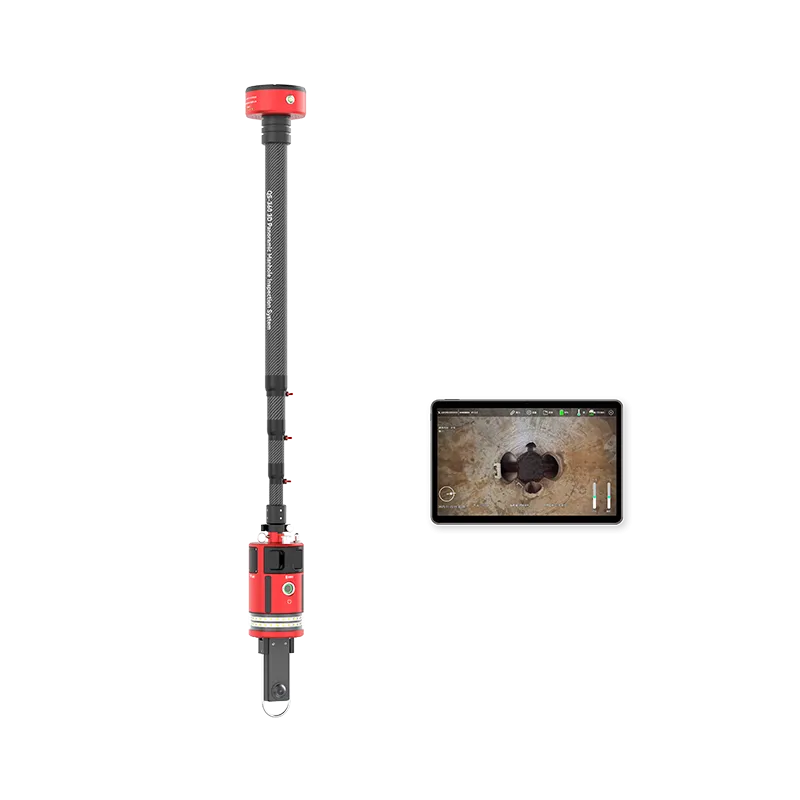
    QS-360 3D Panoramic Surveying System

    The QS-360 3D Panoramic Surveying System is a handheld inspection device capable of rapidly and accurately detecting defects and other parameters in inspection wells. The system consists of a 360° panoramic camera, a control rod, and a control system. 
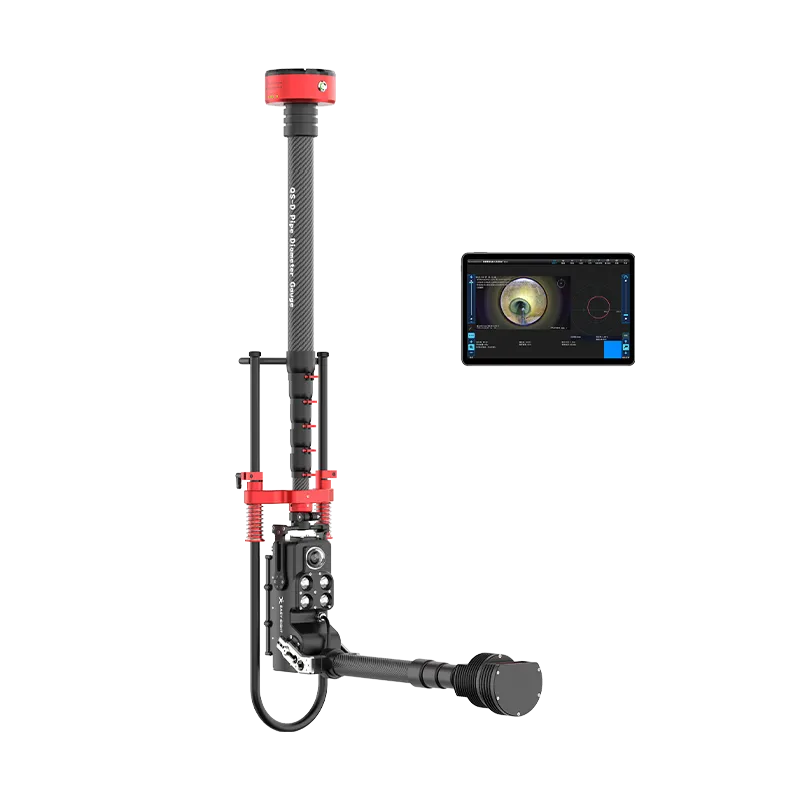
    QS-D Pipe Diameter Gauge

    The QS-D Pipe Diameter Gauge is a millimeter-grade intelligent detection device capable of accurately and rapidly measuring core parameters such as pipeline diameter. 


    With a measurement accuracy of ±2 mm and an error within 0.2%, it provides precise data support for pipeline rehabilitation design. 


    The product employs a high-precision laser probe that extends into the pipeline, utilizing a 360° full-circumference scanning mode to rapidly collect high-density cross-sectional data of the inner pipe wall. 
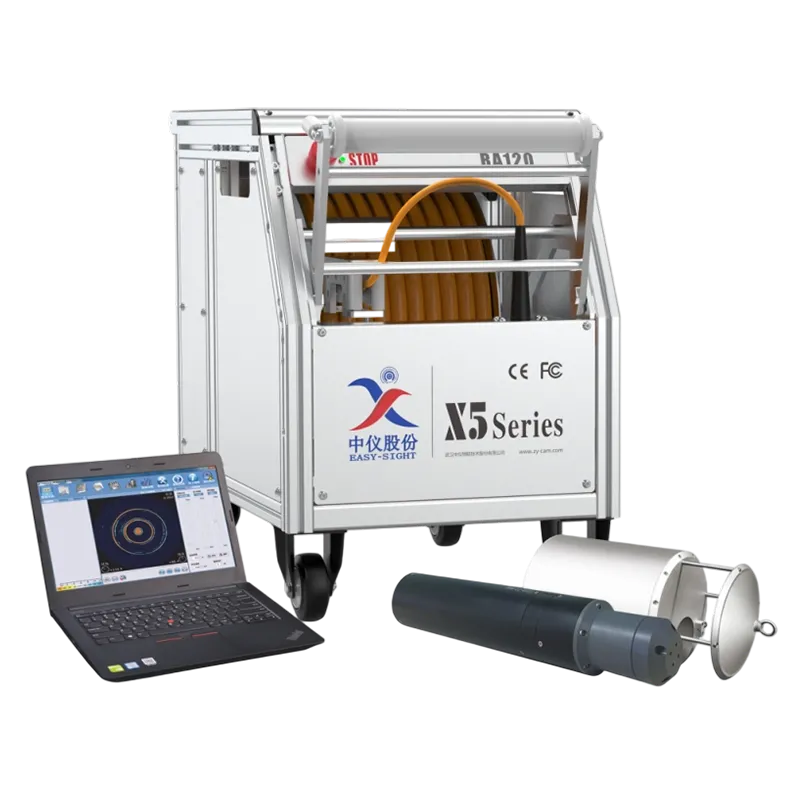
    X4 Pipe Sonar System

    X4 Pipeline Sonar Sewer Inspection Equipment/System is mainly used for the detection of water-carrying pipes (full water or above 2/3 of the water level), inspection wells, or underground cavities. 


    It automatically analyzes and extracts the inner wall contour, establishes a three-dimensional model, and performs the quantitative analysis.
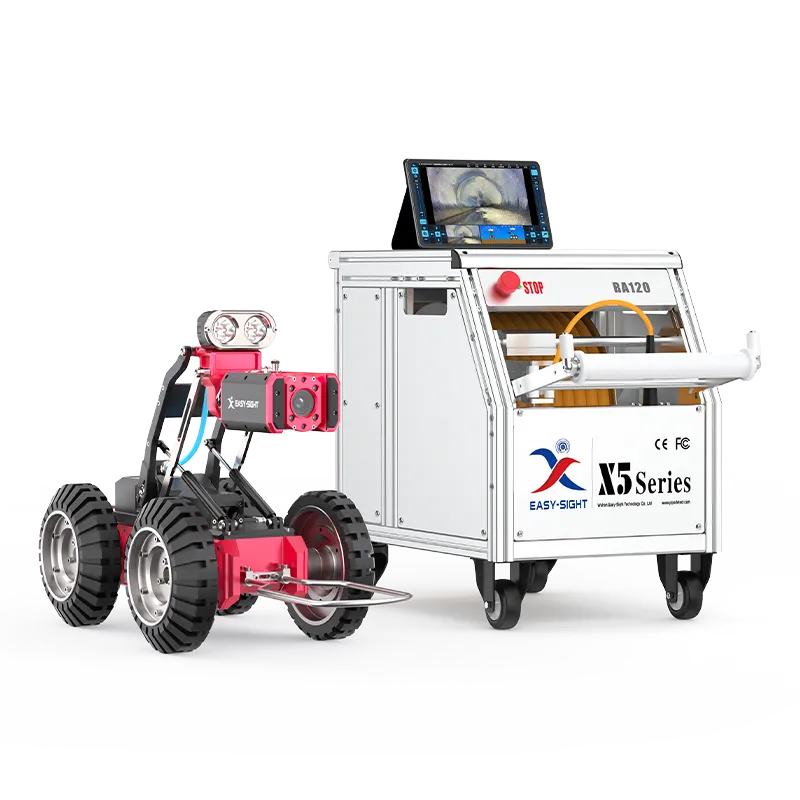
    X5-HT4 Pipeline CCTV Inspection Robot

    The X5-HT4 pipeline CCTV inspection robot is a high-definition inspection system that uses a tablet as the primary control unit. 


    The main controller connects wirelessly to other system components to display and store high-definition inspection video in real time. 


    The X5-HT4 pipeline CCTV inspection robot comprises four main parts: the crawler, the camera, the cable reel, and the main control unit. 
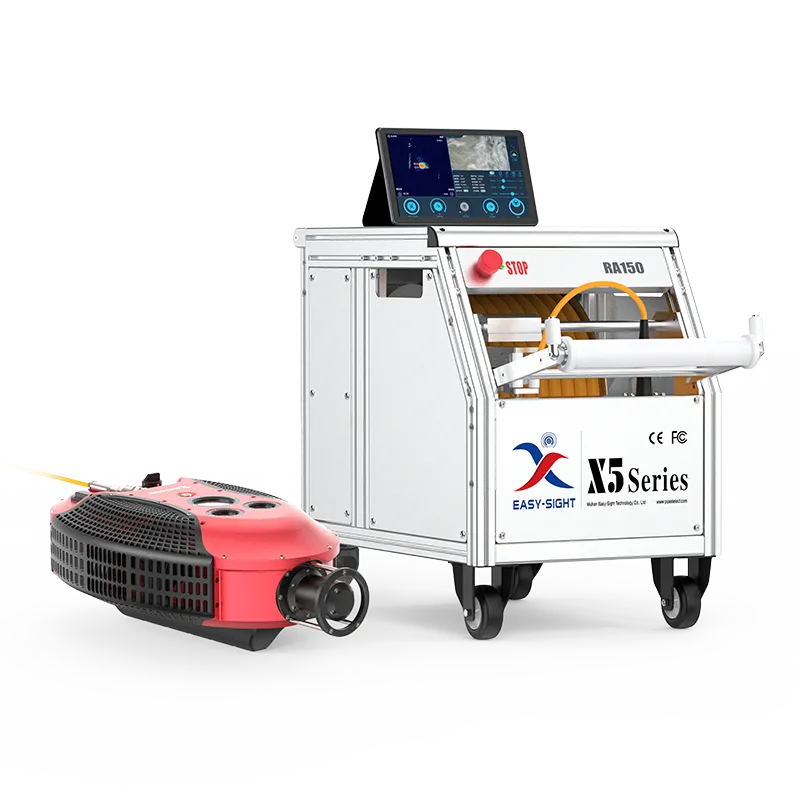
    X7-DM Pipeline Power Sonar System

    The X7-DM Pipeline Power Sonar system consists of three main components: an underwater powered thruster, a cable reel, and a main control unit. 


    It is suitable for inspecting pipelines with diameters of DN350mm and above, as well as box culverts and rivers, under conditions of high water levels or complete submersion. 


    The system features a unique underwater submersible with a maximum travel speed of 1 meter per second.
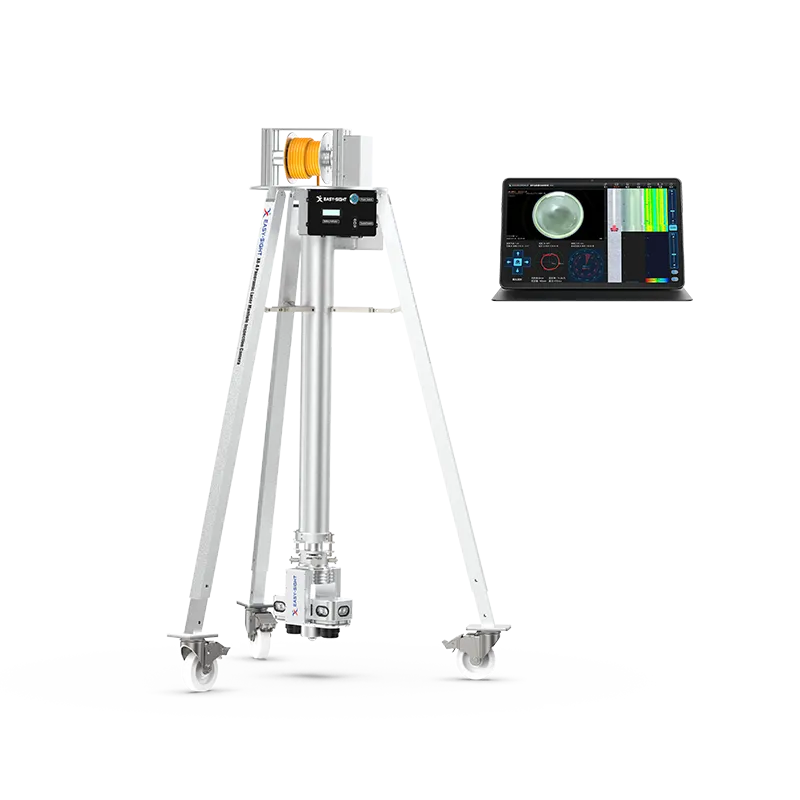
    X8-A Panoramic Laser Shaft Surveying System

    The X8-A Panoramic Laser Shaft Surveying System consists of hardware equipment, the PipeWell shaft panoramic quantification inspection software, and the PipeProf pipeline quantification analysis software. 


    It is primarily used for inspecting various types of inspection shafts. The system operates under the control of the PipeWell software to collect data within the shaft. 


    The acquired information is then processed by the PipeProf software, which can generate professional data reports. 
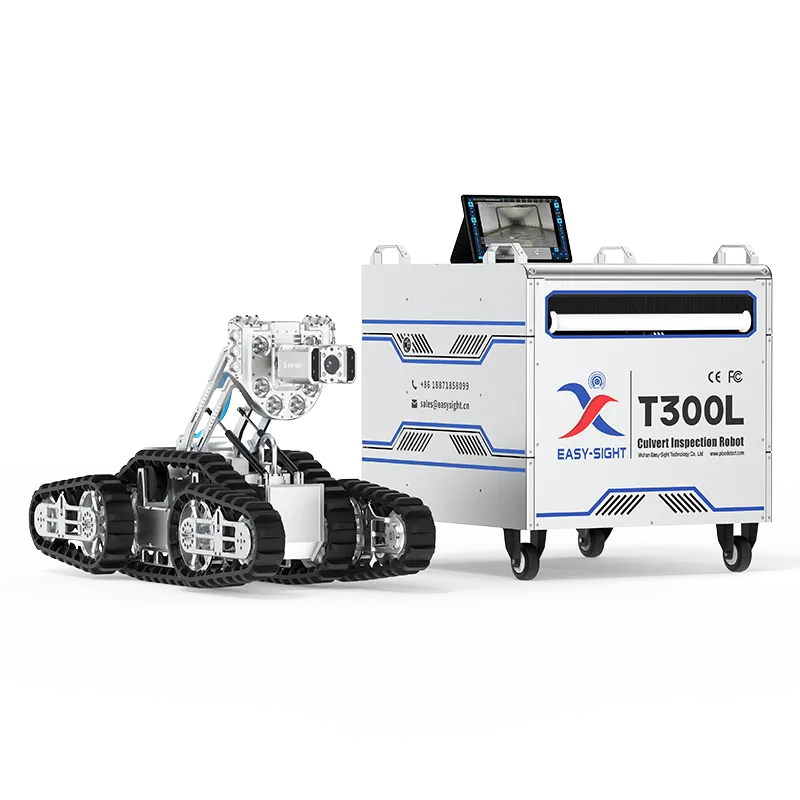
    T300L2 Box Culvert Inspection Robot

    The T300L2 box culvert inspection robot consists of a tracked crawler, a cable reel, and a control terminal. The crawler utilizes a new track structure equipped with front and rear swing arms, enabling multiple posture adjustments. 
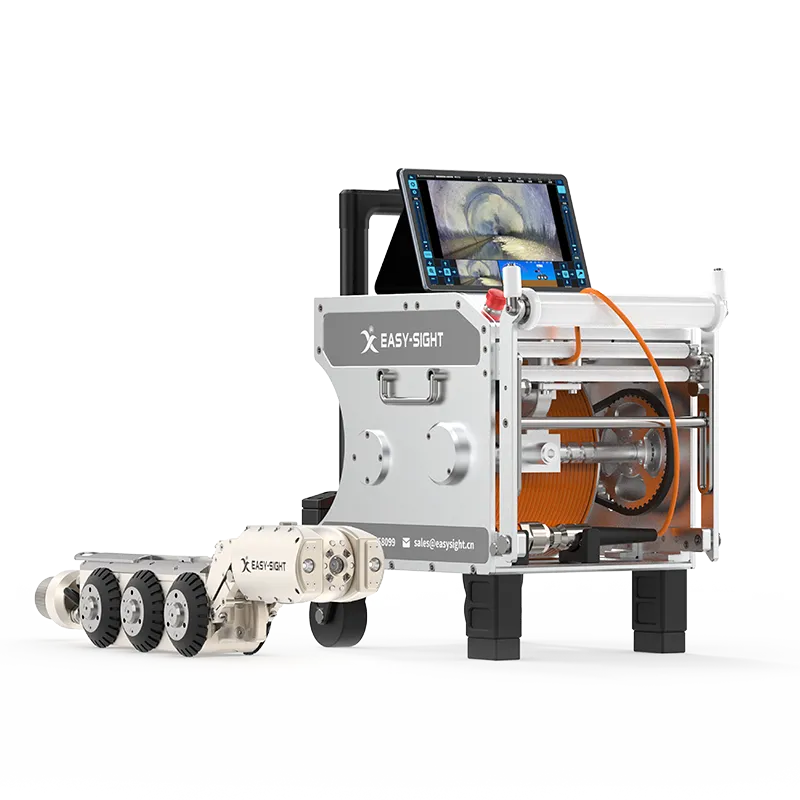
    X5-HM100 Pipeline CCTV Inspection Robot

    The X5-HM100 is a compact HD pipeline CCTV inspection robot system, utilizing a tablet as the master control unit. The master control connects wirelessly to other system components, enabling real-time display and recording of high-definition inspection videos. It is suitable for inspecting community small-diameter pipelines and municipal storm/sewer pipelines from DN100 to DN250.

    Let's Talk About Your Project

    • Afghanistan
    • Albania
    • Algeria
    • American Samoa
    • Andorra
    • Angola
    • Anguilla
    • Antarctica
    • Antigua and Barbuda
    • Argentina
    • Armenia
    • Aruba
    • Australia
    • Austria
    • Azerbaijan
    • Bahamas
    • Bahrain
    • Bangladesh
    • Barbados
    • Belarus
    • Belgium
    • Belize
    • Benin
    • Bermuda
    • BBhutan
    • Bolivia
    • Bosnia and Herzegovina
    • Botswana
    • Bouvet Island
    • Brazil
    • British Indian Ocean Territory
    • Brunei Darussalam
    • Bulgaria
    • Burkina Faso
    • Burundi
    • Cambodia
    • Cameroon
    • Canada
    • Cape Verde
    • Cayman Islands
    • Central African Republic
    • Chad
    • Chile
    • China
    • Christmas Island
    • Cocos (Keeling) Islands
    • Colombia
    • Comoros
    • Congo
    • Cook Islands
    • Costa Rica
    • Cote D'Ivoire
    • Croatia
    • Cuba
    • Cyprus
    • Czech Republic
    • Denmark
    • Djibouti
    • Dominica
    • East Timor
    • Ecuador
    • Egypt
    • El Salvador
    • Equatorial Guinea
    • Eritrea
    • Estonia
    • Ethiopia
    • Falkland Islands (Malvinas)
    • Faroe Islands
    • Fiji
    • Finland
    • France, Metropolitan
    • French Guiana
    • French Polynesia
    • Gabon
    • Gambia
    • Georgia
    • Germany
    • Ghana
    • Gibraltar
    • Greece
    • Greenland
    • Grenada
    • Guadeloupe
    • Guam
    • Guatemala
    • Guinea
    • Guinea-Bissau
    • Guyana
    • Haiti
    • Honduras
    • Hong Kong, China
    • Hungary
    • Iceland
    • India
    • Indonesia
    • Iran (Islamic Republic of)
    • Iraq
    • Ireland
    • Israel
    • Italy
    • Jamaica
    • Japan
    • Jordan
    • Kazakhstan
    • Kenya
    • Kiribati
    • North Korea
    • South Korea
    • Kuwait
    • Kyrgyzstan
    • Lao People's Democratic Republic
    • Latvia
    • Lebanon
    • Lesotho
    • Liberia
    • Libyan Arab Jamahiriya
    • Liechtenstein
    • Lithuania
    • Luxembourg
    • Macau
    • Madagascar
    • Malawi
    • Malaysia
    • Maldives
    • Mali
    • Malta
    • Marshall Islands
    • Martinique
    • Mauritania
    • Mauritius
    • Mayotte
    • Mexico
    • Micronesia
    • Moldova
    • Monaco
    • Mongolia
    • Montserrat
    • Morocco
    • Mozambique
    • Myanmar
    • Namibia
    • Nauru
    • Nepal
    • Netherlands
    • New Caledonia
    • New Zealand
    • Nicaragua
    • Niger
    • Nigeria
    • Niue
    • Norfolk Island
    • Northern Mariana Islands
    • Norway
    • Oman
    • Pakistan
    • Palau
    • Panama
    • Papua New Guinea
    • Paraguay
    • Peru
    • Philippines
    • Pitcairn
    • Poland
    • Portugal
    • Puerto Rico
    • Qatar
    • Reunion
    • Romania
    • Russian Federation
    • Rwanda
    • Saint Kitts and Nevis
    • Saint Lucia
    • Saint Vincent and the Grenadines
    • Samoa
    • San Marino
    • Saudi Arabia
    • Senegal
    • Seychelles
    • Sierra Leone
    • Singapore
    • Slovak Republic
    • Slovenia
    • Solomon Islands
    • Somalia
    • South Africa
    • Spain
    • Sri Lanka
    • St. Helena
    • Sudan
    • Suriname
    • Swaziland
    • Sweden
    • Switzerland
    • Syrian Arab Republic
    • Taiwan, China
    • Tajikistan
    • Tanzania
    • Thailand
    • Togo
    • Tokelau
    • Tonga
    • Trinidad and Tobago
    • Tunisia
    • Turkey
    • Turkmenistan
    • Turks and Caicos Islands
    • Tuvalu
    • Uganda
    • Ukraine
    • United Arab Emirates
    • United Kingdom
    • United States
    • Uruguay
    • Uzbekistan
    • Vanuatu
    • Vatican City State (Holy See)
    • Venezuela
    • Viet Nam
    • Virgin Islands (U.S.)
    • Wallis and Futuna Islands
    • Western Sahara
    • Yemen
    • Zambia
    • Zimbabwe
    • Montenegro
    • Serbia
    • Palestine
    • South Sudan
    • Jersey
    sales@easysight.cn
    +86 188 7185 8099