How can we help you?
Recent Searches Clear All
News
For the inspection, repair, operation, and digital management of urban water supply and drainage networks
Jun.12,2026
Urban box culverts are critical components of municipal underground infrastructure, serving essential functions such as stormwater drainage, utility management, and underground space maintenance. Compared with conventional municipal pipelines, box culverts feature larger internal spaces and more complex operating environments. Due to poor ventilation and confined conditions, manual inspections often involve significant safety risks.
With their unmanned operation, high-precision data collection, and comprehensive inspection capabilities, pipeline inspection robots have become indispensable tools for the intelligent maintenance of large box culverts. Adhering to standardized operating procedures and mastering key safety inspection techniques under complex working conditions are crucial for ensuring inspection accuracy, minimizing operational risks, and improving maintenance quality.
As confined spaces, box culverts may accumulate toxic or hazardous gases and present additional risks such as standing water, slippery surfaces, structural deterioration, and debris blockages. Therefore, comprehensive safety preparations must be completed before any inspection work begins.
Inspection personnel should conduct a thorough site survey in advance to assess access points, surrounding traffic conditions, water accumulation levels, and debris distribution. Dedicated work zones should be established with appropriate safety barriers and warning signs to prevent unauthorized personnel and vehicles from entering the operating area.
Adequate ventilation and gas monitoring are also critical. Ventilation equipment should be deployed to continuously circulate fresh air within the confined space and reduce hazardous gas concentrations. Gas levels must be monitored in real time throughout the operation, and inspection work should only commence once all safety parameters meet regulatory requirements.
In addition, the overall condition of the pipeline inspection robot must be carefully verified. The mobility system, HD camera system, power supply, and communication system should be thoroughly tested. Equipment parameters should be adjusted according to site conditions such as water depth, sludge accumulation, and elevation changes to ensure optimal performance in complex environments.
When operating pipeline inspection robots in complex box culvert environments, the primary objectives are stable operation, full coverage, high inspection accuracy, and fault prevention.
In areas with significant water accumulation or heavy sludge deposits, the robot should travel at a controlled and consistent low speed. Excessive speed may cause sludge disturbance, wheel slippage, or trajectory deviation, potentially compromising image quality and creating inspection blind spots. Maintaining stable movement helps ensure clear video recording and complete inspection coverage.
When encountering obstacles such as debris, uneven surfaces, elevation changes, ramps, or structural irregularities, operators should remotely guide the robot through these areas with caution. Forced passage should be avoided to prevent equipment jamming, rollover incidents, or mechanical failures.
Throughout the inspection process, high-definition video footage and defect data should be continuously recorded and preserved to ensure the integrity, accuracy, and traceability of inspection results.
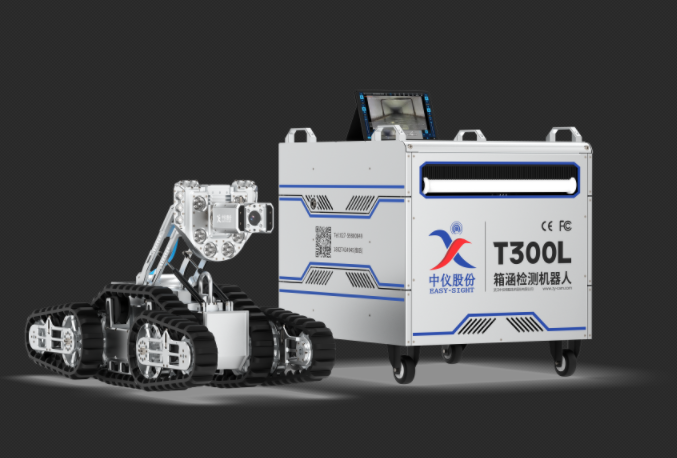
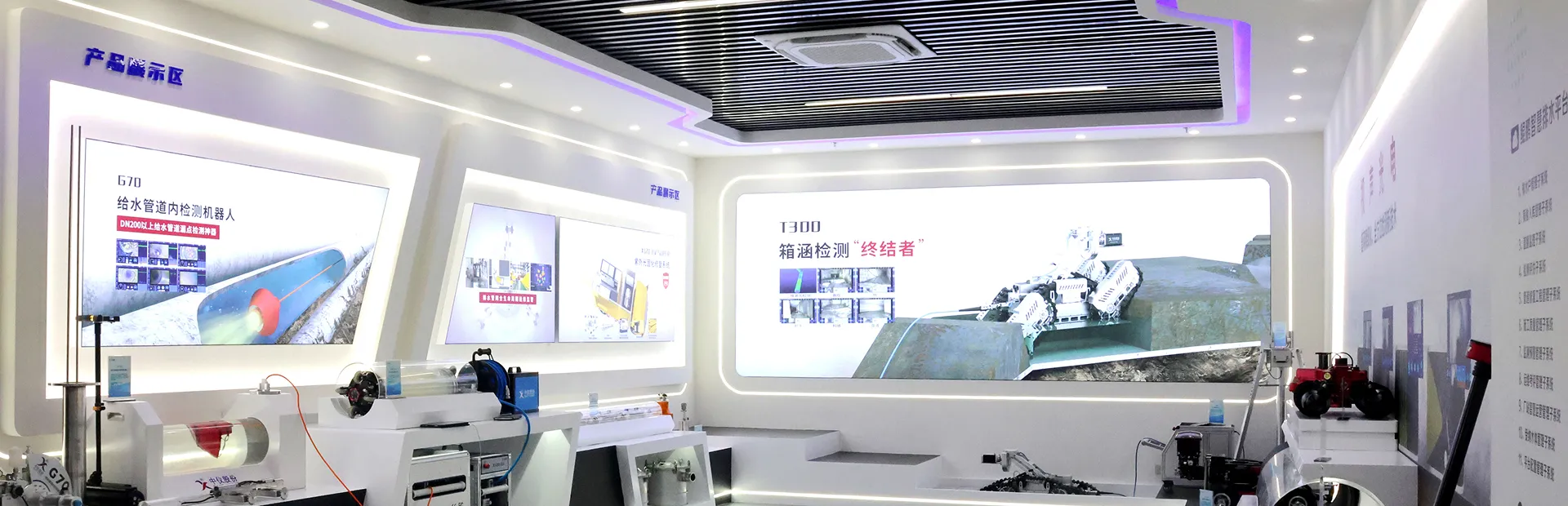
(The T300 Pipeline Inspection Robot fully meets the above safety and technical requirements.)
Upon completion of the inspection, proper shutdown and maintenance procedures should be followed to protect both equipment and collected data.
The pipeline inspection robot should be promptly retrieved from the culvert, and any attached sludge, water, or debris should be removed. A comprehensive inspection of critical components should be conducted to identify wear or damage. Regular cleaning and maintenance help prevent corrosion caused by harsh environmental conditions and extend the service life of the equipment.
At the same time, all inspection data—including video footage, defect locations, structural damage records, and measurement parameters—should be systematically organized and archived. Inspection coverage must be verified to ensure that no sections have been missed or incorrectly assessed.
Accurate inspection data provides a reliable foundation for subsequent pipeline condition assessments, defect remediation planning, maintenance activities, repair projects, and engineering acceptance procedures.
Box culvert maintenance presents considerable operational challenges and safety risks, making traditional manual inspection methods increasingly inadequate for modern municipal infrastructure management.
By utilizing advanced pipeline inspection robots and implementing standardized procedures—including site assessment, equipment calibration, systematic inspection, and post-operation verification—municipal authorities and service providers can significantly reduce operational risks while improving inspection accuracy and coverage.
These intelligent inspection technologies are accelerating the transition toward more refined, efficient, and data-driven management of large underground structures, ultimately enhancing the safety, reliability, and long-term performance of urban drainage and utility networks.
Latest News
Sep.18,2026
Common Problems Detected by Modern Pipe Inspection Equipment
Sep.17,2026
Pipe Inspection Equipment Cost Factors: What Affects the Investment?
Sep.16,2026
Pipe Inspection Equipment Selection Guide for Different Pipeline Diameters
Get Friendly Advice, Tailored to You!
Let's Talk About Your Project