How can we help you?

Recent Searches Clear All

    Pipeline Inspection Cameras: Types and Uses Explained

    Mar.20,2026

    Pipeline systems are essential to modern infrastructure. They transport water, oil, gas, chemicals, and wastewater across cities, industrial plants, and commercial buildings. However, because pipelines are often buried underground or hidden within structures, diagnosing problems inside them can be difficult without specialized equipment.

    This is where pipeline inspection cameras play a critical role. A pipeline inspection camera allows technicians to visually inspect the interior of pipes and drainage systems without excavation or dismantling the pipeline. By delivering real-time video footage, these devices help identify blockages, corrosion, cracks, root intrusion, and other structural issues.

    In industries such as plumbing, municipal maintenance, oil and gas, and manufacturing, pipeline inspection cameras have become an indispensable diagnostic tool. Modern systems combine high-resolution cameras, flexible cables, LED lighting, and digital recording capabilities to provide clear visual data from deep within pipelines.

    This article explains what pipeline inspection cameras are, the main types available, and their most common applications, helping businesses and technicians choose the right inspection solution for their needs.

    What Is a Pipeline Inspection Camera?

    A pipeline inspection camera, sometimes called a sewer inspection camera or pipe inspection camera, is a specialized video device designed to inspect the interior of pipes, drains, and sewer systems.

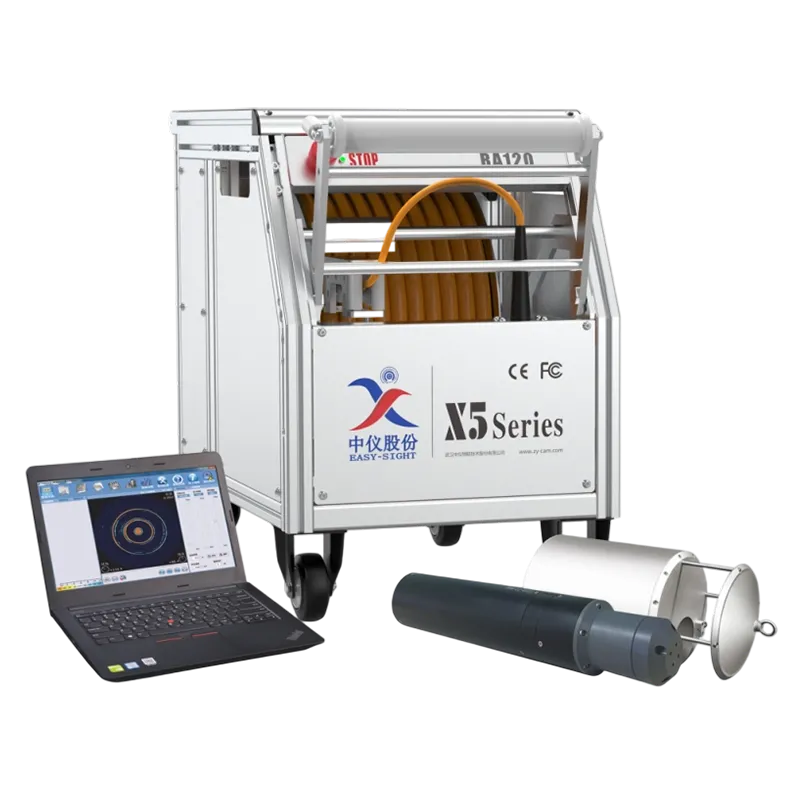
    The system usually consists of several key components:

    • Waterproof camera head

    • Flexible push rod or cable

    • LED lighting for dark environments

    • Monitor or display screen

    • Recording and storage system

    • Cable reel or control unit

    The camera head is inserted into a pipeline through an access point, such as a cleanout or inspection port. As the camera travels through the pipe, it transmits live video to the monitor, allowing operators to detect defects or blockages.

    Because most pipeline environments are dark, wet, and narrow, inspection cameras are designed to be durable, waterproof, and resistant to pressure and corrosion.

    Advanced systems may also include self-leveling cameras, distance counters, and pipe locators, making inspection faster and more precise.
    QQ_1773991078980.png

    Why Pipeline Inspection Cameras Are Important

    Pipeline inspection cameras significantly improve the efficiency and accuracy of pipeline maintenance.

    1. Non-Destructive Inspection

    Before inspection cameras were widely used, diagnosing pipe problems often required digging trenches or dismantling pipe sections. A pipe inspection camera eliminates unnecessary excavation by providing a clear internal view of the pipeline.

    2. Faster Problem Identification

    With real-time video feedback, technicians can quickly locate issues such as:

    • Pipe cracks

    • Blockages

    • Corrosion

    • Collapsed pipe sections

    • Tree root intrusion

    This helps reduce downtime and repair costs.

    3. Preventive Maintenance

    Regular inspections help detect early signs of damage before they become serious failures. Municipalities and industrial facilities often schedule routine pipeline inspections to prevent costly system breakdowns.

    4. Accurate Documentation

    Most modern pipeline inspection systems allow users to record video footage and capture images, creating a detailed inspection record that can be used for maintenance planning or reporting.

    Main Types of Pipeline Inspection Cameras

    Different inspection environments require different camera systems. Below are the most common types of pipeline inspection cameras used in professional applications.

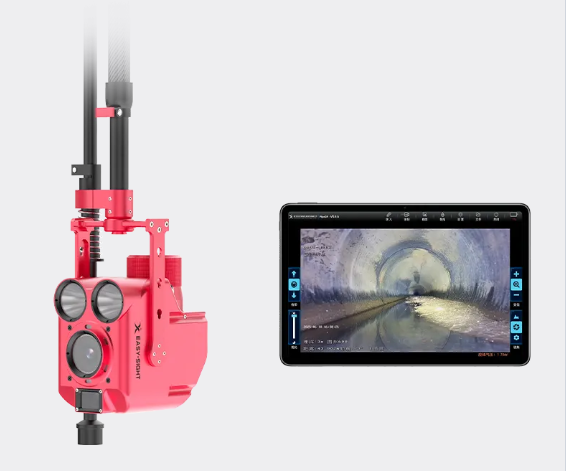
    Push Rod Pipeline Inspection Cameras

    Push rod cameras are among the most widely used pipe inspection camera systems, especially in plumbing and small pipeline inspections.

    Key Features

    • Flexible push cable

    • Compact waterproof camera head

    • Built-in LED lighting

    • Portable design

    Best Applications

    Push rod pipeline inspection cameras are ideal for:

    • Residential plumbing inspections

    • Drain inspection

    • Sewer line inspection

    • Small diameter pipelines

    These cameras typically work best in pipes ranging from 25 mm to 200 mm in diameter.

    Many professional technicians prefer push rod systems because they are easy to operate, portable, and cost-effective.
    QQ_1773991110778.png

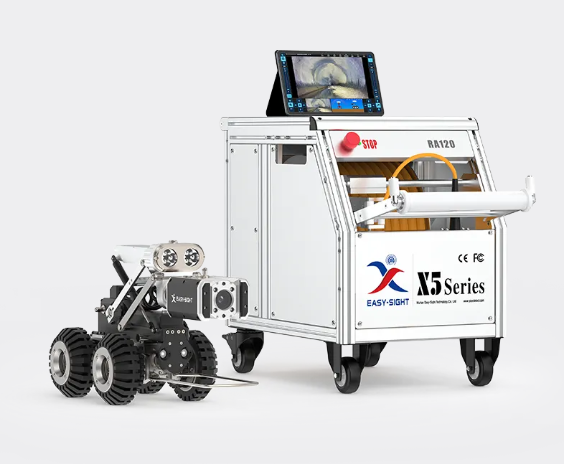
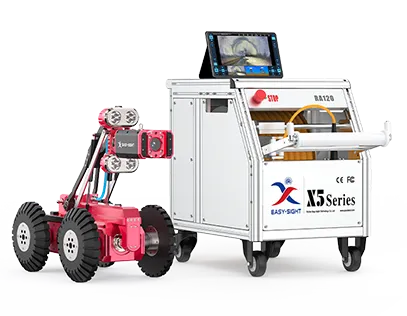
    Crawler Pipeline Inspection Cameras

    Crawler systems are designed for large-diameter pipelines where push rod cameras cannot travel efficiently.

    Key Features

    • Motorized crawler vehicle

    • High-definition camera

    • Remote control operation

    • Pan-and-tilt camera movement

    • Long-distance inspection capability

    Best Applications

    Crawler pipeline inspection cameras are commonly used in:

    • Municipal sewer inspection

    • Stormwater pipelines

    • Large industrial pipelines

    • Underground utility tunnels

    Because they are motorized, crawler systems can travel hundreds of meters through large pipelines and provide detailed inspection data.

    Pan-and-Tilt Pipeline Inspection Cameras

    Pan-and-tilt cameras offer advanced viewing capabilities by allowing operators to rotate the camera horizontally and vertically.

    Key Features

    • 360° rotation

    • Adjustable tilt angles

    • High-resolution imaging

    • Remote control functionality

    Best Applications

    Pan-and-tilt pipeline inspection cameras are especially useful for:

    • Complex pipe networks

    • Large sewer systems

    • Industrial pipeline inspection

    • Structural pipe analysis

    By adjusting the viewing angle, operators can inspect pipe walls more thoroughly and detect small defects that might otherwise be missed.

    Self-Leveling Pipeline Inspection Cameras

    A self-leveling camera automatically keeps the video image upright, regardless of how the camera head rotates inside the pipe.

    Key Advantages

    • Stable video orientation

    • Easier defect identification

    • Improved inspection efficiency

    Self-leveling cameras are widely used in professional plumbing and drainage inspection systems.

    Many modern pipeline inspection camera systems integrate this feature to enhance usability.

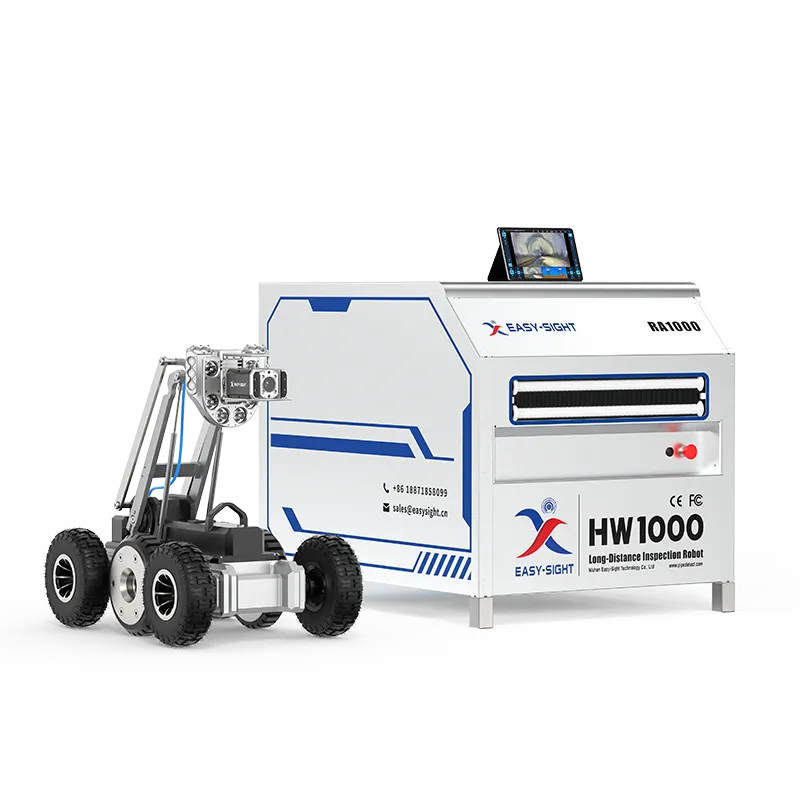
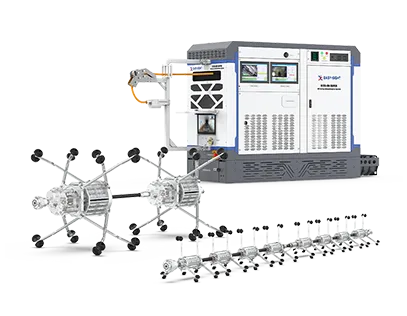
    Robotic Pipeline Inspection Systems

    For highly complex or hazardous environments, robotic inspection systems provide advanced capabilities.

    Key Features

    • Robotic mobility

    • Long-distance inspection

    • High-definition cameras

    • Sensors and measurement tools

    Common Uses

    Robotic pipeline inspection systems are frequently used in:

    • Oil and gas pipelines

    • Petrochemical facilities

    • Power plants

    • Large infrastructure projects

    These systems are designed for environments where manual inspection is difficult or dangerous.

    Key Features to Consider When Choosing a Pipeline Inspection Camera

    Selecting the right pipeline inspection camera system depends on several important factors.

    Camera Resolution

    High-resolution cameras provide clearer images and make it easier to identify cracks, corrosion, and debris.

    Pipe Diameter Compatibility

    Different cameras are designed for specific pipe sizes. Always ensure the camera head fits the target pipeline diameter.

    Cable Length

    Inspection depth depends on cable length. For residential plumbing, 20–40 meters may be sufficient, while municipal pipelines may require over 100 meters.

    Lighting System

    Since pipelines are dark environments, strong LED lighting is essential for clear visibility.

    Durability and Waterproof Rating

    Pipeline cameras must withstand water, debris, and harsh environments. Look for systems with strong waterproof ratings and corrosion-resistant materials.

    Professional manufacturers, such as Easy-Sight, design pipeline inspection cameras specifically for demanding industrial environments where durability and reliable imaging are critical.

    Common Uses of Pipeline Inspection Cameras

    Pipeline inspection cameras are used across a wide range of industries.

    Plumbing and Drain Inspection

    Plumbers frequently use inspection cameras to locate clogs, damaged pipes, and root intrusion in residential and commercial drainage systems.

    Municipal Sewer Inspection

    City maintenance teams rely on pipeline inspection cameras to monitor the condition of sewer infrastructure and identify maintenance needs.

    Industrial Pipeline Maintenance

    Factories and processing plants use pipeline inspection systems to inspect pipelines carrying water, chemicals, or other industrial fluids.

    Oil and Gas Pipeline Inspection

    In the energy sector, inspection cameras help detect corrosion, leaks, and structural weaknesses inside pipelines.

    Construction and Infrastructure Inspection

    During construction projects, pipeline inspection cameras verify that newly installed pipelines are correctly aligned and free of defects.

    Advanced inspection solutions developed by companies such as Easy-Sight help technicians perform accurate inspections while reducing maintenance time and operational costs.

    Future Trends in Pipeline Inspection Technology

    As technology advances, pipeline inspection cameras are becoming more sophisticated.

    AI-Assisted Defect Detection

    Artificial intelligence can analyze inspection footage and automatically identify pipe defects.

    High-Definition and 4K Imaging

    Higher-resolution cameras allow inspectors to detect smaller cracks and early signs of corrosion.

    Integrated Mapping Systems

    Some inspection systems can generate digital maps of pipeline networks, improving maintenance planning.

    Wireless Data Transmission

    Future systems may enable real-time remote monitoring through wireless connectivity and cloud-based data storage.

    These innovations will make pipeline inspection faster, safer, and more accurate.

    Conclusion

    Pipeline inspection cameras have transformed how industries inspect and maintain underground and enclosed pipeline systems. By providing real-time visual access to areas that were once difficult or impossible to inspect, these tools help detect problems early and reduce costly repairs.

    From push rod inspection cameras for small drains to robotic crawler systems for large industrial pipelines, there is a solution for nearly every inspection scenario. Selecting the right system depends on factors such as pipe diameter, inspection distance, and required image quality.

    As technology continues to evolve, pipeline inspection cameras will play an even more important role in infrastructure maintenance, industrial safety, and environmental protection.

    Latest News

    • Mar.20,2026

      What is a Drain Inspection Camera & How Does it Work?

      Discover what a drain inspection camera is, how it works, and why it's essential for plumbing maintenance. Learn about different types of sewer cameras and how Easy-Sight makes drain inspections efficient and reliable.

    • Mar.20,2026

      Pipeline Inspection Cameras: Types and Uses Explained

      Discover the different types of pipeline inspection cameras, how they work, and their practical uses in sewer, plumbing, and industrial pipeline inspection. Learn how modern pipeline inspection camera systems improve accuracy, efficiency, and maintenance.

    • Dec.05,2025

      Overcoming Challenges Faced by Pipe Crawler Robots in Navigating Complex Pipe Networks

      In recent years, the use of pipe crawler robots has become increasingly prevalent in various industries such as oil and gas, water management, and construction. These innovative robots are designed to navigate through intricate pipe networks with ease, carrying out inspections, maintenance, and repairs efficiently. However, despite their advanced capabilities, pipe crawler robots face several challenges when operating in complex pipe networks. In this blog post, we will explore some of the common obstacles faced by these robots and how engineers are working to overcome them.

    Get Friendly Advice, Tailored to You!

    Related Products

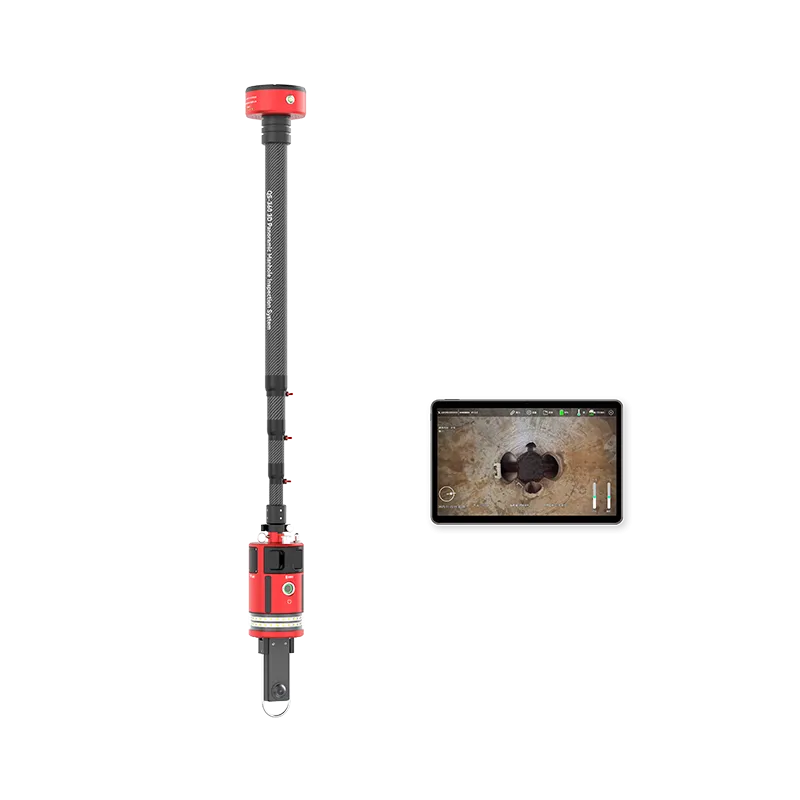
    QS-360 3D Panoramic Surveying System

    The QS-360 3D Panoramic Surveying System is a handheld inspection device capable of rapidly and accurately detecting defects and other parameters in inspection wells. The system consists of a 360° panoramic camera, a control rod, and a control system. 

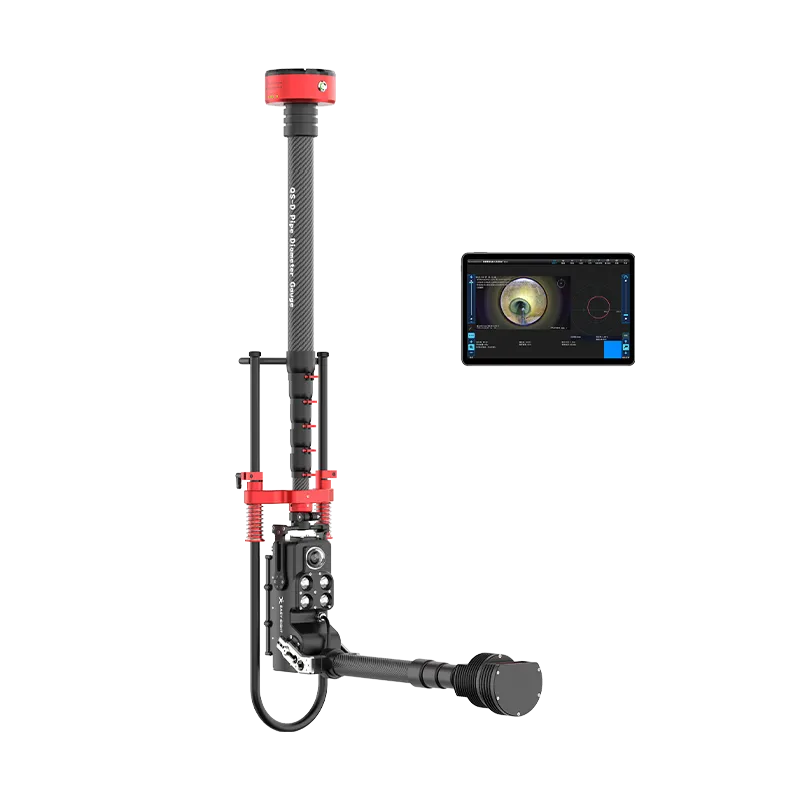
    QS-D Pipe Diameter Gauge

    The QS-D Pipe Diameter Gauge is a millimeter-grade intelligent detection device capable of accurately and rapidly measuring core parameters such as pipeline diameter. 


    With a measurement accuracy of ±2 mm and an error within 0.2%, it provides precise data support for pipeline rehabilitation design. 


    The product employs a high-precision laser probe that extends into the pipeline, utilizing a 360° full-circumference scanning mode to rapidly collect high-density cross-sectional data of the inner pipe wall. 

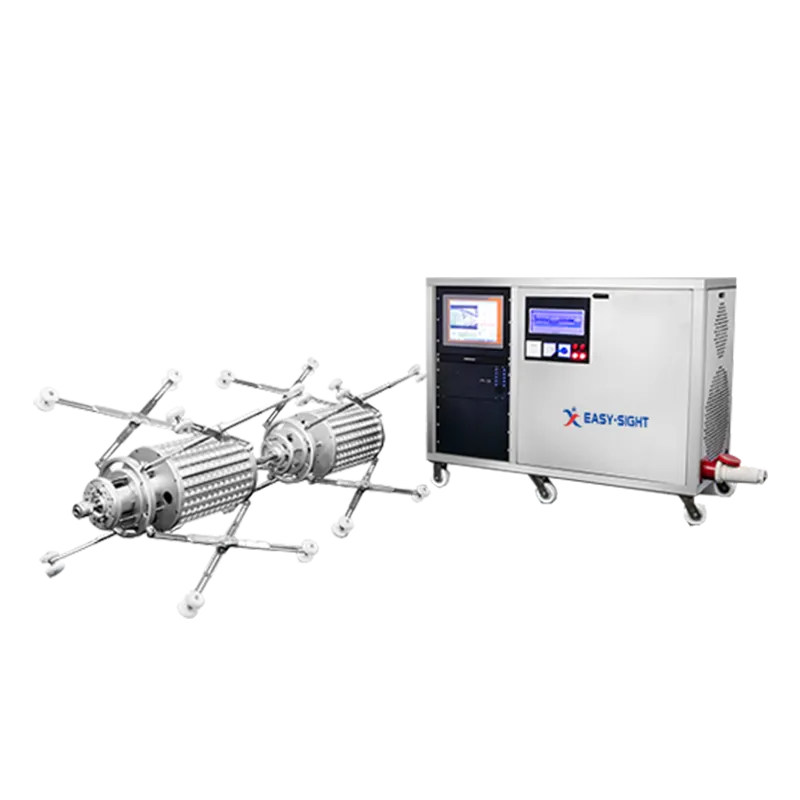
    X120-CIPP UV Light Curing Repair System

    The X120-CIPP UV Light Curing Repair System is composed of a mobile control system, a transmission cable, a UV lamp holder, a high-definition lens and auxiliary tools. 


    It mainly suitable for non-excavation repair projects of municipal pipe network, repair pipe diameter DN200-DN1600. Small size, light weight, can work with external generator; at the same time, it can be separated from the vehicle for operation in narrow streets.

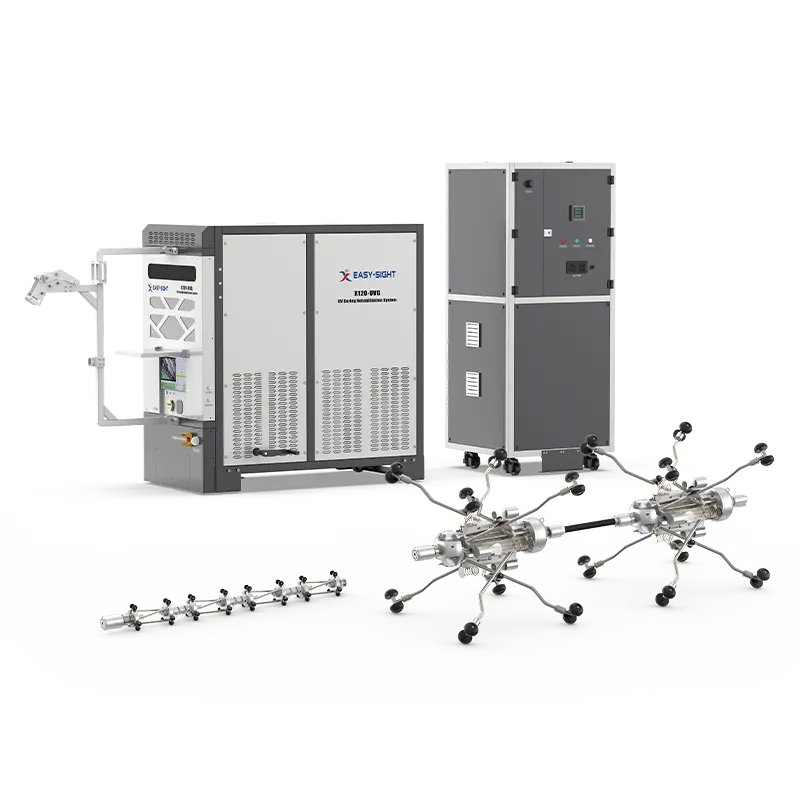
    X120-UVG Drainage Pipeline Rehabilitation System

    The X120-UVG is a drainage pipeline rehabilitation system equipped with a mercury lamp source, integrating a generator, air blower, power system, control system, cable reel, UV lamp frame, camera, sealing head, and air pipes. 


    Utilizing advanced UV curing technology, it is designed for trenchless UV rehabilitation of municipal pipelines ranging from DN200 to DN2000mm.

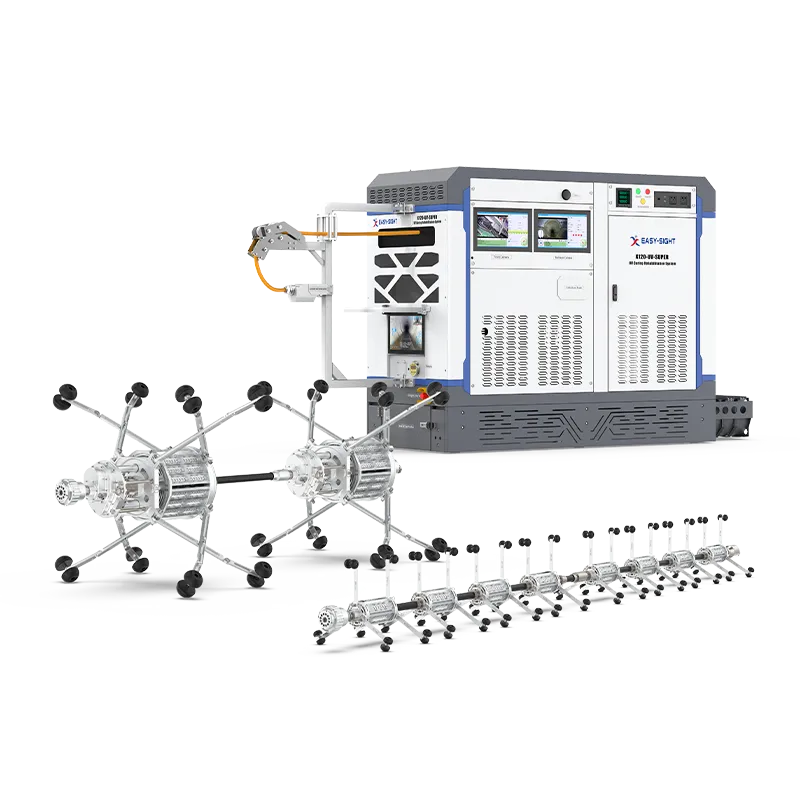
    X120-UV-SUPER UV Curing Rehabilitation System

    The X120-UV-SUPER UV Curing Rehabilitation System consists of specialized equipment, including a power system, UV rehabilitation control system, UV lamp frame system, video monitoring system, pipeline pressure adjustment system, and cold air cabinet. 


    Utilizing advanced ultraviolet curing technology, it is primarily designed for trenchless UV curing rehabilitation of municipal pipeline facilities with diameters ranging from DN200 to DN1600.

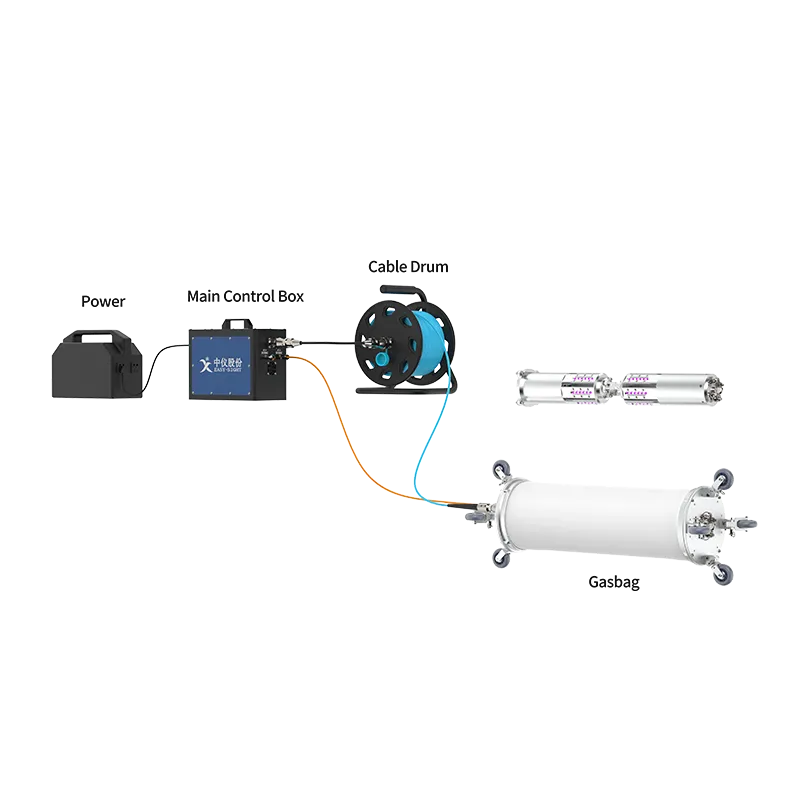
    X120-ZD Targeted Point Repair System

    The X120-ZD Targeted Point Repair System consists of a control box, cable reel, light source assembly, and four specifications of airbags. It is designed for localized defect repair in drainage pipelines with diameters ranging from DN200 to DN600mm. 


    Compact and portable, the system achieves precise repair of a single defect point within 7 minutes. The foldable airbags enable simple, quick installation and disassembly.

    X5-HW1000 Pipeline CCTV Inspection Robot

    The X5-HW1000 pipeline CCTV inspection robot is designed for large-diameter, long-distance drainage pipelines, with an applicable pipe diameter range of 500mm-3000mm and an inspection distance of up to 1050m. 


    Its most notable feature is its long single-inspection distance, solving the problem of traditional pipeline inspection robots being unable to inspect long-distance pipelines.

    X4 Pipe Sonar System

    X4 Pipeline Sonar Sewer Inspection Equipment/System is mainly used for the detection of water-carrying pipes (full water or above 2/3 of the water level), inspection wells, or underground cavities. 


    It automatically analyzes and extracts the inner wall contour, establishes a three-dimensional model, and performs the quantitative analysis.

    Let's Talk About Your Project

    • Afghanistan
    • Albania
    • Algeria
    • American Samoa
    • Andorra
    • Angola
    • Anguilla
    • Antarctica
    • Antigua and Barbuda
    • Argentina
    • Armenia
    • Aruba
    • Australia
    • Austria
    • Azerbaijan
    • Bahamas
    • Bahrain
    • Bangladesh
    • Barbados
    • Belarus
    • Belgium
    • Belize
    • Benin
    • Bermuda
    • BBhutan
    • Bolivia
    • Bosnia and Herzegovina
    • Botswana
    • Bouvet Island
    • Brazil
    • British Indian Ocean Territory
    • Brunei Darussalam
    • Bulgaria
    • Burkina Faso
    • Burundi
    • Cambodia
    • Cameroon
    • Canada
    • Cape Verde
    • Cayman Islands
    • Central African Republic
    • Chad
    • Chile
    • China
    • Christmas Island
    • Cocos (Keeling) Islands
    • Colombia
    • Comoros
    • Congo
    • Cook Islands
    • Costa Rica
    • Cote D'Ivoire
    • Croatia
    • Cuba
    • Cyprus
    • Czech Republic
    • Denmark
    • Djibouti
    • Dominica
    • East Timor
    • Ecuador
    • Egypt
    • El Salvador
    • Equatorial Guinea
    • Eritrea
    • Estonia
    • Ethiopia
    • Falkland Islands (Malvinas)
    • Faroe Islands
    • Fiji
    • Finland
    • France, Metropolitan
    • French Guiana
    • French Polynesia
    • Gabon
    • Gambia
    • Georgia
    • Germany
    • Ghana
    • Gibraltar
    • Greece
    • Greenland
    • Grenada
    • Guadeloupe
    • Guam
    • Guatemala
    • Guinea
    • Guinea-Bissau
    • Guyana
    • Haiti
    • Honduras
    • Hong Kong, China
    • Hungary
    • Iceland
    • India
    • Indonesia
    • Iran (Islamic Republic of)
    • Iraq
    • Ireland
    • Israel
    • Italy
    • Jamaica
    • Japan
    • Jordan
    • Kazakhstan
    • Kenya
    • Kiribati
    • North Korea
    • South Korea
    • Kuwait
    • Kyrgyzstan
    • Lao People's Democratic Republic
    • Latvia
    • Lebanon
    • Lesotho
    • Liberia
    • Libyan Arab Jamahiriya
    • Liechtenstein
    • Lithuania
    • Luxembourg
    • Macau
    • Madagascar
    • Malawi
    • Malaysia
    • Maldives
    • Mali
    • Malta
    • Marshall Islands
    • Martinique
    • Mauritania
    • Mauritius
    • Mayotte
    • Mexico
    • Micronesia
    • Moldova
    • Monaco
    • Mongolia
    • Montserrat
    • Morocco
    • Mozambique
    • Myanmar
    • Namibia
    • Nauru
    • Nepal
    • Netherlands
    • New Caledonia
    • New Zealand
    • Nicaragua
    • Niger
    • Nigeria
    • Niue
    • Norfolk Island
    • Northern Mariana Islands
    • Norway
    • Oman
    • Pakistan
    • Palau
    • Panama
    • Papua New Guinea
    • Paraguay
    • Peru
    • Philippines
    • Pitcairn
    • Poland
    • Portugal
    • Puerto Rico
    • Qatar
    • Reunion
    • Romania
    • Russian Federation
    • Rwanda
    • Saint Kitts and Nevis
    • Saint Lucia
    • Saint Vincent and the Grenadines
    • Samoa
    • San Marino
    • Saudi Arabia
    • Senegal
    • Seychelles
    • Sierra Leone
    • Singapore
    • Slovak Republic
    • Slovenia
    • Solomon Islands
    • Somalia
    • South Africa
    • Spain
    • Sri Lanka
    • St. Helena
    • Sudan
    • Suriname
    • Swaziland
    • Sweden
    • Switzerland
    • Syrian Arab Republic
    • Taiwan, China
    • Tajikistan
    • Tanzania
    • Thailand
    • Togo
    • Tokelau
    • Tonga
    • Trinidad and Tobago
    • Tunisia
    • Turkey
    • Turkmenistan
    • Turks and Caicos Islands
    • Tuvalu
    • Uganda
    • Ukraine
    • United Arab Emirates
    • United Kingdom
    • United States
    • Uruguay
    • Uzbekistan
    • Vanuatu
    • Vatican City State (Holy See)
    • Venezuela
    • Viet Nam
    • Virgin Islands (U.S.)
    • Wallis and Futuna Islands
    • Western Sahara
    • Yemen
    • Zambia
    • Zimbabwe
    • Montenegro
    • Serbia
    • Palestine
    • South Sudan
    • Jersey
    sales@easysight.cn
    +86 188 7185 8099