How can we help you?
Recent Searches Clear All
News
For the inspection, repair, operation, and digital management of urban water supply and drainage networks
Dec.05,2025
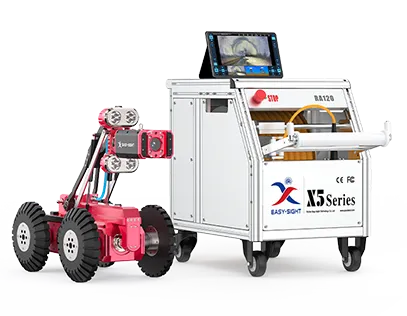
In recent years, the use of pipe crawler robots has become increasingly prevalent in various industries such as oil and gas, water management, and construction. These innovative robots are designed to navigate through intricate pipe networks with ease, carrying out inspections, maintenance, and repairs efficiently. However, despite their advanced capabilities, pipe crawler robots face several challenges when operating in complex pipe networks. In this blog post, we will explore some of the common obstacles faced by these robots and how engineers are working to overcome them.
Limited Maneuverability
One of the primary challenges faced by pipe crawler robots is limited maneuverability in tight spaces. The intricate layout of pipe networks can often make it difficult for these robots to navigate through bends, sharp turns, and narrow passages. This can result in delays in inspections or maintenance tasks, ultimately impacting the overall efficiency of the operation.
Engineers are continuously working on improving the design and capabilities of pipe crawler robots to enhance their maneuverability. By developing robots with articulated joints, omni-directional wheels, and advanced sensors, they aim to improve the robots' ability to navigate through complex pipe networks with ease. These advancements are crucial in ensuring that pipe crawler robots can access every corner of the pipeline for thorough inspections and maintenance.
Communication and Control
Another challenge faced by pipe crawler robots is maintaining communication and control while navigating through pipes. The confined nature of pipe networks can disrupt wireless signals, making it difficult for operators to monitor and control the robots remotely. This can result in lost connectivity and hinder the progress of inspections or repairs.
To address this issue, engineers are exploring alternative communication technologies such as acoustic, magnetic, or optical signals that can penetrate through pipes effectively. By incorporating robust communication systems into the design of pipe crawler robots, operators can maintain constant connectivity and control, ensuring smooth operation in complex pipe networks.
Dealing with Hazardous Environments
Pipe crawler robots often have to operate in hazardous environments such as pipelines carrying toxic chemicals, gases, or wastewater. These environments pose various risks to the robots, such as corrosion, mechanical damage, or exposure to harmful substances. Ensuring the safety and durability of the robots in such conditions is a significant challenge for designers and operators.
To overcome this challenge, engineers are developing pipe crawler robots with robust materials, protective coatings, and specialized sensors to withstand harsh environmental conditions. By equipping the robots with gas detectors, corrosion monitoring systems, and redundant safety features, operators can ensure the safe operation of the robots in hazardous environments, reducing the risk of accidents or damage.
In conclusion, pipe crawler robots play a crucial role in inspecting and maintaining complex pipe networks, but they face several challenges that need to be addressed to improve their efficiency and reliability. By continuously innovating and improving the design of these robots, engineers can overcome obstacles such as limited maneuverability, communication issues, and hazardous environments, making pipe inspections and maintenance tasks safer and more effective. As technology advances, pipe crawler robots will continue to evolve, providing valuable solutions for industries reliant on efficient pipe network operations.
Latest News
Sep.18,2026
Common Problems Detected by Modern Pipe Inspection Equipment
Sep.17,2026
Pipe Inspection Equipment Cost Factors: What Affects the Investment?
Sep.16,2026
Pipe Inspection Equipment Selection Guide for Different Pipeline Diameters
Get Friendly Advice, Tailored to You!
Let's Talk About Your Project