How can we help you?

Recent Searches Clear All
    A Comprehensive Comparison of Robotic Crawler Pipe Inspection Systems

    Dec.05,2025

    Understanding the Robotic Crawler Revolution


    In the ever-evolving realm of infrastructure maintenance, the robotic crawler pipe inspection system has emerged as a groundbreaking solution. These innovative devices are transforming the way we inspect pipelines, offering efficiency, accuracy, and safety in a single package. This article embarks on a journey to compare various types of robotic crawler pipe inspection systems, shedding light on their unique features and applications.


    Examining the Diversity of Robotic Crawler Pipe Inspection Systems


    Robotic crawler pipe inspection systems come in various shapes and sizes, each designed to cater to specific needs and challenges. Let's explore the key types of these systems and their differentiating factors:


    Magnetic Crawlers: Equipped with magnetic wheels, these crawlers adhere to the inner surface of metallic pipelines. This type is particularly effective in inspecting ferrous pipelines, offering stability and precise maneuverability. Magnetic crawlers are commonly employed in industries such as oil and gas, where metallic pipelines are prevalent.


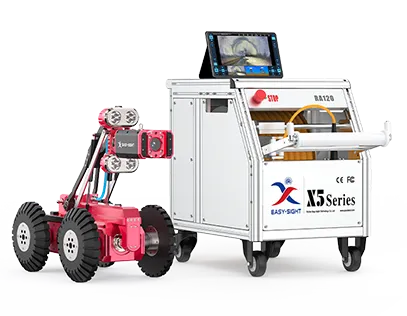
    Tracked Crawlers: Featuring robust tracks, these crawlers are versatile and well-suited for navigating through a variety of pipe materials. Tracked crawlers are known for their stability and traction, making them suitable for pipelines with irregular surfaces or challenging terrains. Their adaptability makes them a preferred choice for municipal sewer systems and water distribution pipelines.


    Wheeled Crawlers: With a design reminiscent of miniature rovers, wheeled crawlers excel in pipelines with smooth surfaces. Their wheels offer swift navigation through straight sections of pipes, making them ideal for inspections in industrial environments and wastewater systems.


    Choosing the Right Robotic Crawler Pipe Inspection System


    Selecting the most suitable robotic crawler pipe inspection system depends on several factors, including the type of pipeline, environmental conditions, and the specific requirements of the inspection. Here are some considerations to keep in mind when choosing the right system for your needs:


    Pipeline Material: Magnetic crawlers are optimal for metallic pipelines, while tracked and wheeled crawlers accommodate a broader range of materials, including concrete and plastic.


    Pipeline Diameter: Different robotic crawlers are designed for various pipe diameters. Ensure that the chosen system can effectively navigate and inspect the specific size of your pipelines.


    Environmental Challenges: Consider the conditions in which the inspection will take place. Tracked crawlers may excel in uneven terrains, while wheeled crawlers might be more suitable for smoother surfaces.


    Data Collection Capabilities: Evaluate the sensors and data collection capabilities of each system. A comprehensive inspection requires accurate data on the pipeline's condition, potential issues, and recommended maintenance.


    The world of robotic crawler pipe inspection systems is diverse and dynamic, offering solutions tailored to the unique challenges posed by different pipelines. Understanding the distinctions between magnetic, tracked, and wheeled crawlers is essential for making an informed decision that aligns with the specific requirements of your infrastructure. As these robotic marvels continue to evolve, the choice between them becomes a strategic step towards efficient and proactive pipeline maintenance. The robotic crawler revolution is here to stay, providing a glimpse into the future of smart infrastructure management.


    Latest News

    • Dec.05,2025

      Overcoming Challenges Faced by Pipe Crawler Robots in Navigating Complex Pipe Networks

      In recent years, the use of pipe crawler robots has become increasingly prevalent in various industries such as oil and gas, water management, and construction. These innovative robots are designed to navigate through intricate pipe networks with ease, carrying out inspections, maintenance, and repairs efficiently. However, despite their advanced capabilities, pipe crawler robots face several challenges when operating in complex pipe networks. In this blog post, we will explore some of the common obstacles faced by these robots and how engineers are working to overcome them.

    • Dec.05,2025

      Inserted Lining High-Density Polyethylene (HDPE) Pipeline Repair Technology

      Inserted lining high-density polyethylene (HDPE) pipe is a brand new pipe rehabilitation technology. The technology is to insert a HDPE pipe of suitable size into the old pipe that needs to be repaired. It takes advantage of the rigidity and strength of the old pipeline as the bearing structure, as well as the characteristics of HDPE pipe's corrosion resistance, wear resistance and permeability resistance, to form a "pipe in pipe" composite structure, so that the repaired pipeline has the comprehensive performance of steel pipe and HDPE pipe. This technology, by using the feature of HDPE pipe that it can automatically recover its original physical shape after deformation, is to retract HDPE pipe with special equipment. Before inserting, the lining pipe is pulled into the target pipe with a certain traction force as well as speed. Then the pulling force is removed and the liner is restored to its original diameter and tightly bonded with the outer pipe. The outer diameter of the lineing pipe is slightly larger than the inner diameter of the original tube. After the lining is completed, the lining pipe and the original tube are firmly combined and the thickness of the liner can be designed according to the needs.

    • Dec.05,2025

      Trenchless Rehabilitation Technology and Application of Pipeline Lining

      Since the rise of pipeline trenchless rehabilitation technology in developed countries in the 1980s, it has become a widely used method for underground pipeline rehabilitation. By avoiding large-scale excavation, this technology reduces the impact on urban traffic, the environment, and residents' lives, hence gaining extensive attention and preference. This article will provide a detailed introduction to the main methods and application fields of trenchless rehabilitation technology and analyze its important role in urban network renovation.

    Get Friendly Advice, Tailored to You!

    Let's Talk About Your Project

    • Afghanistan
    • Albania
    • Algeria
    • American Samoa
    • Andorra
    • Angola
    • Anguilla
    • Antarctica
    • Antigua and Barbuda
    • Argentina
    • Armenia
    • Aruba
    • Australia
    • Austria
    • Azerbaijan
    • Bahamas
    • Bahrain
    • Bangladesh
    • Barbados
    • Belarus
    • Belgium
    • Belize
    • Benin
    • Bermuda
    • BBhutan
    • Bolivia
    • Bosnia and Herzegovina
    • Botswana
    • Bouvet Island
    • Brazil
    • British Indian Ocean Territory
    • Brunei Darussalam
    • Bulgaria
    • Burkina Faso
    • Burundi
    • Cambodia
    • Cameroon
    • Canada
    • Cape Verde
    • Cayman Islands
    • Central African Republic
    • Chad
    • Chile
    • China
    • Christmas Island
    • Cocos (Keeling) Islands
    • Colombia
    • Comoros
    • Congo
    • Cook Islands
    • Costa Rica
    • Cote D'Ivoire
    • Croatia
    • Cuba
    • Cyprus
    • Czech Republic
    • Denmark
    • Djibouti
    • Dominica
    • East Timor
    • Ecuador
    • Egypt
    • El Salvador
    • Equatorial Guinea
    • Eritrea
    • Estonia
    • Ethiopia
    • Falkland Islands (Malvinas)
    • Faroe Islands
    • Fiji
    • Finland
    • France, Metropolitan
    • French Guiana
    • French Polynesia
    • Gabon
    • Gambia
    • Georgia
    • Germany
    • Ghana
    • Gibraltar
    • Greece
    • Greenland
    • Grenada
    • Guadeloupe
    • Guam
    • Guatemala
    • Guinea
    • Guinea-Bissau
    • Guyana
    • Haiti
    • Honduras
    • Hong Kong, China
    • Hungary
    • Iceland
    • India
    • Indonesia
    • Iran (Islamic Republic of)
    • Iraq
    • Ireland
    • Israel
    • Italy
    • Jamaica
    • Japan
    • Jordan
    • Kazakhstan
    • Kenya
    • Kiribati
    • North Korea
    • South Korea
    • Kuwait
    • Kyrgyzstan
    • Lao People's Democratic Republic
    • Latvia
    • Lebanon
    • Lesotho
    • Liberia
    • Libyan Arab Jamahiriya
    • Liechtenstein
    • Lithuania
    • Luxembourg
    • Macau
    • Madagascar
    • Malawi
    • Malaysia
    • Maldives
    • Mali
    • Malta
    • Marshall Islands
    • Martinique
    • Mauritania
    • Mauritius
    • Mayotte
    • Mexico
    • Micronesia
    • Moldova
    • Monaco
    • Mongolia
    • Montserrat
    • Morocco
    • Mozambique
    • Myanmar
    • Namibia
    • Nauru
    • Nepal
    • Netherlands
    • New Caledonia
    • New Zealand
    • Nicaragua
    • Niger
    • Nigeria
    • Niue
    • Norfolk Island
    • Northern Mariana Islands
    • Norway
    • Oman
    • Pakistan
    • Palau
    • Panama
    • Papua New Guinea
    • Paraguay
    • Peru
    • Philippines
    • Pitcairn
    • Poland
    • Portugal
    • Puerto Rico
    • Qatar
    • Reunion
    • Romania
    • Russian Federation
    • Rwanda
    • Saint Kitts and Nevis
    • Saint Lucia
    • Saint Vincent and the Grenadines
    • Samoa
    • San Marino
    • Saudi Arabia
    • Senegal
    • Seychelles
    • Sierra Leone
    • Singapore
    • Slovak Republic
    • Slovenia
    • Solomon Islands
    • Somalia
    • South Africa
    • Spain
    • Sri Lanka
    • St. Helena
    • Sudan
    • Suriname
    • Swaziland
    • Sweden
    • Switzerland
    • Syrian Arab Republic
    • Taiwan, China
    • Tajikistan
    • Tanzania
    • Thailand
    • Togo
    • Tokelau
    • Tonga
    • Trinidad and Tobago
    • Tunisia
    • Turkey
    • Turkmenistan
    • Turks and Caicos Islands
    • Tuvalu
    • Uganda
    • Ukraine
    • United Arab Emirates
    • United Kingdom
    • United States
    • Uruguay
    • Uzbekistan
    • Vanuatu
    • Vatican City State (Holy See)
    • Venezuela
    • Viet Nam
    • Virgin Islands (U.S.)
    • Wallis and Futuna Islands
    • Western Sahara
    • Yemen
    • Zambia
    • Zimbabwe
    • Montenegro
    • Serbia
    • Palestine
    • South Sudan
    • Jersey
    sales@easysight.cn
    +86 188 7185 8099