How can we help you?
Recent Searches Clear All
News
For the inspection, repair, operation, and digital management of urban water supply and drainage networks
Dec.05,2025
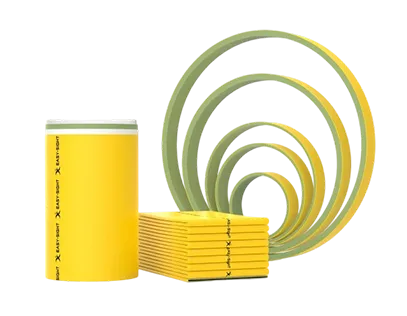
CIPP UV is one of the in-situ curing methods for trenchless restoration. In this CIPP UV technology, the glass fiber is woven into a hose impregnated with resin, and then it is pulled into the original pipe to inflate and expand to cling to the original pipe. Under the action of ultraviolet light, it is an in-situ curing method to make the resin solidify to form UV CIPP lining with certain strength.
Features: CIPP UV method can produce hose up to 500m in length at one time, even if the size of a section of the pipe changes, or the pipe has a radian within 30°, a wrinkle-free repair can be carried out. Hoses are suitable for all kinds of pipes: round, oval, egg-shaped, square, and other special shapes. Lining repair range: from DN150 to DN1200, lining wall thickness from 3mm to 12mm. Therefore it is flexible, diverse, and fast. The repair time is short and it can be put into use immediately after repairing. So it is a suitable method for cured in place pipe lining.
Compared with the traditional thermal curing technology, the CIPP UV technology has larger liner stiffness and smaller liner wall thickness under the same load. The curing time is short, as the ultraviolet light source gradually moves forward, the cooling of the lining also occurs continuously, which reduces the internal stress caused by curing shrinkage in the lining. A camera can be installed on the UV curing equipment to detect the liner curing condition in real-time. In the UV curing process, the problem of the initial curing end caused by the cross-section height of the drainage pipe port is not considered. No wastewater is produced in the curing process.
Latest News
Sep.18,2026
Common Problems Detected by Modern Pipe Inspection Equipment
Sep.17,2026
Pipe Inspection Equipment Cost Factors: What Affects the Investment?
Sep.16,2026
Pipe Inspection Equipment Selection Guide for Different Pipeline Diameters
Get Friendly Advice, Tailored to You!
Let's Talk About Your Project