How can we help you?
Recent Searches Clear All
News
For the inspection, repair, operation, and digital management of urban water supply and drainage networks
Sep.15,2026
I use digital Pipe Inspection Equipment to turn pipeline condition into structured, location-based information that operators can act on. Instead of relying only on visual notes or isolated inspection reports, modern systems combine cameras, robotic crawlers, sensors, inspection software, mapping, and analytics to identify defects, document their position, and support predictive maintenance. This approach improves asset visibility, maintenance planning, operational safety, and long-term pipeline performance.
Digital pipeline inspection technology is a combination of Pipe Inspection Equipment, sensors, imaging systems, robotic platforms, data software, and analytical methods used to assess pipeline condition. It can identify corrosion, cracks, leaks, wall loss, deformation, deposits, blockages, joint problems, and structural damage without requiring full excavation or manual entry.
The equipment selected depends on the pipeline’s internal diameter, material, geometry, pressure, flow condition, access points, and inspection objective. A CCTV crawler may be suitable for a gravity sewer, while an inline inspection tool, magnetic flux leakage system, ultrasonic sensor, or smart pig may be more appropriate for a pressurized transmission line. In practice, digital inspection works best when the equipment, field procedure, data format, and asset-management process are designed as one workflow.
| Equipment type | Detectable problems | Suitable pipeline conditions | Management value |
|---|---|---|---|
| CCTV crawler camera | Cracks, deposits, blockages, infiltration, deformation, joint defects | Gravity drainage, sewer, and accessible water pipelines | Creates visual evidence and location-based defect records |
| Robotic inspection system | Structural damage, obstacles, leaks, corrosion indicators, dimensional changes | Pipelines requiring mobility, lighting, traction, or remote operation | Extends inspection into areas unsafe or difficult for personnel |
| Smart pig or inline inspection tool | Wall loss, corrosion, cracks, dents, ovality, weld anomalies | Pressurized pipelines designed for pigging | Supports long-distance condition assessment without excavation |
| Sonar system | Sediment depth, submerged defects, cross-section changes | Water-filled or partially flooded pipelines | Reveals conditions hidden from conventional cameras |
| Remote pipeline sensors | Pressure changes, vibration, temperature, flow irregularities, leaks | Fixed monitoring points and active pipeline networks | Enables repeatable condition monitoring between inspections |
| Pole or manhole camera | Visible defects near access points, obstructions, surface damage | Large chambers, manholes, short inaccessible sections | Provides rapid screening before detailed inspection |
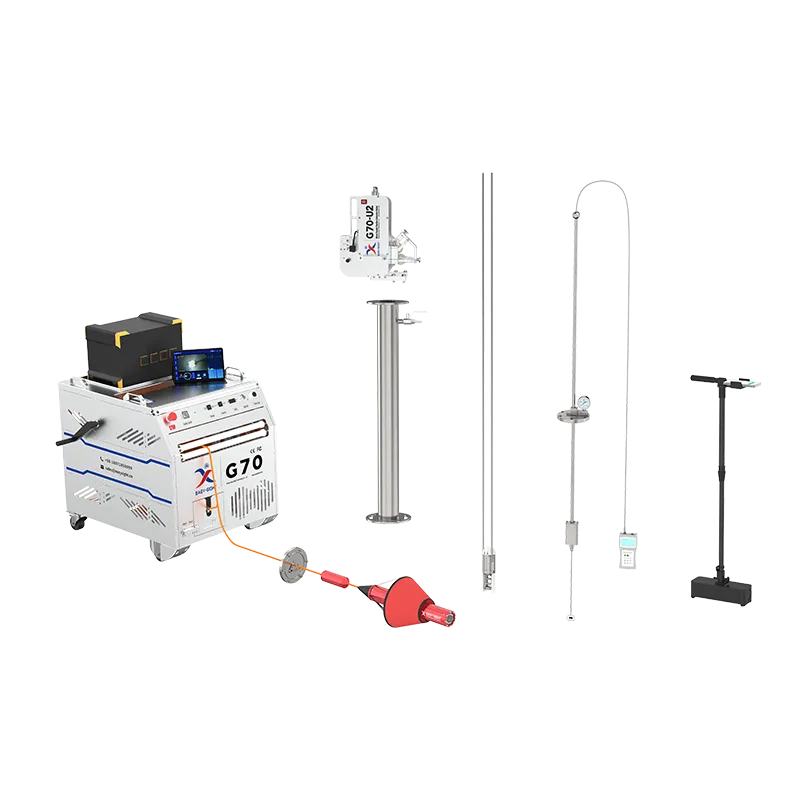
| Supporting pigging equipment | Cleaning, tracking, launching, receiving, and retrieval | Pipelines requiring cleaning or inline inspection preparation | Improves inspection readiness and reduces tool interference |
!
The central value of digital inspection is not the camera image or sensor reading by itself. The value comes from converting field data into decisions about risk, maintenance, compliance, and asset life. I normally evaluate the process as a sensor-to-decision workflow with five connected stages.
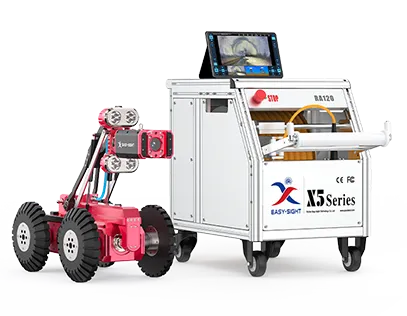
The inspection system records video, images, measurements, coordinates, depth information, leakage signals, or sensor readings. A crawler can document the full internal surface of a pipe, while a water supply inspection robot may identify a leakage point and estimate its location. Published Easy-Sight specifications illustrate how equipment selection changes by application: the X5-HT5 is listed for DN200–1200 mm pipes, with a maximum travel speed of 41 m/min and a detection distance of 500 m.
For smaller or community pipeline environments, the X5-HM100 is listed for pipelines above DN100 mm and includes a 50 mm vertical lift range, a maximum travel speed of 0.16 m/s, IP68 waterproof protection, and HD CCTV capability. These specifications matter because a system that cannot pass a step, negotiate a bend, maintain traction, or withstand immersion will produce incomplete data regardless of its software.
A digital inspection report should connect each defect to a chainage, manhole, valve, geographic coordinate, or other repeatable reference. The operator should also record defect category, severity, dimensions, clock position, image evidence, confidence level, and recommended follow-up action. Without consistent location and classification, a pipeline operator may have a large video archive but still lack a reliable asset condition register.
This is where GIS, mapping, and pipeline asset management software become important. When inspection observations are connected to pipe segments, materials, installation dates, service history, repair records, and surrounding risk factors, the organization can compare condition across neighborhoods, pressure zones, industrial sites, or drainage basins.
AI-assisted defect detection can identify likely cracks, corrosion patterns, deposits, blockages, leaks, or deformation in large inspection datasets. Automation is useful for sorting footage, flagging frames for review, and reducing the amount of footage an engineer must inspect manually. It should not be treated as an independent engineering decision-maker.
False positives can occur when lighting is poor, water is turbulent, surfaces are coated, camera movement is unstable, or a defect resembles sediment or shadow. False negatives can also occur when a crack is narrow, partially submerged, hidden by deposits, or outside the sensor’s detection range. I recommend assigning a human reviewer to verify high-risk findings, uncertain classifications, and any observation that may lead to excavation, shutdown, or capital expenditure.
A smart pipeline management program should not rank defects only by visual severity. A small defect in a high-consequence location may require faster action than a larger defect in a low-consequence section. Risk scoring should consider probability of failure, consequence of failure, pipe material, operating pressure, redundancy, service criticality, environmental sensitivity, and the reliability of the inspection data.
A practical risk model may classify assets as immediate repair, planned rehabilitation, continued monitoring, or no current action. The model should also identify data gaps, because an apparently low-risk segment with poor inspection coverage should not be treated the same as a segment supported by repeatable, high-confidence evidence.
The final stage is linking inspection results to work orders, budgets, shutdown plans, cleaning programs, rehabilitation projects, and future inspection intervals. Corrosion or wall-loss findings may lead to thickness verification, pressure review, coating work, or replacement planning. Deposits and blockages may trigger cleaning, while deformation or structural collapse may require rehabilitation or bypass planning.
This process supports predictive maintenance for pipelines because the operator can use condition trends rather than fixed calendar intervals alone. If repeated inspections show that a defect is growing, the maintenance interval can be shortened; if condition remains stable, resources may be directed toward higher-risk assets.
Pipeline operators generally use several equipment categories rather than one universal tool. CCTV cameras provide visual evidence and are effective for identifying cracks, deposits, roots, infiltration, blockages, exposed joints, and deformation where the pipe is accessible and visibility is adequate.
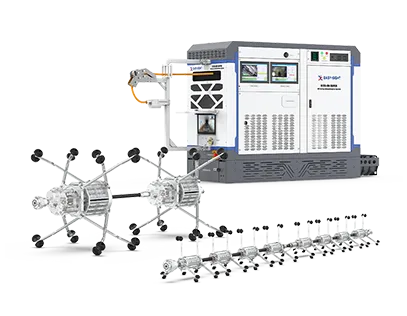
Robotic systems add traction, lighting, pan-and-tilt cameras, measurement functions, and remote operation. They are useful in deep manholes, long drainage lines, culverts, and areas where personnel entry creates confined-space risk. Easy-Sight’s product range includes crawlers, pole cameras, manhole cameras, sonar systems, long-distance detection systems, small-diameter systems, high-precision systems, and all-terrain inspection platforms.
Smart pigs and inline inspection tools are designed for pipelines that support controlled tool movement through the bore. Depending on the sensor package, they may detect metal loss, corrosion, cracks, dents, ovality, and weld-related anomalies. However, inline inspection requires compatible pipe geometry, suitable launch and receive facilities, appropriate flow conditions, and careful planning for tool tracking and retrieval.
I use the following decision matrix as an initial screening tool. It does not replace a site survey, engineering review, or equipment demonstration, but it helps narrow the options before procurement.
| Inspection need | Preferred technology | Main constraint |
|---|---|---|
| Visual inspection of drainage pipelines | CCTV crawler | Requires visibility, access, and sufficient passage clearance |
| Submerged or sediment-filled pipe assessment | Sonar with complementary camera inspection | Sonar interpretation may not identify every surface defect |
| Long-distance inspection of compatible pressurized pipe | Smart pig or inline inspection tool | Requires piggable geometry and operating control |
| Localized leak investigation | Acoustic, pressure, tracer, or robotic leak detection | Accuracy depends on background noise and pipe conditions |
| Corrosion or wall-loss assessment | Ultrasonic testing or magnetic flux leakage | Sensor performance depends on material, surface, and calibration |
| Small-diameter community pipeline inspection | Compact crawler or quick-view camera | Limited space restricts sensor size and mobility |
| Irregular culvert or large conduit inspection | All-terrain robot or specialized crawler | Travel speed and obstacle clearance can vary significantly |
| Manhole and chamber screening | Pole camera or 3D panoramic system | Does not replace full-length internal inspection |
I begin with the pipe itself rather than the equipment brand. The minimum selection profile should include internal diameter, length, material, wall thickness, lining, pipe shape, bend radius, slope, access points, expected flow, pressure, temperature, and the presence of sediment or standing water.
The second question is the defect type. CCTV may provide sufficient evidence for a blockage or visible crack, but wall loss may require ultrasonic testing or magnetic flux leakage. A leak detection system may identify abnormal flow or pressure behavior without directly measuring structural condition, so operators should distinguish between leak detection, structural inspection, and dimensional measurement.
The third question is data integration. I check whether the system can export video, images, defect codes, coordinates, measurements, timestamps, and inspection metadata in formats that can be imported into GIS, computerized maintenance management systems, digital twins, or pipeline integrity management software. A closed report that cannot be compared with earlier inspections limits long-term value.
The fourth question is operating practicality. Equipment specifications such as the X5-HT5’s listed DN200–1200 mm range, 41 m/min maximum travel speed, and 500 m long-distance detection capability may help define suitability, but the operator still needs to verify actual site conditions. Access, traction, bends, vertical offsets, water level, debris, retrieval arrangements, lighting, communication, and weather can determine whether a system completes the inspection.
The strongest implementation connects field data with a central asset record. Each pipe segment should have a stable identifier that links inspection files, defect history, maintenance actions, material information, installation records, pressure data, incident reports, and rehabilitation history. This structure enables engineers to compare current condition with previous inspections and identify deterioration rates.
A digital twin for pipeline management can extend this model by combining spatial data, hydraulic information, inspection records, sensor readings, and failure scenarios. The digital twin does not need to represent every physical detail to be useful. It should provide enough current information to support questions such as which assets need inspection, which defects threaten service continuity, and which rehabilitation projects offer the best long-term value.
Cybersecurity also deserves attention. Inspection systems may store network maps, critical infrastructure information, user credentials, and operational records. I recommend role-based access, encrypted data transfer, secure backups, software update controls, audit logs, and separation between inspection devices and operational control networks where appropriate.
Digital inspection is not automatically suitable for every pipeline. A camera may provide weak results when the surface is covered by grease, sediment, scale, biological growth, or heavy corrosion. Robotic systems may fail to pass sharp bends, collapsed sections, vertical offsets, or large diameter transitions. Inline tools may be unsuitable for pipelines with incompatible valves, unpiggable branches, restricted access, or insufficient flow control.
Data quality can also limit decision confidence. A clear image does not prove that no hidden defect exists, and an AI classification does not eliminate the need for engineering review. When inspection conditions are poor, I recommend documenting the limitation, assigning a confidence level, and using complementary methods such as sonar, ultrasonic testing, pressure monitoring, excavation, or targeted sampling.
The financial case for digital inspection usually comes from avoiding poorly timed decisions. Early identification of a growing defect can support planned repair during an existing shutdown instead of an emergency intervention. Better location data can reduce excavation scope, shorten fault-finding time, and prevent crews from investigating the wrong section of pipe.
The return on investment should be calculated using the operator’s own cost data. Relevant inputs include emergency repair frequency, average unplanned shutdown cost, excavation cost per meter, inspection labor hours, water loss, environmental response cost, traffic disruption, regulatory exposure, and the expected service life of rehabilitation options. A simple comparison is to measure the annual cost of inspection and data management against the avoided cost of failures, urgent repairs, repeat site visits, and unnecessary replacement.
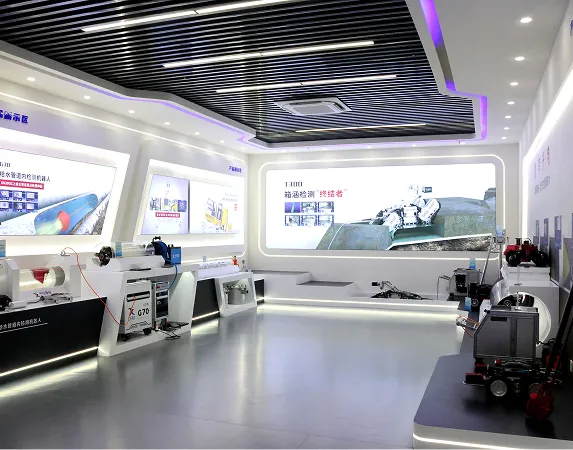
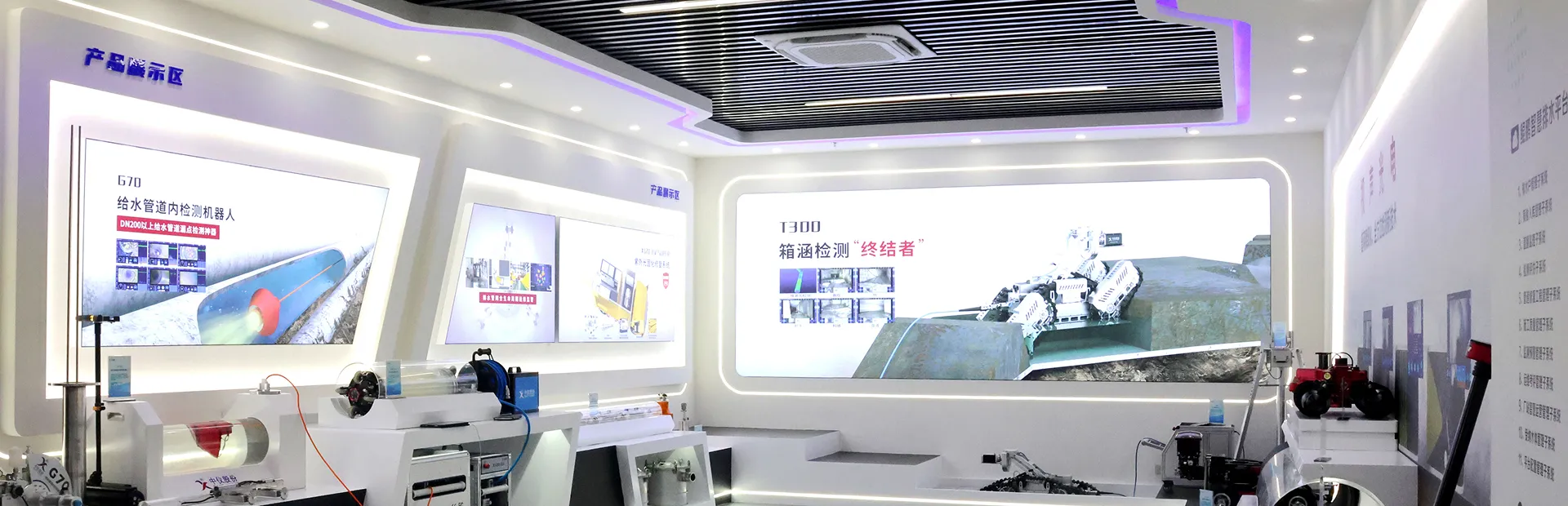
Easy-Sight’s published company information states that its systems have been deployed internationally, including more than 4,000 pipeline inspection robots, while its broader portfolio includes inspection, rehabilitation, operation, and digital management solutions for urban water supply and drainage networks. These figures describe deployment scale, not a guaranteed result for every project, so I would still evaluate equipment against the specific pipe geometry, defect risks, data requirements, and field conditions.
How Digital Pipe Inspection Equipment Supports Smart Pipeline Management can be summarized in one principle: it transforms pipeline condition from scattered observations into repeatable evidence for maintenance and investment decisions. Cameras and robots capture the condition, sensors add measurements, software organizes the findings, analytics support risk ranking, and asset-management systems connect the result to work orders and budgets.
For implementation, I recommend starting with a defined inspection objective and a verified pipe inventory. Then select equipment according to diameter, material, geometry, flow, access, defect type, and required data outputs. Finally, establish quality controls for calibration, operator training, AI review, data security, defect classification, and engineering approval.
Used in that structured way, digital pipe inspection equipment supports pipeline integrity management, predictive maintenance, compliance records, operational safety, and long-term asset planning. It does not remove the need for experienced engineers or field judgment, but it gives those teams better evidence for deciding what to repair, when to repair it, and how to allocate limited maintenance resources.
Latest News
Sep.15,2026
How Digital Pipe Inspection Equipment Supports Smart Pipeline Management
Sep.04,2026
Technology for Safer Infrastructure | Easy-Sight Showcases Innovations at the 2026 High-Tech Launch Event in Hong Kong
Aug.25,2026
Why Municipal Pipeline Networks Need Pipeline Inspection Robots: Analysis of Four Major Technical Advantages
Get Friendly Advice, Tailored to You!
Let's Talk About Your Project