How can we help you?
Recent Searches Clear All
News
For the inspection, repair, operation, and digital management of urban water supply and drainage networks
Sep.23,2026
When I compare Portable vs Robotic Pipe Inspection Equipment: Which Solution Fits Your Project?, I start with four variables: pipe diameter, inspection distance, access conditions, and the level of evidence required for repair decisions. Portable push cameras usually minimize setup time and purchase cost, while robotic crawlers provide stronger traction, longer operating distances, pan-and-tilt viewing, and more consistent records in larger pipes.
The right selection also depends on annual inspection volume, crew size, water and debris conditions, reporting standards, and whether the equipment must support emergency work. A plumbing company inspecting short residential laterals has different requirements from a municipal utility assessing several miles of large sewer mains.
!
The table below compares common configurations I see in contractor, municipal, industrial, and rehabilitation projects. Prices are indicative equipment ranges in U.S. dollars and vary by camera resolution, cable length, crawler size, software, transport package, and service coverage.
| Configuration | Typical Pipe Range | Practical Reach | Typical Crew | Setup Time | Reporting Capability | Indicative Price | Best-Fit Projects |
|---|---|---|---|---|---|---|---|
| Portable push camera | 50–300 mm | 30–120 m | 1–2 people | 5–15 minutes | Basic video, distance counter, snapshots | $3,000–$18,000 | Plumbing, laterals, short access pipes |
| Portable robotic crawler | 150–600 mm | 100–300 m | 2–3 people | 15–30 minutes | Video, measurements, overlays, inspection logs | $20,000–$75,000 | Utility contractors and medium pipelines |
| Truck-mounted crawler | 200–2,000 mm or more | 300–600 m | 3–5 people | 30–60 minutes | Structured reports, coding, GPS, project records | $120,000–$450,000+ | Municipal mainlines and large sewer networks |
| Trailer-based crawler | 150–1,200 mm | 150–500 m | 2–4 people | 20–45 minutes | Video, coding, defect records, exportable reports | $60,000–$220,000 | Contractors needing mobility without a full truck |
| Specialized robotic system | Model-dependent | 300–600 m or more | 2–5 people | 30–90 minutes | High-resolution records, sonar or measurement data | $150,000–$500,000+ | Industrial, submerged, large, or difficult assets |
The primary difference is how the camera moves through the pipe. A portable push camera is advanced manually or with a flexible fiberglass rod, so it performs best in smaller pipes, short runs, and routes with limited obstructions. A robotic system uses a motorized crawler, powered wheels or tracks, a tether, and remote controls to move independently through the pipe.
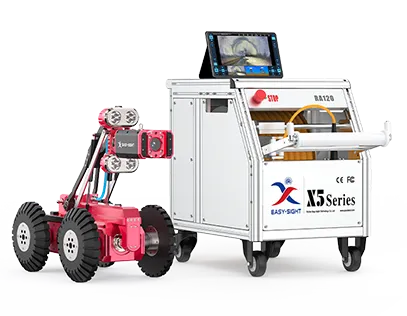
I also separate portable systems into two groups: push cameras and portable crawlers. A push camera is compact and fast to deploy, while a portable crawler adds powered movement, stronger lighting, pan-and-tilt control, and better performance over longer distances. Truck-mounted and trailer-based systems are larger platforms designed to carry the reel, control console, generator, crawler, monitors, and reporting equipment as one field package.
Portable push camera systems are usually the most practical choice for small contractors, plumbers, building maintenance teams, and utility crews inspecting service laterals. The operator feeds the camera head through a cleanout, floor drain, manhole, or other access point while viewing the image on a monitor.
Their main advantages are low transport weight, one- or two-person operation, quick setup, and lower ownership cost. A typical system may support 30–120 meters of cable, depending on the cable diameter and camera configuration. The main limitation is that the operator cannot apply continuous powered traction, so cable friction, bends, roots, standing water, and deposits can reduce the actual reach.
Portable robotic crawlers bridge the gap between a push camera and a full truck inspection vehicle. These systems usually include a motorized crawler, reel, control unit, monitor, lighting, and recording software that can be transported in a van or trailer.
I would consider a portable crawler when the project includes medium-diameter pipes, repeated inspections, longer runs, or conditions where pushing a camera manually would create inconsistent results. Some models support adjustable wheel sets, pan-and-tilt cameras, distance measurement, and powered retrieval. They still require attention to cable management, access geometry, pipe preparation, and crawler traction.
Truck-mounted crawler systems are designed for high inspection volume and large sewer or drainage networks. The vehicle carries the reel, power supply, control station, cable, crawler, lifting equipment, safety gear, and reporting workstation.
This configuration reduces repeated loading and unloading, but the vehicle adds capital cost, maintenance, fuel, insurance, parking requirements, and operator training. It is most suitable when a contractor or municipality can maintain high annual utilization, such as several hundred inspection hours or a recurring mainline assessment program.
Trailer systems provide many of the functions of a truck package while separating the inspection equipment from the towing vehicle. This can reduce the initial vehicle investment and allow one trailer to be used by different crews or attached to an existing fleet vehicle.
The tradeoff is slower deployment in locations where trailer access, parking, turning radius, or road restrictions are difficult. A trailer-based system can be an effective middle option for utility contractors that need crawler capacity but do not yet require a dedicated inspection truck.
Pipe diameter affects crawler stability, wheel contact, lighting coverage, and camera height. A camera that works well in a 150 mm lateral may provide poor centering and weak image coverage in a 900 mm sewer.
Before purchasing, I check the minimum and maximum diameter range, wheel or track adjustment, camera lift, pan-and-tilt angle, obstacle clearance, and whether the system can maintain a centered view. For unusual assets, such as culverts or oversized conduits, I also review the crawler’s obstacle-clearing height and trench-spanning width.
Reach is not the same as cable length. A 200-meter reel may provide less than 200 meters of usable inspection distance after accounting for access depth, bends, slack, vertical entry, and retrieval requirements.
Portable push cameras are practical for short and moderate runs, while robotic crawlers are better suited to long-distance work because the motorized unit reduces manual cable force. For municipal programs, I also compare reel capacity, cable replacement cost, retrieval speed, and the availability of spare cables.
Access conditions often determine the correct system before image quality is considered. A lightweight portable unit may fit through a narrow gate, stairwell, or building entrance, while a truck-mounted crawler may require road access close to the manhole.
I also assess slopes, uneven surfaces, submerged sections, standing water, sediment, grease, and debris. Motorized crawlers need sufficient traction and clearance, but they may still require pre-cleaning when deposits cover defects or prevent the camera from reaching the inspection target. In submerged or partially flooded assets, a crawler with suitable waterproofing, lighting, and optional sonar may produce more useful information than a standard push camera.
For routine blockage checks, a basic recording may be adequate. For rehabilitation design, claims documentation, municipal asset management, or repair prioritization, I look for stable video, controllable lighting, pan-and-tilt movement, distance overlays, defect measurements, still-image capture, and structured inspection records.
Reporting software should match the client’s requirements. Some projects require simple MP4 video and photographs, while others require coded observations, defect locations, pipe references, condition grades, and exports compatible with PACP, NASSCO, or local asset-management workflows. The inspection camera is only one part of the data chain; inconsistent naming, missing distance data, and poor file organization can reduce the value of otherwise clear footage.
The purchase price usually reflects more than the camera head. I include the reel, cable, crawler, control console, lighting, software license, monitor, transport case, generator, vehicle, training, calibration, spare parts, and service agreement when calculating the project cost.
| Equipment Type | Purchase Range | Typical Annual Operating Additions |
|---|---|---|
| Basic push camera | $3,000–$8,000 | $500–$2,000 |
| Professional push camera | $8,000–$18,000 | $1,000–$4,000 |
| Portable crawler package | $20,000–$75,000 | $3,000–$10,000 |
| Trailer crawler package | $60,000–$220,000 | $8,000–$25,000 |
| Truck-mounted system | $120,000–$450,000+ | $20,000–$70,000+ |
| Specialized inspection robot | $150,000–$500,000+ | $25,000–$80,000+ |
These figures should be treated as planning ranges rather than quotations. A system with a 500-meter cable, high-resolution camera, measurement functions, crawler lift, advanced software, and service support will cost more than a compact camera intended for short residential inspections.
I recommend calculating total cost of ownership over three to five years instead of comparing purchase prices alone. The calculation should include equipment depreciation, vehicle or trailer costs, staffing, preventive maintenance, calibration, software, training, repairs, replacement cables, batteries, travel, insurance, and downtime.
A basic ownership model is:
Annual equipment cost = purchase and transport costs + staffing + maintenance + software + training + repairs + downtime − resale value allocation.
Buying generally makes sense when the inspection workload is predictable and the equipment will be used regularly. For example, a contractor performing 600 to 1,000 billable inspection hours per year may spread ownership costs across enough projects to justify a portable crawler or trailer system.
Renting can be more practical when demand is seasonal, the pipe-size mix changes substantially, or a contractor needs a specialized crawler for only a few projects. Subcontracting is often the better choice for low utilization, highly regulated municipal work, submerged inspections, or projects requiring experienced coding and formal condition assessment.
I use this decision framework:
Price should be connected to measurable field outcomes. A push camera may allow a two-person crew to begin within 10 minutes, while a truck-mounted crawler may require 30–60 minutes for vehicle positioning, safety controls, setup, and system checks.
Robotic systems can improve inspection throughput in long, accessible pipes because powered movement reduces manual pushing and allows the operator to control camera direction remotely. They can also reduce physical strain and limit the need for workers to approach open manholes repeatedly, although traffic control, confined-space procedures, and site safety requirements still apply.
For repair decisions, the important outcome is not only video resolution. A robotic crawler with pan-and-tilt control, stable centering, distance tracking, and repeatable lighting can provide more consistent evidence of cracks, joints, deformation, infiltration, roots, and deposits. That consistency can improve confidence when deciding whether to clean, line, spot-repair, replace, or monitor a pipe.
I would not force a municipality or contractor to choose only portable or only robotic equipment when the network contains different pipe classes. A hybrid fleet can pair a portable push camera for building connections and laterals with a crawler for mainline sewers and larger conduits.
This approach also improves emergency response. A crew can send a compact push camera to identify a blockage or collapsed section immediately, then schedule a crawler inspection when the line is cleaned and access is prepared. For rehabilitation contractors, the portable unit can verify lateral connections while the crawler collects the mainline condition record needed for project design.
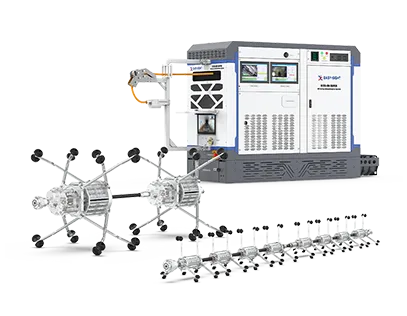
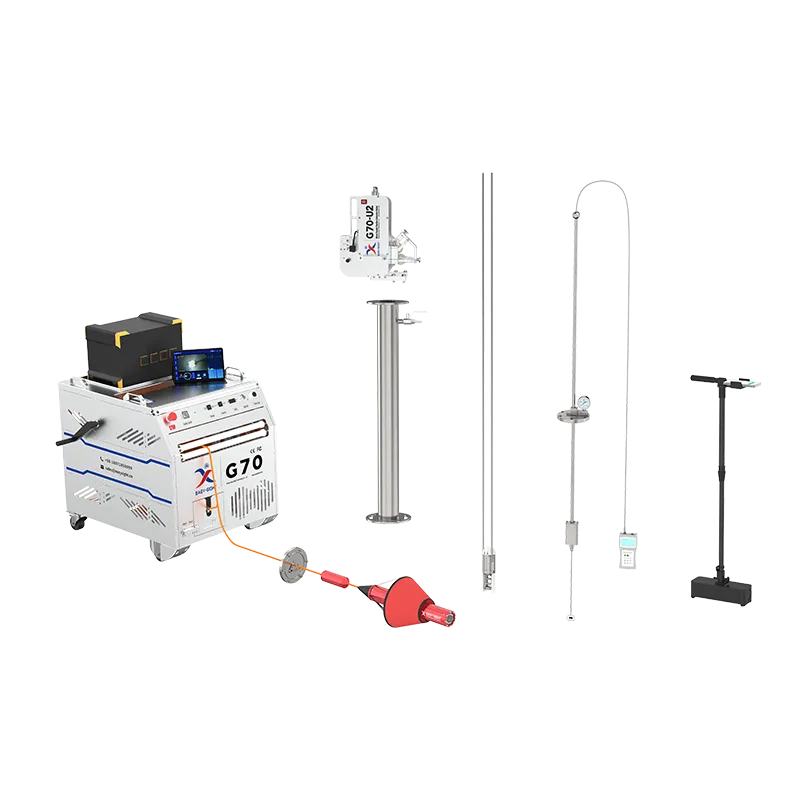
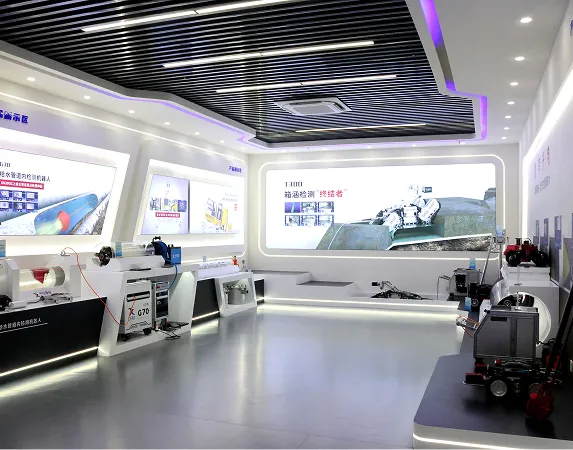
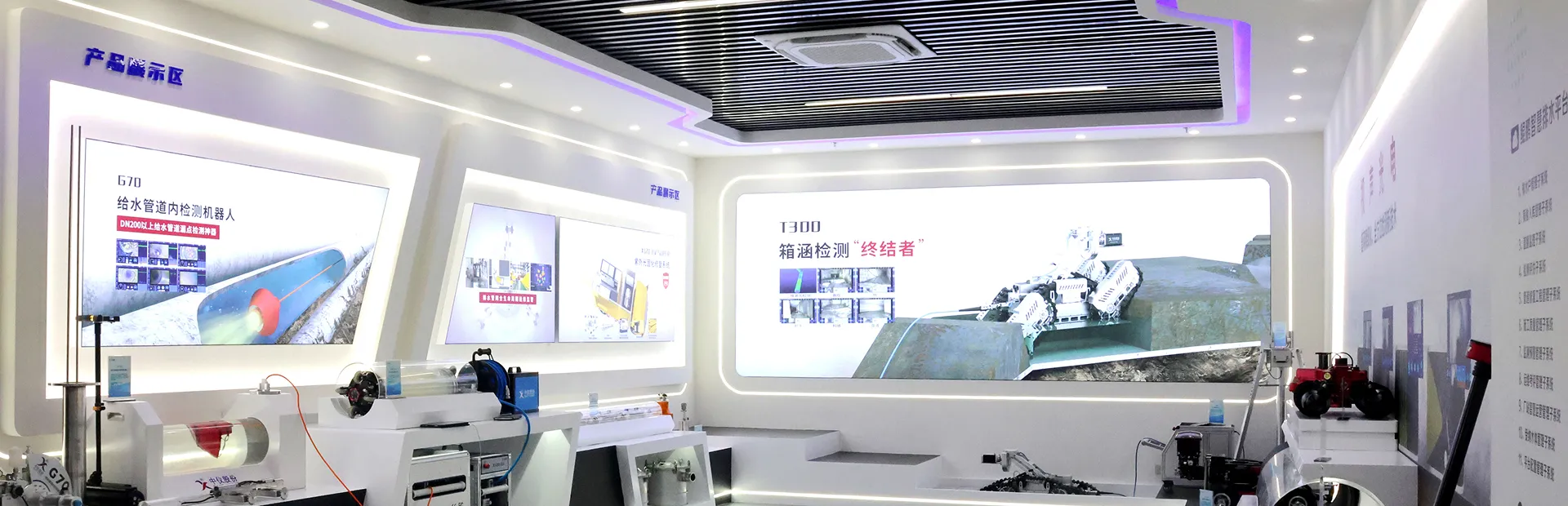
Easy-Sight illustrates this broader equipment category through a product range that includes pipe inspection robots, small-diameter systems, long-distance detection equipment, manhole cameras, sonar systems, and rehabilitation solutions. Its published product information includes crawler systems for pipe diameters such as DN200–1200 mm, long-distance inspection capabilities up to 500 meters on selected models, and specialized equipment for water-supply and all-terrain applications.
| Project Type | Preferred Starting Configuration | Reason |
|---|---|---|
| Plumbing company | Push camera | Low cost, fast setup, short laterals, one- or two-person operation |
| Small utility contractor | Push camera plus portable crawler | Covers service lines and medium pipes without a dedicated truck |
| Municipal utility | Truck-mounted crawler | High inspection volume, structured records, long mainlines |
| Rehabilitation contractor | Trailer crawler plus push camera | Supports mainline assessment and lateral verification |
| Industrial facility | Portable crawler or specialized robot | Flexible access, controlled sites, variable pipe sizes |
| Remote site | Portable push camera or battery crawler | Reduced transport demands and limited vehicle access |
| Large sewer network | Truck-mounted crawler with reporting software | Long reach, repeatable data, centralized asset records |
| Confined or submerged environment | Specialized crawler, sonar, or inspection robot | Better control in water, debris, depth, or restricted access |
Before I approve a purchase or rental, I confirm the following points:
For short access pipes, residential laterals, emergency blockage checks, and low-volume work, I usually recommend a professional portable push camera. It offers the lowest entry cost and the fastest deployment, but its reach and image consistency can decline in long, dirty, sharply curved, or water-filled lines.
For medium-diameter pipes, repeated utility inspections, and longer routes, a portable robotic crawler is often the better balance. It adds purchase cost and operator training, but powered travel, controllable viewing, and stronger reporting can produce better field records with a small crew.
For municipal mainlines, large sewer networks, rehabilitation surveys, and programs with high annual utilization, a truck-mounted or trailer-based crawler is usually more appropriate. The final decision should be based on pipe size, access, annual workload, safety exposure, reporting requirements, and the cost of sending work to an outside specialist.
Portable vs Robotic Pipe Inspection Equipment: Which Solution Fits Your Project? depends on the relationship between access, distance, pipe diameter, data requirements, and annual utilization. Portable push cameras are the practical choice for short laterals, plumbing work, emergency checks, and contractors that need a compact system with a purchase range often below $18,000.
Portable crawlers suit medium-sized projects that require powered movement without a dedicated inspection truck. Truck-mounted, trailer-based, and specialized robotic systems are better for long mainlines, large-diameter pipes, municipal programs, rehabilitation design, and inspections where repeatable data supports major repair decisions.
I recommend completing the selection checklist, estimating three- to five-year ownership costs, and comparing buy, rent, and subcontract options before choosing equipment. For organizations serving mixed networks, a hybrid fleet that combines a portable camera for laterals with a robotic crawler for mainlines can provide broader coverage than either configuration alone.
Latest News
Sep.23,2026
Portable vs Robotic Pipe Inspection Equipment: Which Solution Fits Your Project?
Sep.22,2026
Essential Features to Look for in Professional Pipe Inspection Equipment
Sep.21,2026
Pipe Inspection Equipment for Municipal Sewer and Drainage Pipeline Management
Get Friendly Advice, Tailored to You!
Let's Talk About Your Project