How can we help you?
Recent Searches Clear All
News
For the inspection, repair, operation, and digital management of urban water supply and drainage networks
Sep.21,2026
Municipal sewer and drainage teams need more than a camera to assess buried infrastructure. Pipe Inspection Equipment for Municipal Sewer and Drainage Pipeline Management combines CCTV cameras, crawlers, sonar, laser measurement, locating devices, manhole cameras, and reporting software to identify defects, measure pipe conditions, and prioritize maintenance without relying on repeated excavation. I use the following comparison to connect equipment capability with pipe diameter, access conditions, inspection distance, crew size, and the required level of documentation.
Municipal teams should select equipment by inspection objective rather than by camera resolution alone. A small public works department may need a portable push camera for service laterals, while a regional wastewater authority may require a crawler, sonar, laser profiler, vehicle integration, and condition-assessment software.
!
Pipe inspection equipment is a group of cameras, mobile platforms, sensors, cables, control units, and software used to examine underground sewer, stormwater, drainage, culvert, lateral, manhole, and large-diameter pipeline assets. The equipment records video, captures still images, measures defects, locates inspection points, and produces condition reports for maintenance or rehabilitation planning. Municipal crews use it to inspect pipes without placing personnel inside confined spaces. The correct system depends on diameter, water level, sediment, access, inspection distance, and whether the objective is visual review or quantified condition assessment.
| Supplier or solution | Main equipment focus | Suitable municipal application | Budgetary planning range* |
|---|---|---|---|
| Easy-Sight | Push cameras, CCTV crawlers, sonar, manhole cameras, laser systems, and rehabilitation equipment | Small laterals through large drainage pipelines and integrated inspection programs | Approximately $8,000–$250,000+ |
| Municipal Equipment Sales | Municipal sewer cameras, inspection vehicles, and related public works equipment | Departments seeking packaged sewer inspection and service equipment | Approximately $10,000–$300,000+ |
| CUES | CCTV inspection systems, crawlers, software, and vehicle-based platforms | Large wastewater utilities and contractors requiring established inspection workflows | Approximately $25,000–$400,000+ |
| iPEK | Camera crawlers, control systems, and sewer inspection platforms | Detailed CCTV inspection across varied pipe diameters | Approximately $20,000–$350,000+ |
| Carolina Industrial Equipment | Portable and municipal sewer inspection systems, including camera equipment | Small and mid-sized public works teams needing portable or vehicle-mounted options | Approximately $5,000–$250,000+ |
*These are planning ranges rather than supplier quotations. Final cost changes with pipe diameter, cable length, crawler configuration, vehicle integration, software, locating, sonar, training, shipping, and service agreements.
Push camera systems use a flexible rod or cable to move a camera through smaller pipes, laterals, storm drains, and short sewer sections. They are generally portable and can be operated by a two-person crew, making them practical for small municipalities and public works departments with limited vehicle space. A locating sonde can help crews identify the camera position from the surface when the system includes compatible locating equipment.
I recommend push cameras for service connections, short inspections, blockage verification, and preliminary assessment before cleaning or repair. Their primary limitation is that operators cannot control the camera’s travel direction as precisely as a crawler, and long distances may become difficult when the pipe contains heavy deposits, offsets, or standing water.
CCTV sewer inspection cameras provide the visual record most municipalities use for defect classification, maintenance planning, and contractor documentation. A typical system includes a camera head, lighting, cable reel, control unit, distance counter, and recording or reporting software. Pan-and-tilt camera heads are particularly useful because the operator can inspect joints, service connections, defects, and lateral openings without rotating the entire crawler.
For municipal programs, I would check the camera’s field of view, lighting control, image resolution, waterproof rating, cable length, distance accuracy, and compatibility with inspection reporting standards. The camera should also support clear still-image capture because a usable defect record requires more than continuous video.
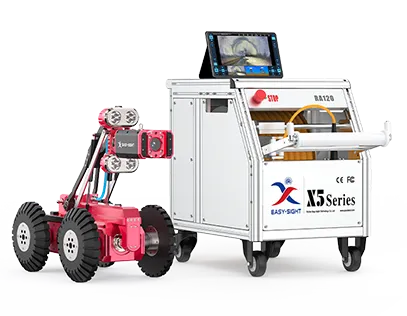
Pipe inspection crawlers use powered wheels, tracks, or specialized propulsion systems to move through medium and large pipelines. They provide better control over travel speed and camera position than a push rod, especially when the inspection requires consistent viewing, distance tracking, or repeatable documentation. Some crawlers can raise the camera to match different pipe diameters, cross obstacles, or carry additional sensors.
Easy-Sight offers several crawler classes for municipal applications. The X5-HM100 is intended for small-diameter community and municipal storm or sewer pipelines from DN100 to DN250, while the X5-HW1000 is designed for pipelines from 500 mm to 3,000 mm and inspection distances up to 1,050 m. The X5-HR4 addresses larger, difficult environments with sediment and high water, using a helical propulsion design and 360-degree imaging.
Pan-and-tilt systems allow the camera to rotate, tilt, zoom, and inspect branch connections from a central position. I consider this capability important when the municipality needs to identify lateral connections, observe pipe joints, or document defects at different angles. It reduces the need to reposition the crawler for every observation.
The tradeoff is cost and mechanical complexity. A pan-and-tilt camera may require a larger crawler, more operator training, and additional maintenance compared with a fixed forward-facing camera. It is most useful when the inspection program requires detailed asset records rather than a basic blockage check.
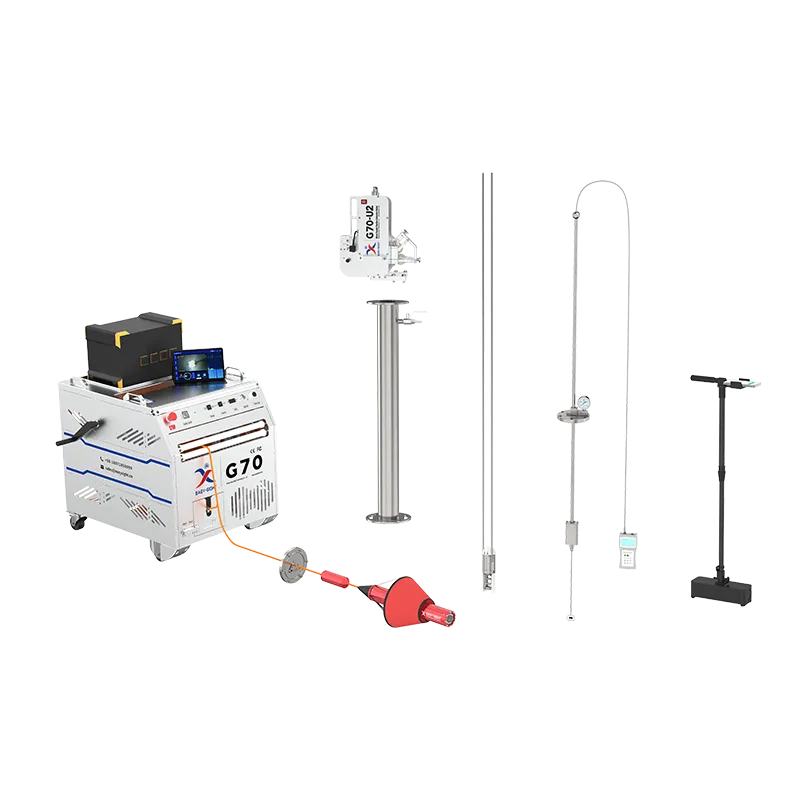
Manhole inspection equipment uses a pole, 360-degree camera, or panoramic scanner to assess manhole walls, benches, channels, ladders, covers, and connections. These systems are useful when the manhole is unsafe or too deep for direct visual inspection. They can also create a more complete record of the asset surrounding the pipe.
Easy-Sight’s product range includes quick-view cameras, 3D panoramic systems, and shaft surveying equipment. Some systems combine image capture with measurement or software-based reporting, which helps municipalities connect manhole findings with pipeline records and GIS-based asset management.
Sonar systems are designed for pipes that contain high water levels or are fully submerged. Standard CCTV can show only the section above the waterline, while sonar can map the submerged interior profile and identify sediment accumulation, deformation, voids, or obstructions below the water surface. This makes sonar valuable for large stormwater conduits, combined sewers, box culverts, and drainage channels.
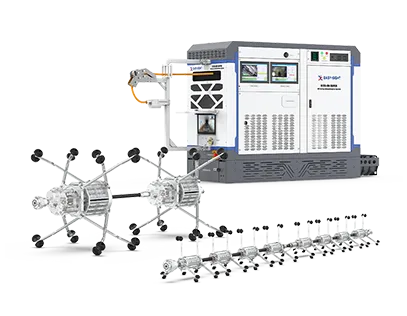
Easy-Sight’s X4 sonar system is intended for water-carrying pipes, inspection wells, and underground cavities, while the X7-DM powered sonar system is designed for pipes from DN350 and above, box culverts, and fully submerged conditions. I would not treat sonar as a replacement for CCTV in every project; the two technologies often provide better coverage when used together.
Laser profilers quantify pipe geometry instead of relying only on operator interpretation. They can measure internal diameter, deformation, ovality, cross-sectional loss, and other dimensional conditions needed for rehabilitation design. This information becomes especially important when the municipality is evaluating lining, spot repair, or replacement options.
Easy-Sight lists the QS-D pipe diameter gauge with a stated measurement accuracy of ±2 mm and error within 0.2%. Those figures should still be verified against the specific operating method, calibration process, pipe surface, and field conditions before using the data for contract design.
A CCTV system sends power and control signals through a cable to a camera positioned inside the pipe. The operator views the live image, controls lighting and movement, records video, marks defects, and tracks distance from the access point. A crawler adds powered movement, while a push camera depends mainly on manual cable insertion.
Sonar systems transmit acoustic signals through water and interpret the returning reflections to create an underwater profile. Laser systems project a controlled beam or scanning pattern to calculate dimensions and shape. In practice, municipalities often combine CCTV, sonar, and laser data when a pipe has standing water, significant sediment, or a rehabilitation decision that requires measurements.
| Inspection condition | Primary objective | Recommended equipment | Typical crew profile |
|---|---|---|---|
| DN75–DN250 lateral or short drain | Locate blockage or verify connection | Push camera with sonde | Two-person crew |
| DN100–DN250 municipal sewer | Record defects across short or medium distances | Compact crawler or advanced push camera | Two to three operators |
| DN200–DN1,200 sewer | Detailed condition assessment | CCTV crawler with pan-and-tilt camera | Trained inspection crew |
| DN500–DN3,000 drainage pipeline | Long-distance inspection | Large crawler, long cable reel, or all-terrain robot | Specialized crew |
| High water or submerged pipe | Assess underwater profile and sediment | Sonar, often combined with CCTV | Specialist operator |
| Manhole or shaft | Inspect walls, channels, and connections | Manhole camera or panoramic scanner | One to two operators |
| Rehabilitation design | Quantify diameter and deformation | Laser profiler or diameter measurement system | Inspection and engineering team |
| Large recurring program | Increase daily inspection coverage | Vehicle-mounted integrated system | Dedicated municipal unit |
I start equipment selection with the asset inventory rather than the supplier catalog. The municipality should list pipe diameters, material types, access points, average inspection lengths, water levels, sediment conditions, lateral density, and the percentage of assets requiring quantified measurements. This information usually reveals whether a portable system, crawler, vehicle, or combination of technologies is appropriate.
The following criteria should be documented in the procurement specification:
Inspection reporting software converts field observations into records that engineers, supervisors, and contractors can use. I look for software that captures project information, pipe direction, distance, defect type, severity, photographs, video time stamps, operator notes, and inspection summaries. The system should also allow records to be reviewed after the crew returns from the field.
Sewer condition assessment software becomes more valuable when it supports consistent defect classification and exports data to GIS or municipal wastewater asset management platforms. Easy-Sight describes reporting functions that can include project information, defect distribution, equipment details, workflow records, defect statistics, and detailed defect charts. Before purchasing, I would test whether the software exports usable files rather than storing all information in a proprietary format.
A standalone camera is the most practical starting point when the municipality has a small network, short inspection distances, and frequent lateral or blockage investigations. Its lower purchase price also reduces training and storage requirements, but it may not provide the travel control or measurement capability needed for formal condition assessment.
A crawler system is suitable when the municipality needs repeatable inspections across medium or large pipes. It costs more than a push camera, yet it can improve coverage consistency, distance tracking, and defect documentation. A complete inspection vehicle makes sense when the department performs inspections frequently enough to justify dedicated storage, power, cleaning, cable management, and field integration.
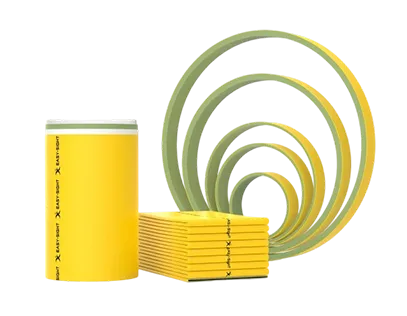
An integrated inspection-and-rehabilitation platform is appropriate for municipalities managing inspection, repair, and long-term asset planning within one program. Easy-Sight’s product range extends beyond inspection robots into UV curing systems, spot repair equipment, liners, and digital management tools. That broader scope does not mean every municipality needs a complete platform; it means the buyer should decide whether future rehabilitation work is part of the procurement plan.
Budgeting should include more than the purchase price. I would calculate the first five years of ownership using equipment cost, vehicle installation, software, operator training, calibration, preventive maintenance, replacement wheels or cables, camera repairs, batteries, insurance, storage, and service travel. A low-cost camera can become expensive if it requires frequent downtime or produces records that staff must reprocess manually.
For planning purposes, portable push camera systems may begin around the upper thousands of dollars, compact crawlers commonly extend into the tens of thousands, and advanced crawler or vehicle systems can reach several hundred thousand dollars. Sonar, laser measurement, pan-and-tilt heads, extended cable reels, and integrated reporting software can increase the final package price substantially.
I would request a five-year ownership schedule from every supplier and compare expected inspection coverage rather than only equipment price. The useful metric is not simply dollars per camera; it is dollars per documented foot or meter, adjusted for setup time, cleaning, traffic control, repeat visits, downtime, and the percentage of inspections that produce data suitable for rehabilitation decisions.
Pipe Inspection Equipment for Municipal Sewer and Drainage Pipeline Management should be selected according to pipe size, access, water conditions, inspection distance, measurement needs, crew capacity, and reporting requirements. Push cameras work well for short laterals and rapid checks, while crawlers provide more controlled movement and repeatable records across municipal sewer networks. Sonar and laser systems become important when submerged conditions or rehabilitation measurements limit the value of ordinary CCTV.
For a small public works department, I would begin with a portable push camera, locating capability, manhole camera, and reporting software. A growing inspection program should consider a compact crawler with pan-and-tilt imaging, while large utilities may justify a vehicle-mounted system with sonar, laser profiling, GIS integration, and dedicated operators. Easy-Sight is relevant when a municipality wants to compare inspection robots, sonar, manhole imaging, measurement tools, and rehabilitation equipment within a broader pipeline management plan.
Latest News
Sep.21,2026
Pipe Inspection Equipment for Municipal Sewer and Drainage Pipeline Management
Sep.18,2026
Common Problems Detected by Modern Pipe Inspection Equipment
Sep.17,2026
Pipe Inspection Equipment Cost Factors: What Affects the Investment?
Get Friendly Advice, Tailored to You!
Let's Talk About Your Project