How can we help you?
Recent Searches Clear All
News
For the inspection, repair, operation, and digital management of urban water supply and drainage networks
Sep.22,2026
Professional Pipe Inspection Equipment should be evaluated across seven feature groups: pipe-size compatibility, camera and cable configuration, image quality and lighting, locating and distance measurement, recording and reporting, durability and waterproofing, and service support. I recommend comparing each group against your pipe diameters, access conditions, inspection distance, reporting requirements, operator skills, and expected annual utilization before selecting a system.
!
When I evaluate Pipe Inspection Equipment, I begin with the job rather than the camera specification alone. A system designed for short residential drains may not provide the cable reach, traction, data control, or camera movement required for municipal or industrial pipelines. The correct choice depends on pipe diameter, access conditions, inspection distance, standing water, sediment, bends, roots, grease, and the level of documentation required.
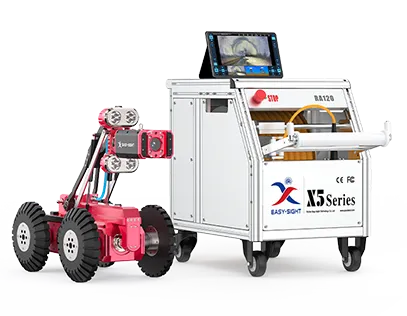
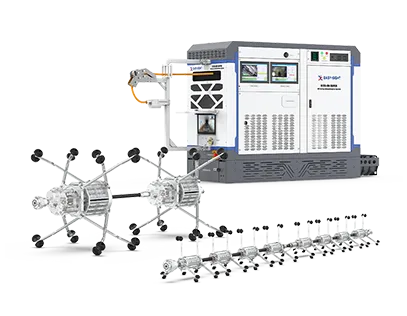
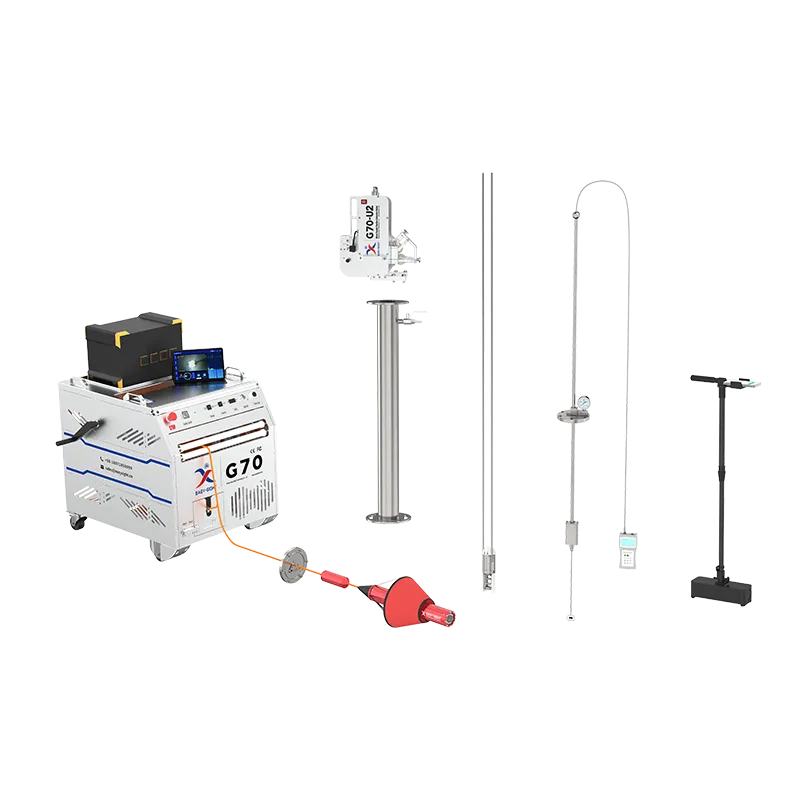
I also consider whether the system will be used for fault finding, pre-purchase inspections, maintenance records, rehabilitation planning, or formal asset management. These tasks require different levels of image quality, measurement accuracy, locating capability, and reporting control. Easy-Sight provides product categories covering crawlers, pole cameras, manhole cameras, sonar systems, small-diameter inspection, long-distance detection, and high-precision pipeline inspection, making equipment classification a useful starting point for buyers.
The first specification I check is the usable pipe-diameter range. A camera head that performs well in a 75 mm drain may not center correctly in a 200 mm pipe, while a crawler designed for larger lines may be physically unsuitable for small service connections. Buyers should compare the minimum and maximum pipe diameter, camera-head dimensions, skids, wheel options, and the system’s ability to pass bends.
Access conditions are equally important. A push camera can enter through a cleanout or floor drain with limited setup, but its reach depends on cable length and the number of bends. A crawler typically requires a manhole or larger access opening, yet it can provide better control and traction across longer pipeline sections.
| Inspection condition | Suitable equipment type | Main feature to prioritize |
|---|---|---|
| Residential drains and short branches | Mini drain camera or pushrod system | Flexible cable and compact camera head |
| Commercial drains and medium runs | Push camera with locator | Cable length, sonde, recording, and battery life |
| Municipal gravity sewers | Crawler inspection system | Traction, camera lift, distance measurement, and reporting |
| Large or difficult pipelines | Pan-and-tilt crawler or robotic platform | Camera movement, lighting, wheel control, and long-distance operation |
| Submerged or partially filled lines | Sonar-supported or specialized robotic system | Underwater visibility and data interpretation |
I recommend creating a pipe-diameter map from the last twelve months of work. Record how many jobs fall into each diameter range, the average reach, and the percentage requiring a locator or crawler. This converts equipment selection from a general preference into a utilization-based decision.
The most important pipe inspection camera features relate to whether the operator can identify defects without repeating the inspection. Resolution matters, but it should be assessed with lens quality, sensor performance, image processing, monitor size, and lighting. A high-resolution camera with glare, poor color control, or an unstable image may produce less usable evidence than a lower-resolution camera with balanced illumination.
I look for a camera head that maintains focus at the expected viewing distance and produces clear images at the pipe wall, joints, laterals, cracks, roots, corrosion, and deposits. Wide-angle lenses can provide more context, while narrower lenses may show small defects with greater visual scale. The system should also allow the operator to capture still images during video recording without interrupting the inspection.
LED lighting must match the camera head and pipe diameter. Too little light creates dark areas around the pipe crown, while excessive light can reflect from standing water, grease, or smooth plastic surfaces. Adjustable lighting is especially useful when moving between small service lines and larger sewers.
I would test the system in standing water, heavy sediment, roots, grease, mud, and submerged sections rather than relying on a clean demonstration pipe. The test should include a dark joint, a small lateral opening, a hairline crack, and a partially obstructed section. The buyer should record whether these conditions remain identifiable at normal operating speed.
Self-leveling is another important feature for professional use. A self-leveling camera keeps the image orientation stable as the push cable or crawler rotates, which helps the operator interpret the pipe crown, invert, sidewall, and defect position. Pan-and-tilt systems add more control by allowing the camera to look around junctions, inspect manhole walls, and examine defects without repositioning the entire vehicle.
The cable determines how far a push camera can travel and how consistently it can be controlled. I compare cable length, diameter, stiffness, bend radius, memory, abrasion resistance, and cleaning requirements. A cable that is too stiff may be difficult to guide through small bends, while a cable that is too flexible may buckle in longer or obstructed lines.
A professional reel should provide controlled payout and retrieval rather than forcing the operator to manage loose cable manually. Foot controls, cable counters, reel brakes, and mechanical guidance can improve consistency and reduce hand fatigue. The frame should remain stable during operation, especially when the cable is pulled through a difficult bend.
Crawler systems require a different evaluation. I check wheel traction, selectable wheel sizes, obstacle clearance, incline performance, camera lift, and the ability to reverse without losing position. For industrial and municipal work, the crawler should be tested in sediment, shallow standing water, roots, and uneven pipe surfaces because clean concrete does not represent normal field conditions.
A pipe inspection camera with locator capability can help the operator identify the underground position of a defect, blockage, lateral connection, or damaged section. The sonde is usually integrated near the camera head and detected from the surface with a compatible receiver. This is valuable when a contractor must mark an excavation point or identify the route of a buried service.
A sonde locator is important because video alone shows what is inside the pipe but does not always show where the defect is located above ground. The operator can place the receiver over the camera head, identify the signal, and mark the approximate surface position. Accuracy depends on depth, soil conditions, signal interference, operator technique, and the specific locator design, so I recommend testing the stated accuracy at several depths before purchase.
Distance measurement should be recorded from a known reference point, such as the manhole rim, cleanout, or access opening. A cable counter or reel encoder can associate a defect with a measured distance, but the result should be checked against the actual cable path. Buyers should ask whether the system displays distance in feet or meters, whether measurements can be corrected, and whether the data transfers into inspection reports.
Video recording is only one part of professional inspection documentation. I look for timestamped video, still-image capture, operator notes, defect tagging, audio commentary, distance overlays, and export options. The system should save files in widely usable formats and allow the company to retain original footage separately from edited reports.
Digital inspection reporting software becomes more valuable when multiple technicians work on the same projects. Consistent naming, project folders, inspection direction, pipe identifiers, defect locations, and site photographs reduce ambiguity during maintenance planning. For municipal and utility work, buyers should verify compatibility with NASSCO PACP or another required reporting workflow before committing to a proprietary format.
Data quality also depends on calibration and chain-of-custody controls. The operator should know when the distance counter, camera orientation, diameter gauge, or other measurement function was last checked. Original files should remain protected from accidental overwriting, and the company should document who recorded, reviewed, edited, and delivered each inspection.
Waterproofing requirements depend on the equipment type and operating environment. A camera used in wet drains needs protection against water intrusion, but the complete system also includes connectors, cable joints, reel electronics, monitor housing, batteries, and control panels. I assess the stated ingress-protection rating and ask whether it applies to the camera head only or to the entire operating system.
Durability should be evaluated through replaceable wear parts and serviceable construction. Camera windows, centering skids, wheels, cable ends, connectors, batteries, and lighting modules may require replacement during normal use. A system with accessible parts and documented maintenance procedures can reduce downtime compared with equipment that must be returned for minor repairs.
Cleaning is often overlooked during demonstrations. After inspecting grease, mud, or sediment, the operator should be able to wash the camera head, wipe the cable, clean the lens, and prepare the reel without damaging electrical connections. I would include cleaning time in the field trial because a system that takes 20 minutes to restore after every difficult job can materially reduce daily utilization.
A pushrod system is usually appropriate for small plumbing businesses inspecting residential drains, branch lines, and short commercial runs. It has a lower transport burden and can be deployed by one technician, but image stability and reach may decline in long, obstructed, or heavily contaminated lines.
A crawler system is more suitable when the inspection begins through a manhole and continues across longer municipal or industrial sections. Traction, camera lift, lighting, distance measurement, and vehicle control are more important than compact size. The trade-off is greater equipment cost, transport weight, setup time, and operator training.
Pan-and-tilt and robotic systems are designed for inspections requiring more visual control or more complex assets. They can inspect junctions, laterals, manhole structures, and large-diameter pipelines with greater camera movement. I would not purchase this class of equipment unless the expected work volume justifies the additional training, maintenance, software, batteries, and accessories.
For a practical sewer inspection equipment buying guide, I recommend scoring each system against the factors below. Use a 1-to-5 score for each category, then multiply the score by the importance weight assigned to your business.
| Decision factor | Suggested weight | Questions to ask |
|---|---|---|
| Pipe-size coverage | 20% | Does it cover at least 90% of our regular jobs? |
| Reach and mobility | 15% | Can it pass our common bends, slopes, and obstructions? |
| Imaging and lighting | 15% | Can it show defects in water, sediment, roots, and grease? |
| Locating and distance measurement | 15% | Can we mark defects and document their positions? |
| Recording and reporting | 15% | Does it support our client and regulatory reporting needs? |
| Durability and maintenance | 10% | Are cleaning, wear parts, and repairs manageable? |
| Service and training | 5% | Is technical support available within the required response time? |
| Purchase and ownership cost | 5% | Does expected utilization justify the total cost? |
For a small business, I would prioritize broad pipe-size coverage, a locator, reliable recording, manageable battery life, and local repair support before purchasing advanced robotic functions. For municipal utilities, I would place more weight on crawler traction, distance accuracy, PACP-compatible reporting, fleet standardization, and operator training.
The purchase price is only one part of professional pipe inspection equipment pricing. I calculate total ownership cost by adding expected repairs, cable and wheel replacement, batteries, software subscriptions, monitors, skids, transport cases, cleaning supplies, training, calibration, and downtime. I then divide the annual ownership cost by the number of inspections expected, which produces a more useful cost-per-inspection figure.
A system used 200 times per year can justify a higher initial cost if it reduces repeat visits and reporting time. Conversely, a complex system used 20 times per year may create unnecessary training, maintenance, and battery expenses. Buyers should model at least three utilization scenarios: low, expected, and high.
Before purchase, I recommend a structured field test:
Easy-Sight is one supplier category I would examine when comparing inspection systems because its product range includes crawler, small-diameter, high-precision, all-terrain, manhole, sonar, and long-distance inspection solutions. I would still compare each model against the actual pipe sizes, inspection distances, reporting standards, and service requirements of the intended operation rather than selecting by product category alone.
The Essential Features to Look for in Professional Pipe Inspection Equipment are not limited to camera resolution. I would give equal attention to pipe-size compatibility, cable and camera configuration, lighting, self-leveling, locating, distance measurement, recording, reporting, waterproofing, service support, and total ownership cost.
The next step is to list your regular pipe diameters, average inspection distances, access points, difficult field conditions, and reporting obligations. Use those details to score at least two equipment configurations with the weighted decision matrix, then conduct a field test before purchase. For small plumbing businesses, a flexible pushrod system with a locator and reliable reporting may provide the best fit; for municipal and industrial work, crawler or robotic equipment may be justified when utilization, pipe size, and documentation requirements are substantially higher.
Latest News
Sep.22,2026
Essential Features to Look for in Professional Pipe Inspection Equipment
Sep.21,2026
Pipe Inspection Equipment for Municipal Sewer and Drainage Pipeline Management
Sep.18,2026
Common Problems Detected by Modern Pipe Inspection Equipment
Get Friendly Advice, Tailored to You!
Let's Talk About Your Project